





 Sunday, 13-09-26








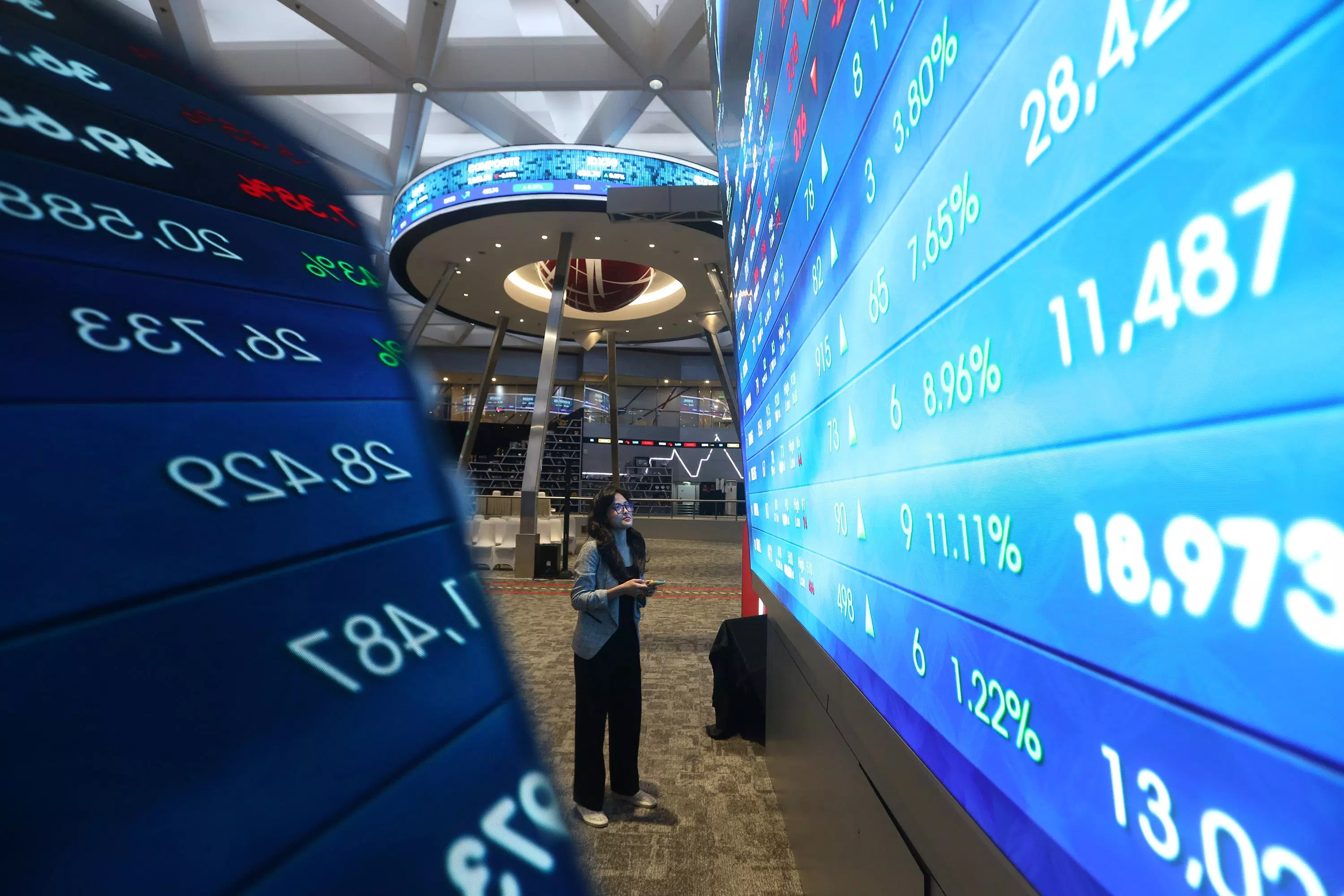
Indonesia’s Indonesia stock market entered a more fragile phase as the rupiah crossed a psychologically important threshold and investor sentiment weakened at the same time. On June 3, 2026, the Jakarta Composite Index, or IHSG, fell more than 3 percent intraday and slipped below the 6,000 level, while the rupiah moved toward Rp18,000 per U.S. dollar. By June 4, broader market data still showed heavy pressure, with the benchmark index extending its year to date losses and several large-cap names under selling pressure.
The message from the market was clear. Currency weakness is no longer an isolated foreign exchange story. It is now directly shaping the direction of the Indonesia stock market, the tone of local risk appetite, and the way investors are positioning for the second half of the year. When the rupiah weakens sharply, imported inflation risks rise, corporate costs can climb, and foreign investors often become more selective about exposure to Indonesian assets.
Why The Rupiah Matters More Than Ever
The rupiah’s slide is important because it changes how investors think about earnings, policy, and valuation all at once. On June 3, the currency was reported around Rp17,900 per dollar, which pushed it close to the Rp18,000 area that many traders see as a major line in the sand. Reuters later reported that the rupiah hit a historic low of 18,045 per dollar on June 4, underscoring how severe the currency pressure had become.
That matters for the Indonesia stock market because a weaker rupiah tends to hit different sectors in different ways. Exporters can sometimes benefit from a softer currency, but companies with large foreign currency liabilities, imported raw materials, or dollar-linked costs may face margin pressure. Banks, consumer names, and companies with significant domestic demand can also suffer when investors worry about inflation, purchasing power, or tighter financial conditions. In that sense, the rupiah is not just a macro indicator. It is a direct transmission channel into equity pricing.
The latest move also comes after months of volatility. Reuters reported in April that Bank Indonesia intervened in the foreign exchange market after the rupiah hit record lows, saying it would use every tool available to stabilize the currency. That background shows the current weakness is part of a broader stress cycle, not a one-day event. For equity investors, that creates an uncomfortable mix of currency risk, policy uncertainty, and shifting capital flows.
What Triggered The Latest Sell-Off
The immediate sell-off in the Indonesia stock market was driven by a combination of currency weakness and external pressure. Ajaib reported that on June 3 the IHSG opened in positive territory, then reversed and fell 3.37 percent to 5,986 by late morning. The trading pattern suggested broad-based selling rather than a narrow sector rotation, with hundreds of stocks in the red and transaction value rising sharply as investors rushed to reposition.
External sentiment played a major role. The stronger U.S. dollar, renewed geopolitical tension, and caution around emerging market assets all weighed on regional risk appetite. In the Ajaib report, these pressures were cited as key reasons why Indonesian equities turned lower even after a decent start to the session. That kind of reversal is often a warning sign that market confidence is thin and that buyers are waiting for a clearer macro signal before stepping back in.
TradingEconomics data reinforces the severity of the move. It showed the IHSG falling to 5,941 on June 3, down 4.11 percent from the prior session, with the index also down nearly 14.8 percent over the previous month and almost 16 percent year on year. Those are not normal fluctuations. They point to a market that has been under sustained pressure for weeks and is now reacting more sharply to each new macro shock.
For the Indonesia stock market, the problem is not only the daily headline move. It is the accumulation of negative signals. When the index is already down sharply on a monthly and yearly basis, any new currency shock can amplify existing caution. That is why the rupiah breach became such a powerful catalyst for the latest round of selling.
Policy Uncertainty Is Adding To Investor Anxiety
Market stress is rarely caused by one factor alone. In Indonesia’s case, policy developments are also shaping investor perception. Reuters reported on June 4 that parliament passed legislation expanding Bank Indonesia’s role to support growth, while also allowing lawmakers to make binding recommendations to independent regulators and the central bank. That move raised concerns about central bank independence and policymaking credibility, both of which matter greatly when a currency is already under pressure.
The timing is delicate. Investors are already dealing with the rupiah’s slide and weaker equity performance, so any suggestion that policy discipline could be questioned tends to make them more defensive. Reuters noted that Moody’s and Fitch had already cut Indonesia’s sovereign outlook to negative earlier in the year, citing reduced policymaking predictability. Against that backdrop, the Indonesia stock market is not just reacting to earnings or domestic growth. It is also reacting to institutional credibility.
This is one reason the market response has been so broad. When investors are unsure whether monetary and regulatory policy will stay stable, they often reduce exposure to local risk assets across the board. That can hit equities even if a company’s fundamentals remain intact. In other words, macro credibility can become a valuation input, not just a background concern.
Bank Indonesia’s response will therefore be watched very closely. Reuters reported that the central bank has already intervened in spot and non-deliverable forward markets, and is ready to buy government bonds in the secondary market if needed. That shows authorities are not passive. Still, the market will want proof that the interventions are effective and that confidence can be restored before the Indonesia stock market can stabilize meaningfully.
What Investors Are Likely To Watch Next
The next few sessions will probably be driven by three questions. First, does the rupiah hold above the most fragile levels, or does it keep weakening? Second, do foreign investors continue to reduce risk, or do valuations begin to attract bargain hunters? Third, can policy communication from Bank Indonesia and fiscal authorities reassure the market that stability remains the priority? Those questions will shape whether the current move becomes a temporary shock or a deeper re-pricing.
Sector selection will matter more than usual. Exporters and companies with rupiah-based revenues may prove more resilient, while import-heavy businesses and firms with foreign currency exposure may stay under pressure. That means investors in the Indonesia stock market are likely to be more selective, focusing less on broad index direction and more on balance sheet quality, pricing power, and dollar sensitivity. In volatile currency periods, those details often become the difference between resilience and underperformance.
There is also a behavioral issue. Large, fast moves in the exchange rate often trigger mechanical selling, margin adjustments, and cautious portfolio rebalancing. That can exaggerate the decline even when some fundamentals remain unchanged. The result is a market that looks more fragile than it would under normal conditions. For that reason, the current Indonesia stock market weakness should be read as both a macro warning and a liquidity test.
In the near term, the market needs stability more than a strong narrative. If the rupiah stops sliding and policy messaging becomes clearer, the pressure on equities could ease. If not, the Indonesia stock market may remain vulnerable to more downside, especially as traders continue to price in currency risk, policy uncertainty, and weaker sentiment toward emerging markets. For now, the market is sending a simple message. Confidence has weakened, and investors want proof that the worst is not becoming the new normal.
Read More