





 Monday, 14-09-26








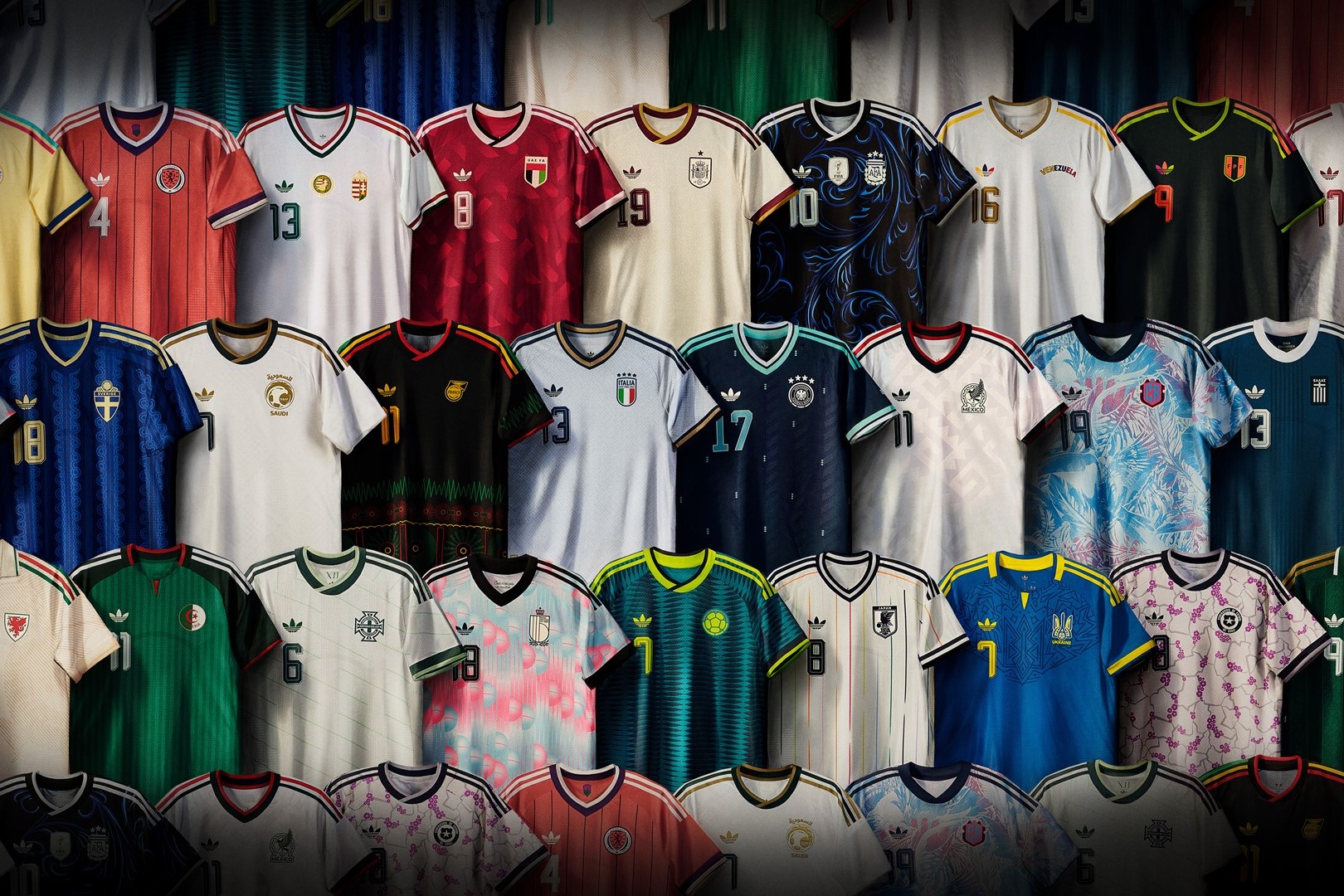
The 2026 FIFA World Cup has already produced a major commercial battle away from the pitch: the competition to supply kits for the expanded 48-team tournament.
A total of 13 sportswear brands will produce national team kits, with Adidas, Nike, and Puma controlling the majority of partnerships. Together, the three global giants supply 37 of the 48 participating nations, representing 77.1% of all World Cup kit deals.
The remaining 11 teams are divided among 10 independent brands, including heritage names such as Reebok and Umbro, as well as domestic manufacturers from Uzbekistan, Iran, and Ecuador.
World Cup Kit Suppliers 2026: The Complete Breakdown of 48 Nations
Adidas leads the 2026 World Cup kit supplier rankings with 14 national teams, representing 29.2% of the tournament field. Its portfolio includes defending champions Argentina, Spain, Mexico, Belgium, Japan, Colombia, Uruguay, and Saudi Arabia.
Nike follows with 12 teams, accounting for 25% of participating nations. The American sportswear company supplies major football markets including Brazil, France, England, host nation the United States, the Netherlands, and South Korea.
Puma completes the top three with 11 teams, or 22.9% of the field. Its partnerships include Portugal, Switzerland, Morocco, Senegal, Ghana, Egypt, and Ivory Coast.
Beyond the three largest brands, the 2026 World Cup features several smaller suppliers. Kelme supplies Jordan and Bosnia and Herzegovina, while Capelli Sport, Jako, Kappa, Majid, Marathon, Reebok, Saeta, 7Saber, and Umbro each represent one competing nation.
The distribution shows a unique balance in the football kit industry: global brands dominate the biggest markets, while smaller companies compete through specialised partnerships and national connections.
Adidas, Nike, and Puma Control the Global Kit Market
The dominance of Adidas, Nike, and Puma reflects the financial scale of international football. Major national teams generate significant shirt sales worldwide, making them valuable assets for global sportswear companies.
Adidas enters the 2026 tournament as the largest supplier despite losing Germany, one of its most important historical partners, to Nike from the 2027 cycle. The company continues to rely on long-term relationships with football powers across Europe and Latin America.
Nike’s strategy focuses on markets with strong commercial potential. Its partnerships with Brazil, France, and England connect the brand with three of the largest national team jersey markets in world football.
Puma has developed a different approach by combining European teams with rising African football markets. Its World Cup partnerships include Morocco, Senegal, Egypt, Ghana, and Ivory Coast, reflecting the growing commercial importance of African football.
The three companies’ continued dominance shows how global sportswear competition remains concentrated among brands with the financial capacity to secure major federation agreements.
Smaller Brands and Domestic Manufacturers Challenge the Giants
The 2026 World Cup also highlights the growing role of smaller and domestic kit suppliers.
Reebok returns to the World Cup stage through Panama, marking its first appearance as a tournament kit supplier since France 1998. The partnership represents part of the brand’s effort to rebuild its football identity under Authentic Brands Group ownership.
Umbro also returns to international tournament football through its partnership with DR Congo, using the country’s passionate football culture as a platform for renewed global visibility.
Three nations have selected domestic manufacturers for the tournament: Uzbekistan with 7Saber, Iran with Majid, and Ecuador with Marathon.
These decisions represent more than commercial agreements. They reflect efforts to support domestic industries, maintain manufacturing revenue within national economies, and strengthen local brands on the global stage.
Spanish brand Kelme has also expanded its World Cup presence by supplying Jordan and Bosnia and Herzegovina. The company, known for its history in football during the 1980s and 1990s, has returned to major international competition with renewed investment.
How Football Federations Choose World Cup Kit Partners
Selecting a World Cup kit supplier involves more than choosing a sportswear company. For national football associations, the decision combines financial considerations, brand strategy, design control, and national interests.
Financial value remains one of the most important factors. Major federations negotiate agreements involving guaranteed payments, shirt sales royalties, and performance-based bonuses.
The decision by the German Football Association to leave Adidas after 70 years for Nike was linked to Nike’s reported offer of approximately €100 million annually, around twice the previous Adidas agreement.
Design control has also become increasingly important. Federations and players have pushed back against generic designs, encouraging brands to create more customised national team kits.
Smaller nations face a different choice: partnering with a global company that offers worldwide distribution or becoming the primary focus of a smaller brand. For some teams, a smaller supplier can provide greater attention and creative involvement.
Domestic considerations also influence supplier decisions. Uzbekistan, Iran, and Ecuador selected local manufacturers to support national economic priorities and promote domestic brands internationally.
Major World Cup Kit Supplier Changes After 2026
The end of the 2026 World Cup will trigger one of the biggest shifts in the international football kit market, with six nations changing suppliers.
Germany will make the most significant move, ending its 70-year partnership with Adidas and joining Nike from January 2027. The agreement will run until 2034 and is reportedly valued at approximately €100 million annually.
Croatia will move from Nike to Adidas in 2027, ending more than two decades of partnership with the American brand. The change will bring Adidas branding to one of football’s most recognisable national team designs.
Chile will leave Adidas for Ecuadorian manufacturer Marathon in a deal running from 2027 to 2030. The move reflects Marathon’s growing presence in South American football.
The Czech Republic will switch from Puma to Adidas after a 33-year relationship. Reports indicate the new partnership may include a retro-inspired design approach featuring Adidas’ classic Trefoil logo.
Turkey and Poland will also move from Nike to Adidas in 2027, strengthening Adidas’ European presence while the company prepares for the loss of Germany.
These changes demonstrate the competitive nature of the World Cup kit market, where supplier relationships can influence brand visibility, revenue opportunities, and global sportswear strategies.
PHOTO: ADIDAS
This article was created with AI assistance.
We make every effort to ensure the accuracy of our content, some information may be incorrect or outdated. Please let us know of any corrections at [email protected].
Read More