





 Tuesday, 20-10-26








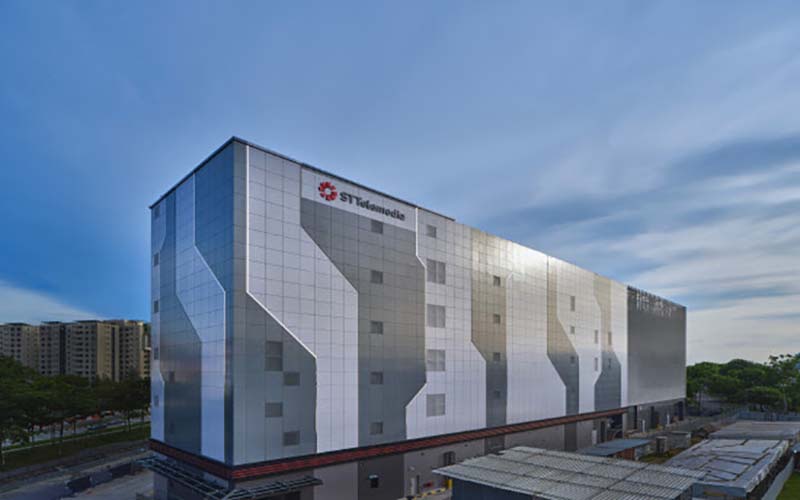
ST Telemedia Global Data Centres, or STT GDC, has taken a major step in Indonesia by expanding its financing platform to support the next phase of the STT Jakarta campus. The company secured an upsized dual-currency facility worth Rp8.8 trillion, or roughly US$500 million, and included its first green term loan tranche in Indonesia. The deal is designed to fund the continued development of STT Jakarta 3 in Cikarang, Bekasi, while also strengthening the broader campus strategy across Jakarta 1 to Jakarta 3.
This is not just another funding headline. It is a strong signal that data center financing in Indonesia is moving from simple project lending toward more sophisticated, sustainability-linked capital structures. The financing package was arranged with support from BNI, HSBC Indonesia, and OCBC NISP, while OCBC also served as coordinator and green lead. That lender mix suggests confidence not only in the project itself, but also in the long-term economics of Indonesia’s digital infrastructure market.
Why The Rp8.8 Trillion Facility Matters
The size of the facility is important, but the structure matters just as much. According to the report, the expanded package is a dual-currency arrangement that builds on existing term loan, revolving loan, and trade facilities already in place for STT GDC Indonesia. In practical terms, that means the company is not starting from scratch. It is scaling a financing platform it has already proven workable, which is often a sign of lender comfort and disciplined capital planning.
The inclusion of a green term loan tranche is especially notable. STT GDC described it as its first green financing in Indonesia, which adds a sustainability layer to the company’s growth story. For the market, that matters because data center financing is increasingly judged not just by capacity growth, but by how efficiently and responsibly that capacity is built. Investors and lenders are paying closer attention to power usage, cooling design, and environmental performance.
STT GDC’s country head for Indonesia, Hendrikus Gozali, framed the transaction as a continuation of the company’s long-term commitment to the market. He said the funding supports sustainable and scalable digital infrastructure to meet rising demand for cloud, AI, and high-performance computing. That is the right framing for a market like Indonesia, where enterprise digitalization is still expanding and compute demand is rising from multiple directions at once.
The timing also aligns with a broader national push. Antara reported in April 2026 that Indonesia is preparing a master plan to spread data center development beyond western Indonesia, while the market is projected by Mordor Intelligence to reach US$1.83 billion by 2026 and US$3.48 billion by 2031. Against that backdrop, data center financing becomes a strategic enabler of national infrastructure buildout rather than a narrow corporate transaction.
What STT GDC Will Build With The New Capital
The funds are earmarked for STT Jakarta 3, located in Cikarang, Bekasi, as part of the wider STT Jakarta campus. The campus is expected to support more than 360MW of IT capacity once fully built out. That is a substantial target, and it underscores why this financing round matters. Large hyperscale and enterprise workloads require not only physical space, but also reliable power, robust cooling, and room for future expansion.
The design of STT Jakarta 3 reflects the direction of next-generation infrastructure. The facility is built to support both liquid cooling and advanced air-cooling, which helps it handle denser workloads associated with AI and high-performance computing. It also targets a Power Usage Effectiveness, or PUE, of 1.30 and LEED Gold certification, with ultra-low global warming potential cooling systems. Those are the kinds of technical details that increasingly define competitive data center financing stories.
That technical focus is not accidental. Data center customers now expect more than capacity. They want efficiency, reliability, and sustainability in the same package. By building STT Jakarta 3 around those priorities, STT GDC is positioning itself for a market that is becoming more demanding and more selective. In that context, the new funding is really a bet on future workload intensity, not just current occupancy.
The project also fits into a broader campus model. The expanded financing platform is meant to support long-term development across the STT Jakarta campus, from STT Jakarta 1 through STT Jakarta 3. That campus approach gives STT GDC flexibility to grow alongside demand, rather than financing each asset as a standalone project with limited integration. For lenders, that can be attractive because it creates more visibility around the borrower’s operating plan. For customers, it can mean better continuity of service and easier expansion options.
Why The Green Loan Changes The Story
The green tranche is more than a branding exercise. It aligns the financing with the Green Loan Principles developed by the APLMA, LMA, and LSTA, and with relevant sustainable finance taxonomies. That matters because the market for data center financing is evolving quickly. Capital providers are increasingly asking not only how fast a project can scale, but also how it will manage emissions, water use, and energy efficiency over time.
This shift is consistent with the way data centers are being financed globally. Projects with strong sustainability profiles often gain access to broader pools of capital and more flexible lending terms. For STT GDC, the first green loan tranche in Indonesia could become a useful precedent for future phases of development, especially if the company continues to meet performance standards and lender expectations.
The bank consortium behind the deal also sends a meaningful market signal. BNI, HSBC Indonesia, and OCBC NISP backing the facility suggests that domestic and international lenders see long-term value in Indonesia’s digital infrastructure story. In a sector where power demand, land use, and execution risk can make lenders cautious, this kind of support indicates real confidence in the sponsor and the asset class. That confidence is essential for a market where data center financing is becoming more complex and capital intensive.
It also reflects a wider shift in how the market views digital infrastructure. Data centers are no longer just real estate with servers inside. They are strategic assets that underpin cloud computing, AI services, enterprise IT, and national digital resilience. The more central those functions become, the more important it is that projects are financed with long-term operating discipline and clear sustainability standards.
What This Means For Indonesia's Data Center Market
Indonesia is in the middle of a strong digital infrastructure cycle. Jakarta remains the main hub, but government planning is also encouraging broader regional development, including eastern Indonesia. That suggests future growth will not only come from a single metropolitan cluster, but from a wider network of locations and use cases. In that environment, large-scale platforms such as STT Jakarta become especially important because they can anchor demand, attract customers, and set benchmarks for what modern facilities should look like.
The market opportunity is also tied to the rise of AI and high-performance computing. Those workloads require more power, more cooling, and more density than traditional enterprise applications. They also demand infrastructure that can evolve over time. This is exactly why the design of STT Jakarta 3, with support for liquid cooling and advanced air-cooling, is such a relevant part of the story. It shows that the company is building for future demand, not just filling current capacity.
For Indonesia, the broader implication is encouraging. The country is attracting capital into one of the most important layers of the digital economy. When data center financing is paired with green standards, long-term campus planning, and credible bank support, it can help create a more resilient infrastructure base for cloud adoption, AI development, and enterprise growth. That is the real significance of STT GDC’s latest move. It is not just funding a building. It is helping define the next phase of Indonesia’s digital backbone.
Read More