





 Sunday, 13-09-26








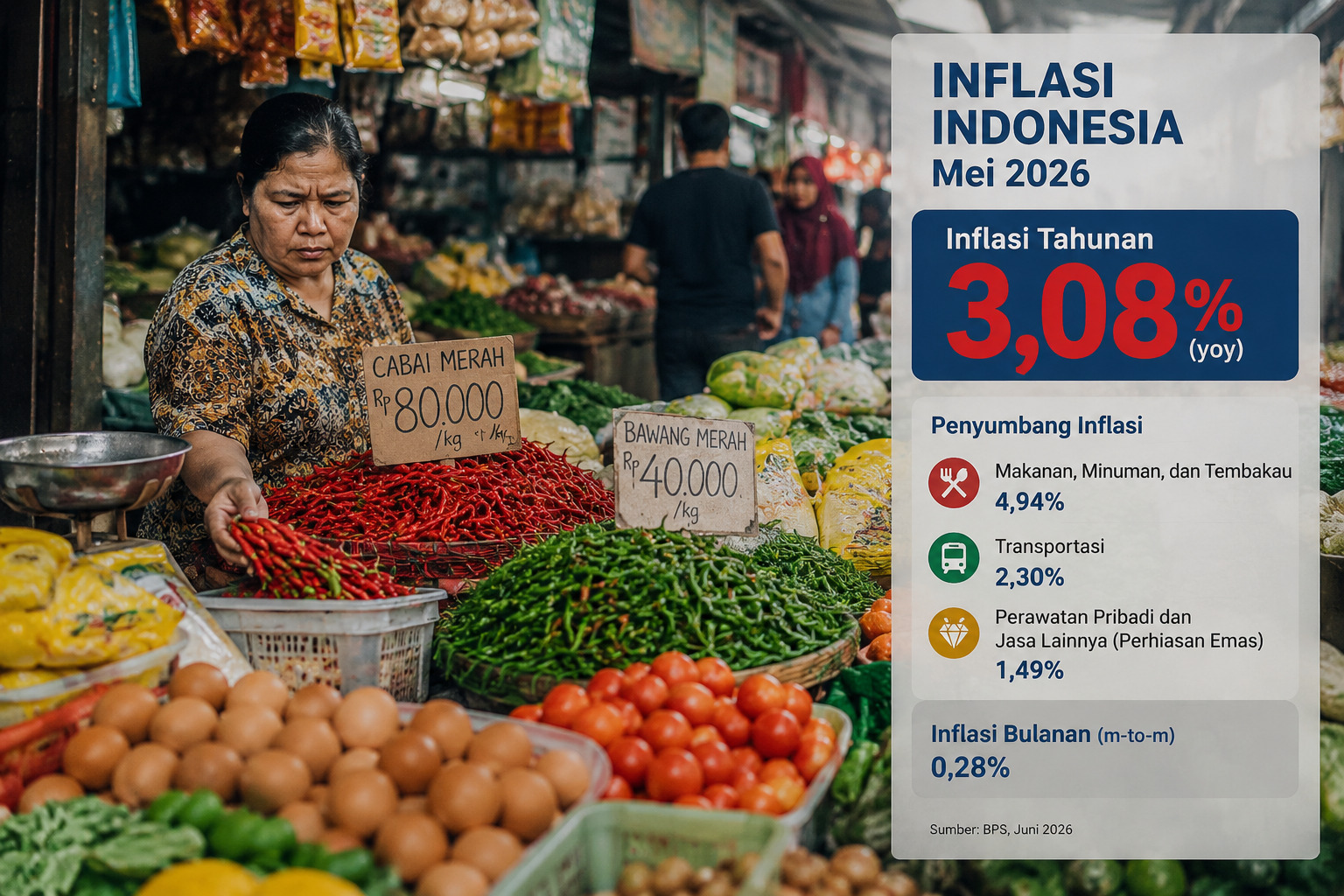
Indonesia's inflation rate accelerated significantly in May 2026, reaching 3.08% year on year, the highest level recorded in recent months and moving closer to the upper limit of Bank Indonesia's target range of 1.5% to 3.5%. The figure was higher than economists' consensus forecast of 2.97% and represented a sharp increase from April's inflation rate of 2.42%. Rising food prices, transportation costs, fuel expenses, and growing imported inflation risks have renewed concerns about consumer purchasing power and economic stability.
While inflation remains within the central bank's official target range, economists are increasingly cautious about the direction of prices in the coming months. The combination of food inflation, rupiah depreciation, and global commodity uncertainty could create additional challenges for policymakers attempting to balance economic growth with price stability. The latest data suggest that Indonesia Inflation is no longer solely a temporary phenomenon but a trend that requires close monitoring from businesses, investors, and households alike.
What Drove Indonesia Inflation Higher in May 2026?
The biggest contributor to May's inflation increase came from the food, beverages, and tobacco category. Statistics Indonesia (BPS) reported that inflation in this category reached 4.94%, making it the largest contributor to overall consumer price growth. Several essential commodities experienced notable price increases, including rice, fresh fish, chicken meat, cooking oil, bird's eye chili, red chili, and machine-made clove cigarettes.
Food prices have always played a critical role in shaping Indonesia Inflation because household spending on food accounts for a substantial portion of consumer expenditure. When staple foods become more expensive, lower and middle-income households feel the impact immediately. Unlike discretionary spending categories, food consumption cannot easily be postponed or reduced, making food inflation particularly sensitive from both an economic and political perspective.
Transportation costs also contributed significantly to inflationary pressures. According to BPS data, transportation inflation reached 2.30% annually. Rising airfare prices, non-subsidized fuel costs, and broader logistics expenses pushed consumer prices higher across multiple sectors. Transportation inflation often has a multiplier effect because higher logistics costs eventually flow through supply chains and affect the prices of goods sold to consumers.
Another notable contributor was the personal care and other services category, particularly gold jewelry. Rising gold prices globally have increased the cost of jewelry products, adding another layer to inflationary pressures. Although jewelry is not considered a basic necessity, its contribution reflects broader price increases across multiple sectors of the economy.
On a monthly basis, inflation reached 0.28% in May, more than double April's monthly inflation rate of 0.13%. This acceleration suggests that price pressures are becoming more widespread rather than remaining concentrated in a few categories.
Why Economists Are Becoming More Cautious
The rise in Indonesia Inflation is concerning not simply because prices are increasing, but because several inflation drivers may persist in the coming months. Economists point to three major risks: food supply disruptions, imported inflation caused by currency weakness, and elevated global energy prices.
The weakening rupiah has become a particularly important factor. The currency has continued to depreciate against the US dollar, reaching record-low levels during 2026. A weaker rupiah increases the cost of imported goods, raw materials, machinery, and fuel. As businesses face higher input costs, many eventually pass those costs on to consumers through higher prices. This phenomenon, commonly known as imported inflation, can sustain inflation even if domestic demand remains relatively stable.
Global energy markets are another source of uncertainty. Rising crude oil prices have already contributed to higher transportation and fuel costs worldwide. Although Indonesia continues to provide fuel subsidies to protect consumers from the full impact of global price increases, government intervention cannot entirely eliminate inflationary pressures across the economy. Higher energy costs eventually affect production, transportation, and distribution activities.
Food inflation also remains difficult to predict. Weather conditions, harvest yields, supply chain disruptions, and seasonal demand fluctuations can all influence food prices. Commodities such as rice, fish, cooking oil, and chili peppers have historically been among the most volatile contributors to Indonesia Inflation, making them a persistent concern for policymakers.
Economists worry that if inflation expectations begin rising among consumers and businesses, the challenge could become more complicated. Once households expect prices to continue increasing, spending behavior changes. Businesses may also adjust pricing strategies more aggressively, creating a cycle that becomes increasingly difficult to control. This is why inflation expectations are closely monitored by central banks around the world.
Bank Indonesia's Response to Rising Inflation
Recognizing these risks, Bank Indonesia has already taken preemptive action. In May 2026, the central bank surprised markets by raising its benchmark interest rate by 50 basis points to 5.25%, marking the first rate increase in two years. The move was intended to stabilize the rupiah and prevent inflation from moving beyond the central bank's target range.
Interest rate increases are one of the most common tools used to manage Indonesia Inflation. Higher rates generally make borrowing more expensive, which can reduce excessive spending and investment activity. At the same time, higher rates can support the currency by attracting capital inflows and improving investor confidence.
However, monetary tightening comes with trade-offs. While higher interest rates may help control inflation, they can also slow economic growth by increasing financing costs for businesses and consumers. Companies may postpone expansion plans, while households may reduce spending on large purchases such as homes, vehicles, and consumer goods.
This balancing act is particularly important in Indonesia, where policymakers are trying to maintain economic growth while ensuring price stability. Too much tightening could weaken economic activity, while insufficient action could allow inflationary pressures to become entrenched.
Despite the recent increase in Indonesia Inflation, Bank Indonesia has maintained its expectation that inflation will remain within the target range through 2027. Nevertheless, the central bank continues to monitor developments closely, especially regarding the exchange rate and global commodity prices.
Impact on Households and Businesses
The effects of rising Indonesia Inflation extend far beyond economic statistics. For households, higher inflation means reduced purchasing power. When prices rise faster than wages, consumers can afford fewer goods and services with the same income. This is especially challenging for lower-income households that spend a larger share of their earnings on food and transportation.
Food inflation is particularly impactful because staple items represent essential daily expenses. Rising prices for rice, fish, cooking oil, and poultry directly affect household budgets. Families may respond by reducing discretionary spending, delaying purchases, or seeking lower-cost alternatives.
Businesses face a different set of challenges. Rising raw material costs, transportation expenses, and imported input prices can squeeze profit margins. Companies must decide whether to absorb these costs or pass them on to customers. Both options carry risks. Absorbing costs reduces profitability, while raising prices can weaken demand.
Sectors heavily dependent on imported materials may experience particularly strong pressure if the rupiah remains weak. Manufacturers, retailers, and logistics providers are likely to continue monitoring exchange rate movements closely over the coming months.
For investors, inflation influences interest rates, bond yields, stock valuations, and currency performance. A sustained rise in Indonesia Inflation could affect investment decisions across multiple asset classes, making inflation data one of the most closely watched economic indicators in the country.
Outlook for Indonesia Inflation in 2026
Looking ahead, the trajectory of Indonesia Inflation will depend on several interconnected factors. Food prices will remain a critical variable, particularly as weather conditions and agricultural production influence supply. Energy prices will continue to be shaped by global market developments and geopolitical uncertainty. Meanwhile, the performance of the rupiah will determine the extent of imported inflation pressures.
Most economists do not currently expect inflation to move dramatically beyond the central bank's target range. However, the latest data indicate that risks are increasing. Inflation has already exceeded market expectations, and multiple price drivers remain active across the economy.
For businesses, the current environment underscores the importance of cost management, pricing strategy, and supply chain resilience. For households, it highlights the need to monitor spending carefully as essential goods become more expensive. And for policymakers, it reinforces the challenge of maintaining economic stability amid a rapidly changing global environment.
The latest figures serve as an important reminder that inflation remains one of the most influential forces shaping economic conditions. While Indonesia continues to demonstrate resilience, the rise of Indonesia Inflation to 3.08% signals that vigilance will be necessary to ensure price stability and sustainable growth throughout the remainder of 2026.
Read More