





 Friday, 23-10-26








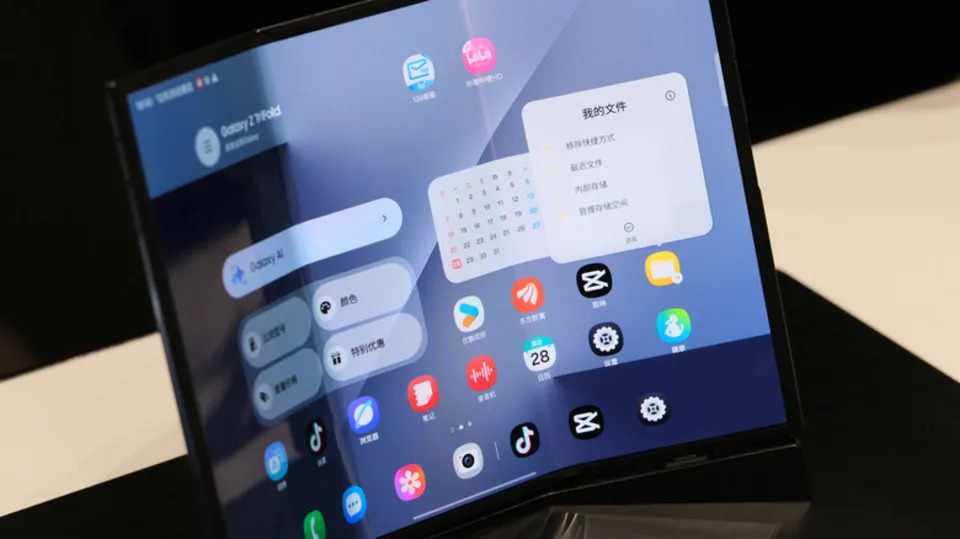
The global Foldable Smartphone Market is entering a critical stage as reports emerge suggesting that Samsung Electronics may reconsider the long term future of its foldable phone production strategy. After years of positioning foldable devices as the next evolution of smartphones, slowing sales growth and shifting consumer preferences are raising serious questions about the sustainability of the segment.
Samsung has long dominated the foldable smartphone category through flagship products such as the Galaxy Z Fold and Galaxy Z Flip series. The company invested heavily in flexible display technology, premium engineering, and marketing campaigns to establish itself as the market leader in foldable devices.
However, despite technological progress and several product generations, the Foldable Smartphone Market still faces major obstacles. High retail prices, durability concerns, limited practical advantages, and weaker than expected consumer demand continue to challenge broader adoption.
The latest speculation surrounding Samsung’s future plans highlights a growing debate within the technology industry. Are foldable smartphones truly the future of mobile devices, or are they becoming a niche premium category unable to reach mainstream consumers?
Samsung’s Foldable Ambitions Face Market Reality
For several years, Samsung aggressively pushed foldable devices as the future of mobile innovation. The company introduced increasingly refined models featuring thinner designs, stronger hinges, improved battery life, and enhanced multitasking capabilities.
Samsung initially gained a major advantage because competitors were still experimenting with flexible display technology. The company became synonymous with the Foldable Smartphone Market, helping shape consumer awareness and industry expectations.
However, market momentum appears to be slowing. Industry analysts have reported that global foldable smartphone shipments are growing at a slower pace than expected. While the category generated excitement during its early years, mainstream consumers remain hesitant to upgrade from conventional flagship smartphones.
One major challenge is pricing. Foldable phones typically cost significantly more than traditional premium devices. Many consumers still view foldables as luxury gadgets rather than practical everyday smartphones.
Durability concerns also continue to affect purchasing decisions. Although Samsung has improved hinge technology and display protection over multiple generations, foldable screens remain more fragile than standard smartphone displays in the eyes of many consumers.
The Foldable Smartphone Market is therefore facing a difficult transition from novelty innovation to mainstream adoption. Without broader consumer demand, manufacturers may struggle to justify the high research and development costs associated with foldable technology.
Why the Foldable Smartphone Market Is Losing Momentum
Several structural issues are slowing the growth of the Foldable Smartphone Market globally. While foldable devices attract attention because of their futuristic appearance, many consumers still question whether the technology provides meaningful practical benefits.
Traditional flagship smartphones already offer powerful cameras, advanced processors, large displays, and long battery life. For many users, foldable devices do not deliver enough additional value to justify their higher prices.
Battery limitations remain another concern. Foldable devices require complex engineering to fit batteries into thinner flexible bodies. As a result, battery performance sometimes struggles to match expectations for premium smartphones.
Software optimization is also an ongoing challenge. Although Android developers have improved support for foldable displays, not all applications function seamlessly across folding screen formats. User experiences can vary depending on how apps adapt to different screen orientations and multitasking features.
Competition from other innovation trends may also be weakening foldable momentum. Artificial intelligence integration, wearable devices, augmented reality, and advanced camera systems are increasingly becoming stronger selling points in the smartphone industry.
The Foldable Smartphone Market is also affected by broader economic conditions. Consumers worldwide are becoming more cautious about spending on expensive electronics amid inflation concerns and slower global economic growth.
Many smartphone users are now holding onto their devices for longer periods rather than upgrading annually. This behavior creates additional pressure for premium categories such as foldables, which depend heavily on early adopters and high end consumers.
Chinese Brands Intensify Competition
While Samsung remains the dominant player in the Foldable Smartphone Market, competition from Chinese smartphone manufacturers is intensifying rapidly.
Brands such as Huawei, Xiaomi, Oppo, and Honor are aggressively developing foldable devices with thinner designs, improved hardware, and competitive pricing.
Chinese manufacturers are increasingly focusing on engineering advantages such as lighter bodies, nearly invisible display creases, and faster charging systems. Some analysts believe these companies are narrowing the technology gap with Samsung more quickly than expected.
Huawei in particular has attracted attention despite international sanctions affecting its global smartphone business. The company continues investing in foldable innovation for the Chinese domestic market, where demand for premium technology products remains relatively strong.
As competition increases, Samsung may face greater pressure on profit margins within the Foldable Smartphone Market. Developing foldable devices requires significant investment in research, display manufacturing, hinge mechanisms, and software optimization.
If market growth slows while competition intensifies, profitability could become increasingly difficult even for established leaders.
Foldable Technology Still Has Long Term Potential
Despite current challenges, many analysts believe the Foldable Smartphone Market still has long term potential. Flexible display technology continues evolving, and future generations may eventually solve several of today’s limitations.
Advancements in materials science could improve durability and reduce visible screen creases. Better battery technology may enable thinner devices with longer operating times. Manufacturing efficiencies could also gradually lower prices and make foldables more accessible to mainstream consumers.
Some industry experts argue that foldables represent an important transitional stage toward future computing devices that combine smartphones, tablets, and wearable technology into more flexible form factors.
Samsung itself has repeatedly emphasized its commitment to innovation in flexible displays and mobile experiences. Even if production strategies change, the company is unlikely to abandon foldable research entirely because it remains one of Samsung’s key differentiators in the premium smartphone segment.
The Foldable Smartphone Market may therefore evolve into a more specialized category rather than disappearing altogether. Similar to gaming laptops or premium tablets, foldable devices could maintain a loyal niche audience even without achieving mass market dominance.
Business users, multitasking professionals, mobile gamers, and technology enthusiasts may continue finding value in larger flexible displays and productivity oriented features.
The Future of Smartphone Innovation
The uncertainty surrounding the Foldable Smartphone Market reflects broader changes occurring across the global technology industry. Smartphone innovation is becoming increasingly difficult because modern devices are already highly advanced.
Manufacturers now compete not only through hardware improvements but also through software ecosystems, artificial intelligence integration, cloud services, and user experience enhancements.
Artificial intelligence may become the next major battleground. Smartphone companies are rapidly integrating AI assistants, generative AI tools, and intelligent personalization features directly into devices.
In this environment, foldable hardware alone may no longer be enough to drive consumer excitement. Companies must demonstrate how new form factors improve real world experiences rather than simply offering futuristic designs.
Samsung’s reported reassessment of foldable production highlights how even industry leaders must adapt to shifting market realities. The company helped pioneer the Foldable Smartphone Market, but long term success will depend on whether consumers ultimately embrace foldable devices as essential tools rather than premium experiments.
The coming years will likely determine whether foldable smartphones become a permanent mainstream category or remain a specialized segment within the broader mobile technology industry.
Regardless of the outcome, the Foldable Smartphone Market has already influenced smartphone design innovation and pushed manufacturers to explore more experimental approaches to mobile computing.
Read More