





 Monday, 29-06-26








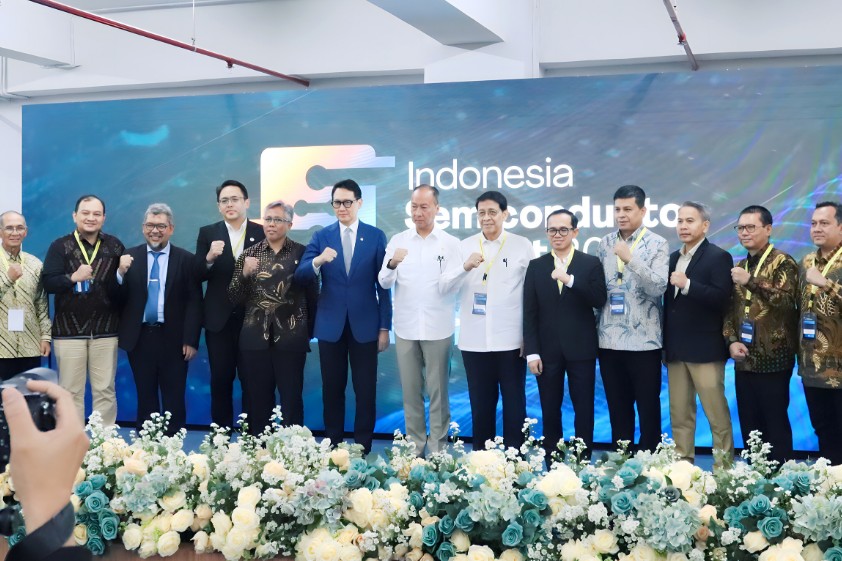
The Indonesia Semiconductor Summit (ISS) 2026 was held on 29–30 January 2026 at ITB Innovation Park, Bandung, organized by the Indonesia Chip Design Collaborative Center (ICDeC).
Supported by the Ministry of Foreign Affairs (Kemlu RI), the summit marked Indonesia’s first international forum in the semiconductor sector.
The event aimed to foster strategic alliances among domestic stakeholders and accelerate the development of Indonesia’s semiconductor ecosystem.
Participants included representatives from government, academia, and private industry, as well as international speakers from Germany, the Netherlands, the UK, the US, Japan, Malaysia, and the Asian Development Bank (ADB).
Deputy Foreign Minister Arif Havas Oegroseno emphasized that Indonesia’s economic diplomacy in semiconductors focuses on building global and regional partnerships.
"Indonesia needs to build strategic alliances with global and regional partners to accelerate the development of the national semiconductor industry," he said, highlighting the importance of these collaborations for technology transfer and positioning Indonesia in the global technology sector.
Domestic Market Potential and Industrial Strategy
Minister of Industry Agus Gumiwang Kartasasmita highlighted Indonesia’s strong manufacturing position in ASEAN and the large domestic market, particularly in smartphones and electric vehicles.
He noted that Indonesia produces 30–60 million smartphones per year, with laptops projected at 1.57 million units in 2026.
Vehicle production in 2025 reached 803,867 units, including hybrids and electric vehicles, which require up to three times more semiconductor components than conventional vehicles.
The government also aims to build silica smelter infrastructure, ensuring raw material independence and strengthening Indonesia’s position in the global value chain.
Collaboration Between Academia and Industry
Leaders from ITB and ICDeC stressed the importance of collaboration between academic institutions and industry.
Rector Prof. Tatacipta Dirgantara and ICDeC Chairman Prof. Trio Adiono highlighted synergy as key to national technological innovation.
Dr. Fauzan Adziman from the Ministry of Education, Science, and Technology explained the strategy for semiconductor human resource development, focusing on research and cultivating chip design expertise.
Import Dependence and Industrial Challenges
Despite existing assembly and testing facilities and domestic IC design companies, Indonesia still heavily depends on imported semiconductors.
According to BPS, import value rose from USD 2.33 billion in 2020 to USD 4.87 billion in January–November 2025, with major suppliers including Taiwan, China, South Korea, the Philippines, Malaysia, Singapore, and Japan.
"The high dependency on imports is a signal for national industrial resilience," Minister Agus said, stressing that strengthening domestic chip design and intellectual property is critical for technological independence.
The national semiconductor roadmap focuses on four pillars: material, design, fabrication (front-end), and assembly, testing, and packaging (back-end).
Supporting initiatives include human resource development, research, innovation, infrastructure, and industrial policy.
ICDeC: Strengthening National Chip Design Capabilities
The Indonesia Chip Design Collaborative Center (ICDeC) was officially launched at ISS 2026 as a nonprofit initiative by the Ministry of Industry, PT Hartono Istana Teknologi (Polytron), and experts from 13 universities, with 16 partner universities.
ICDeC focuses on chip design development (fabless), global-standard training, research and development, and testing facilities including mini wafer fabrication.
The center is designed to develop national capacity, facilitate collaboration between government, industry, and academia, and support Indonesia’s integration into the global semiconductor value chain.
ISS 2026 also included workshops aimed at technology transfer, human resource development, and supply chain strengthening, reinforcing Indonesia’s role as a strategic participant in the global semiconductor market.
PHOTO: ITB
This article is a summary of several original articles. The full versions can be read at the following links:
https://kemlu.go.id/berita/berita/indonesia-semiconductor-summit-2026-perkuat-aliansi-strategis-dan-kemandirian-industri-teknologi-tinggi?type=publication
https://www.kemenperin.go.id/artikel/72482539/Kemenperin-Perkuat-Ekosistem-Semikonduktor-Nasional-melalui-Pengembangan-Desain-Chip-dan-SDM
https://dkst.itb.ac.id/tuan-rumah-indonesia-semiconductor-summit-2026-dkst-itb-fasilitasi-peluncuran-indonesia-chip-design-collaborative-center-icdec/#prettyPhoto
https://money.kompas.com/read/2026/01/30/110000926/impor-semikonduktor-naik-tajam-indonesia-dapat-sinyal-peringatan?page=all#page2
This article was created with AI assistance.
We make every effort to ensure the accuracy of our content, some information may be incorrect or outdated. Please let us know of any corrections at [email protected].
Read More