





 Thursday, 08-10-26








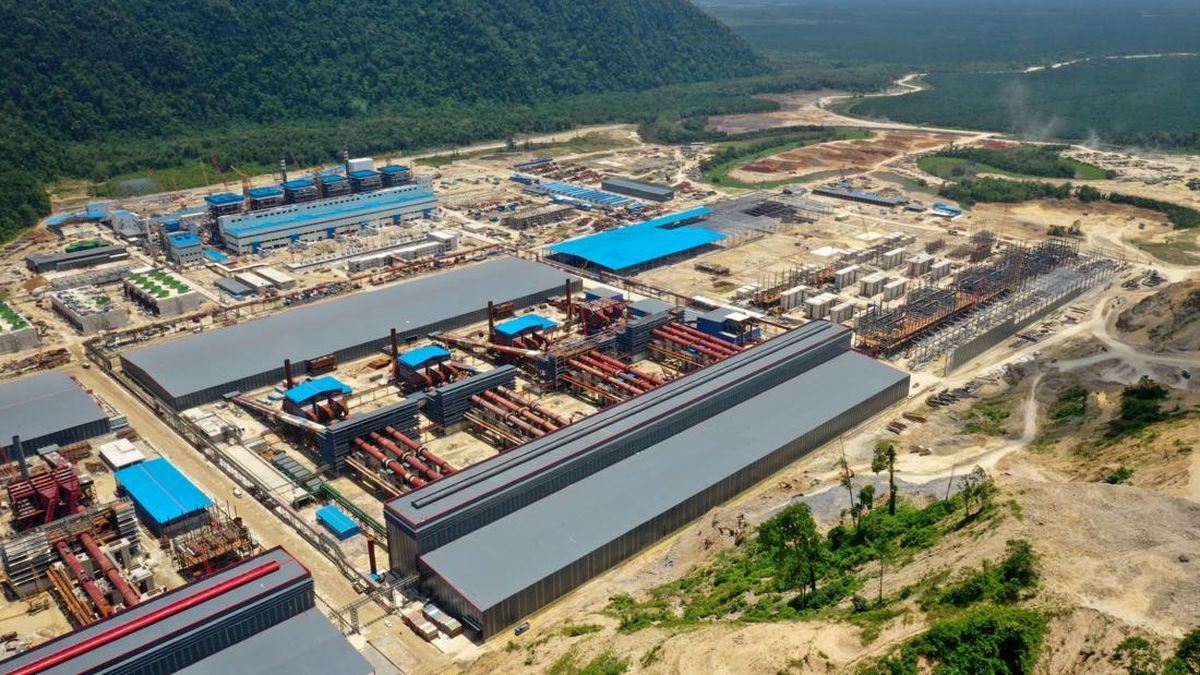
Indonesia has consolidated its position as the undisputed centerpiece of the global nickel market, driven by an aggressive national downstream processing mandate that transformed the archipelago from a raw material exporter into a refined industrial powerhouse. However, maintaining this dominant position requires a delicate equilibrium between industrial capacity and resource extraction. The Ministry of Energy and Mineral Resources recently revealed that annual nickel smelter demand across domestic processing and refining facilities has reached approximately 320 million metric tons. This staggering volume reflects the rapid commissioning of processing facilities across major industrial centers in Sulawesi and Maluku.
To prevent domestic supply chaos, the Ministry of Energy and Mineral Resources regulates raw ore extraction through the formal Work Plan and Budget, locally known as the RKAB. Director of Mineral Business Development Cecep Mochammad Yasin confirmed that official production quotas are continuously calibrated to match verified operational needs while protecting national geological reserves. In early 2026, the government initially capped national production allowances between 260 million and 270 million tons. Quarterly evaluations and mid year revision opportunities allow regulatory authorities to adjust these quotas dynamically as new smelters complete commissioning and enter full production.
The sheer magnitude of modern nickel smelter demand underscores the success of Indonesia's industrial transformation, but it also exposes significant resource vulnerabilities. Unchecked extraction risks accelerating the depletion of high grade saprolite reserves used for stainless steel production, as well as limonit ore utilized in high pressure acid leaching plants for electric vehicle battery chemistry. Consequently, regulatory authorities conduct rigorous technical audits before approving quota adjustments, ensuring that mining companies demonstrate proven real reserves, robust environmental compliance, and consistent operational track records.
Balancing Industrial Growth and Raw Mineral Reserves
Managing the growth of the processing sector requires clear alignment between mine lifespans and industrial throughput. When industrial facilities expand faster than domestic mining capabilities can sustainably support, severe structural imbalances emerge. The government addresses this risk by matching extraction quotas directly to the verified technical capacity of operating processing plants rather than relying solely on requested volumes from mining concession holders.
During the first half of 2026, national ore production reached nearly 174 million tons, demonstrating steady progress toward fulfilling annual processing requirements. However, regulatory officials emphasize that approval for additional production quotas is not automatic. Companies seeking RKAB revisions must undergo thorough field verifications to confirm that their declared ore deposits match actual mine site reserves. This systematic approach prevents artificial overreporting and ensures that extraction rates remain aligned with realistic geological boundaries.
The balance between saprolite and limonit ore is another crucial factor in long term mineral management. While saprolite has historically dominated processing volumes for nickel pig iron and ferronickel production, the rapid expansion of high pressure acid leaching plants has generated unprecedented interest in limonit deposits. By monitoring extraction ratios across both ore types, government planners aim to manage growing nickel smelter demand while extending the overall lifespan of the nation's mineral wealth.
Strategic Interventions to Prevent Market Disruption and Oversupply
Beyond physical supply constraints, government quota management serves as a critical mechanism for preserving global price stability. Energy and Mineral Resources Minister Bahlil Lahadalia highlighted that unregulated ore production can quickly lead to global market saturation, triggering sharp price declines that harm domestic producers and reduce national tax revenues. By maintaining firm control over extraction quotas in response to rising nickel smelter demand, Indonesia effectively protects the market value of its mineral assets on the international stage.
Non-tax state revenue from the mineral sector, known locally as PNBP, reached 21 trillion rupiah in the first eight months of 2026. This significant financial contribution demonstrates the fiscal benefits of disciplined market management. Allowing uncontrolled production might temporarily boost volume, but the resulting price drop would undermine long term tax collections and weaken the financial viability of domestic processing operations.
Furthermore, calibrated extraction quotas incentivize industrial facilities to improve operational efficiency and reduce material waste. Smelter operators facing tight raw material allocations are encouraged to optimize recovery rates, adopt energy efficient technologies, and invest in secondary processing capabilities. This focus on efficiency strengthens the overall competitiveness of the Indonesian processing ecosystem while minimizing the total environmental footprint per ton of refined metal.
Impact on Foreign Trade and Regional Supply Chains
The surging nickel smelter demand has also reshaped regional trade flows across Southeast Asia. In instances where domestic mining quotas or localized logistics bottlenecks create temporary supply shortfalls, processing plants have increasingly turned to foreign raw materials to sustain continuous operations. Industry reports indicate that Indonesian processing facilities imported over 13 million tons of nickel ore from the Philippines during the first eight months of 2026 alone.
This growing cross-border trade highlights a sophisticated regional dynamic where Indonesia serves as the central processing and refining hub, while neighboring nations supply supplementary feedstocks. Importing ore from regional partners allows major industrial parks in Weda Bay and Morowali to satisfy their nickel smelter demand without overstraining local mining concessions or exceeding approved domestic RKAB limits.
This regional integration also enhances national energy security and reserve management. By utilizing imported feedstocks during periods of peak processing activity, Indonesia effectively preserves its own high grade domestic deposits for future use. This strategic flexibility enables domestic facilities to fulfill international export commitments for nickel pig iron, matte, and battery chemicals while maintaining absolute control over national reserve depletion rates.
Environmental Stewardship and Sustainable Downstream Expansion
As global consumers and international regulatory bodies place greater emphasis on environmental, social, and governance criteria, Indonesia's mining policy is rapidly evolving to incorporate strict sustainability standards. Aligning rising nickel smelter demand with responsible environmental stewardship is essential for maintaining access to premium international markets, particularly in Europe and North America.
Mining operations seeking RKAB quota expansions must now demonstrate comprehensive land rehabilitation plans, responsible overburden management, and effective water treatment systems. The environmental footprint of large scale open pit mining in tropical regions presents serious challenges, including soil erosion, river sedimentation, and biodiversity loss. Consequently, regulatory agencies are making environmental performance a non-negotiable prerequisite for quota approvals.
In addition, energy consumption within processing plants is undergoing a gradual green transition. Many facilities are actively exploring captive solar installations, floating photovoltaic systems, and grid connections powered by renewable energy sources to reduce their carbon intensity. Combining sustainable mining practices with lower emission processing technologies ensures that Indonesian nickel products remain highly competitive in global electric vehicle supply chains.
Future Projections and Industry Roadmap for Indonesian Nickel
Looking ahead, the long term outlook for Indonesia's processing sector will be defined by continuous policy refinement and technological adaptation. Industry projections suggest that if all 79 planned and operational downstream facilities reach full capacity, national raw material requirements could eventually surpass 400 million tons annually. Managing this extraordinary volume will require unprecedented coordination between government agencies, mining companies, and industrial investors.
To support this long term expansion, the government is prioritizing expanded geological exploration to identify new unexploited reserves across eastern Indonesia. Modern exploration techniques, including geophysical surveys and deep core drilling, are being deployed to upgrade inferred resources into proven economic reserves, providing greater long term visibility for industrial planners and international investors.
Ultimately, Indonesia's active management of its mineral resources demonstrates a mature industrial policy that prioritizes long term value creation over short term volume gains. By continuously balancing extraction allowances with processing capacity, environmental protection, and global market dynamics, Indonesia ensures that its nickel wealth will continue to drive national economic prosperity for decades to come.
Read More