





 Thursday, 08-10-26








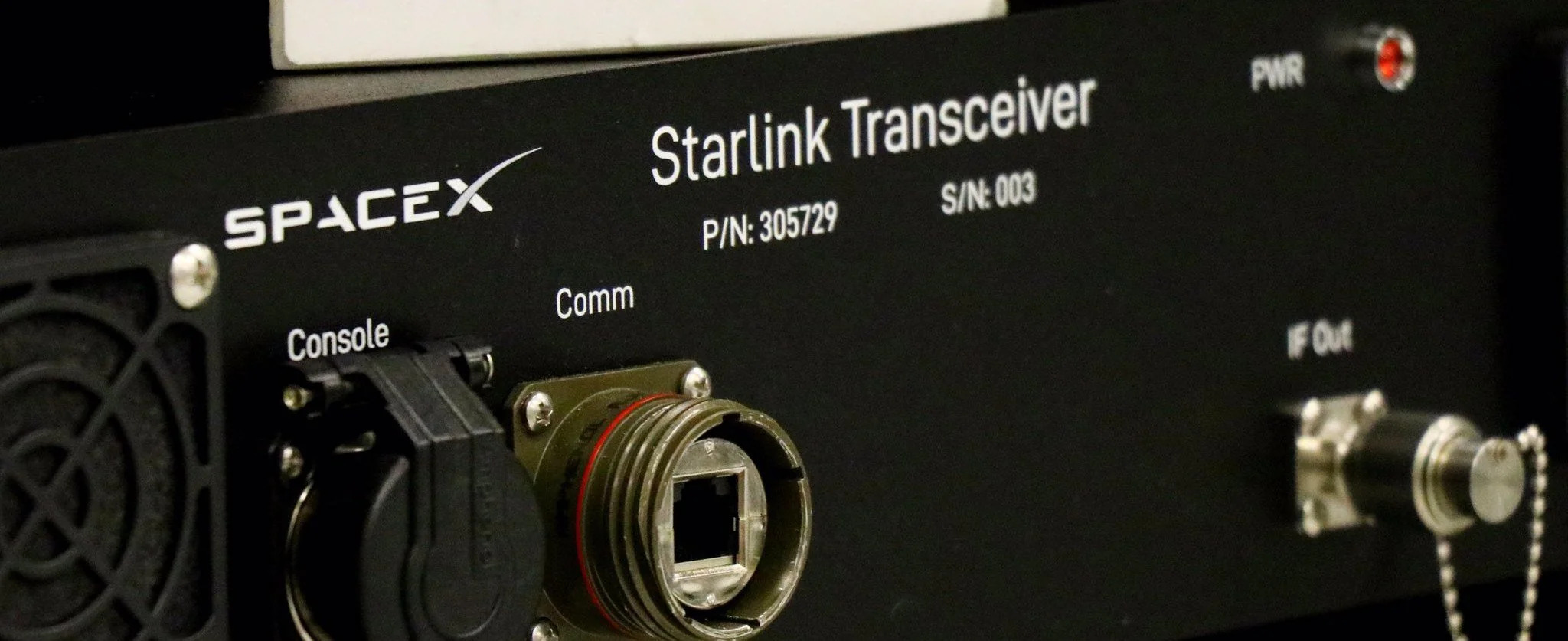
In a bold move that redefines high-tech manufacturing and supply chain resilience, SpaceX has reportedly decided to produce its satellite transceiver components in-house, moving away from long-standing Chinese suppliers. Transceivers serve as the critical communication links in satellite systems, bridging the gap between orbiters high above the Earth and user terminals on the ground. By bringing Starlink transceiver production directly under its operational umbrella, the American aerospace giant aims to mitigate geopolitical risks, streamline hardware iteration, and protect vital intellectual property. This strategic transition reflects a growing trend among global technology leaders seeking greater control over sensitive hardware in an increasingly complex trade environment.
As the Starlink constellation continues its rapid global expansion, the necessity for robust, scalable, and secure manufacturing processes has never been more urgent. Operating thousands of active low Earth orbit satellites demands a continuous supply of highly specialized radio frequency and optical hardware. By eliminating reliance on overseas vendors for these vital components, SpaceX reinforces its vertical integration model while establishing a precedent for foreign technology companies evaluating supply chain vulnerabilities.
The Strategic Drive Behind In-House Manufacturing
The decision to internalize complex component manufacturing is a natural evolution for SpaceX, a company famous for designing and building rocket components, spacecraft structures, and engine systems under one roof. Transitioning to internal Starlink transceiver production grants the aerospace manufacturer complete control over component design, quality control, and assembly timelines. External component suppliers often present risks related to lead times, component defects, and capacity constraints, all of which can impede aggressive deployment schedules.
Transceivers are responsible for transmitting and receiving radio frequency or optical signals between space vehicles and ground stations. Because these units handle sensitive data packets and operate under harsh environmental conditions in orbit, any component failure can impair network performance or jeopardize entire satellite nodes. By manufacturing these transceivers internally, SpaceX engineers can implement immediate hardware revisions without navigating lengthy vendor contract renegotiations or waiting for overseas factory retooling. This agility allows the engineering team to deploy hardware updates directly into production lines in real time.
Reducing Strategic Reliance on Chinese Suppliers
The move to phase out Chinese hardware partners highlights the growing geopolitical complexity surrounding global technology trade. Tensions between major global economies, accompanied by strict export regulations and changing tariff frameworks, have pushed Western tech developers to re-evaluate their offshore supply networks. By mastering Starlink transceiver production within its own facilities, SpaceX insulates itself from potential export restrictions, customs delays, and trade disputes that could disrupt component availability.
Furthermore, security considerations play a decisive role when selecting suppliers for dual-use technologies. Starlink services are increasingly utilized not only by commercial consumers and enterprise customers but also by government agencies and military defense organizations under initiatives like Starshield. Maintaining absolute oversight of hardware origin and manufacturing integrity is critical when serving defense partners who require strict compliance with national security standards. Manufacturing transceivers internally eliminates potential security vulnerabilities associated with foreign supply chains, ensuring that every unit complies with stringent defense and security requirements.
Vertical Integration as a Core Engineering Philosophy
Vertical integration has always been the cornerstone of SpaceX's competitive advantage in aerospace and telecommunications. While conventional aerospace contractors historically relied on tiered networks of specialized subcontractors, SpaceX chose to build manufacturing capabilities from the ground up. Internalizing Starlink transceiver production extends this philosophy into the realm of advanced microelectronics and radio frequency engineering.
By managing raw material procurement, circuit board assembly, testing, and system integration within domestic facilities, the company achieves unmatched operational synergy. When an issue arises during field testing or orbit validation, feedback loops between software developers, hardware designers, and manufacturing engineers occur almost instantaneously. This close integration drastically reduces development cycles, allowing the team to iterate hardware generations in months rather than the multi-year timelines typical of traditional telecom equipment manufacturers.
Technical Significance of Transceivers in Satellite Networks
Satellite transceivers are sophisticated electronic assemblies capable of translating high-frequency electromagnetic signals into digital data and vice versa. In the context of satellite internet constellations, these components operate at microwave frequencies such as Ku-band, Ka-band, and E-band, requiring precision engineering to minimize signal noise, heat generation, and power consumption.
The technical requirements involved in Starlink transceiver production demand extreme precision during automated surface-mount assembly and thermal management design. Each transceiver must withstand violent launch vibrations, rapid thermal cycling in vacuum environments, and exposure to cosmic radiation. Designing and manufacturing these modules in-house allows engineers to tailor thermal dissipation features and power efficiency directly to the custom architecture of Starlink satellites and user dishes. Consequently, the resulting hardware achieves higher bandwidth density and lower power consumption compared to off-the-shelf commercial components.
Economic Scale and Cost Optimization for Global Expansion
Beyond technical performance and supply security, economics remain a fundamental driver for internalizing component production. To achieve profitable global coverage, satellite internet providers must produce millions of user terminals alongside thousands of satellite units at minimal cost. Scaling up domestic Starlink transceiver production enables the enterprise to drive down per-unit manufacturing costs through high-volume automated assembly and simplified procurement logistics.
When relying on external suppliers, component markups, licensing fees, and international shipping logistics add substantial cumulative expenses to every user terminal and satellite bus. By eliminating third-party profit margins and optimizing manufacturing lines, SpaceX can pass cost savings along to consumers or reinvest capital into constellation expansion. Lower hardware costs make satellite user terminals more affordable for rural communities, maritime operators, and aviation clients around the world, expanding Starlink's addressable market.
The Broader Implications for Global Tech Supply Chains
The strategic transition toward localized Starlink transceiver production marks a new milestone in the broader realignment of global technology supply chains. Major corporations in sectors ranging from automotive manufacturing to high-performance computing are actively nearshoring or insourcing vital component production to guard against economic instability and trade friction. SpaceX's decision demonstrates that high-volume, precision electronic hardware can be economically produced in domestic facilities when paired with advanced automation and streamlined design principles.
As other technology developers observe the benefits of vertical manufacturing, the industry at large may accelerate its departure from single-region component sourcing. For the telecommunications and aerospace sectors, this shift emphasizes that long-term competitive success depends not only on software innovation but also on complete mastery over hardware manufacturing pipelines.
Ultimately, bringing transceiver manufacturing in-house solidifies Starlink's position as a dominant force in satellite broadband. By combining hardware independence, economic scalability, and rapid technical iteration, SpaceX ensures that its satellite constellation remains resilient, secure, and ready to meet growing connectivity demands across the globe.
Read More