





 Monday, 05-10-26








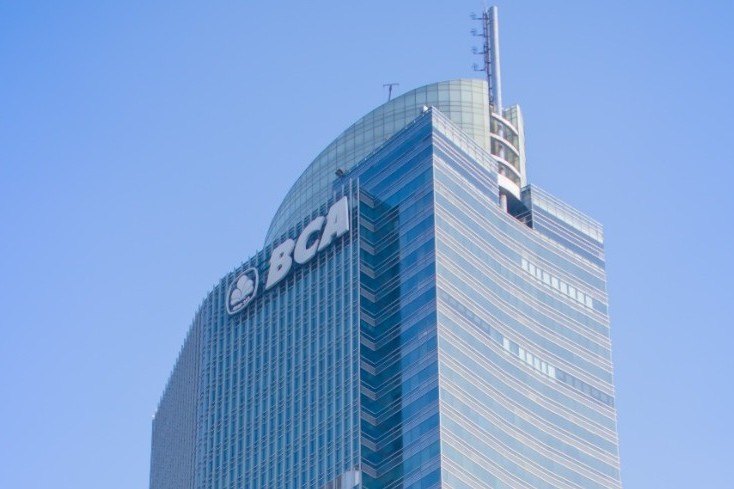
Rumors of a hostile takeover of PT Bank Central Asia Tbk (BBCA) are drawing attention from market participants despite an official denial from the bank's management (25/09).
BCA said reports specifically naming businessman Andi Syamsuddin Arsyad, or Haji Isam, as a potential buyer of BBCA shares were untrue.
As of the publication of the source article, there had been no official announcement of a plan to change BCA's controlling shareholder. However, several sources cited by Investortrust said the probability of a hostile takeover had reached 80% and that control of BCA could move to a party that had already been "determined."
The issue concerns one of Indonesia's largest banks and one of the companies with the largest market capitalizations on the Indonesia Stock Exchange (IDX). As of June 2026, BCA had total assets of Rp1,661 trillion, loans of Rp1,036 trillion and third-party funds of Rp1,284 trillion, while serving more than 41 million customer accounts.
A change of control at BCA, if it occurs, would therefore affect more than a transaction between two investor groups. It would involve the interests of customers, public investors, creditors, employees, regulators and global institutional investors.
BCA Takeover Rumors Raise Concerns Over Market Confidence
The source article highlights confidence as a key issue because banking is a business based on trust. A change of control perceived as lacking transparency, not following market mechanisms or creating uncertainty over bank governance could have wider consequences.
BCA's history also shows how sensitive banking operations can be to confidence. During Indonesia's 1998 monetary crisis, BCA experienced a bank run, became a Bank Take Over (BTO), and entered a recapitalization and restructuring program conducted by the Badan Penyehatan Perbankan Nasional (BPPN).
In 1999, the government through BPPN controlled 92.8% of BCA's shares. However, the source article notes that a change in shareholders does not automatically mean another bank run would occur.
The risk would depend on customers' perceptions of the safety of their funds, the bank's liquidity, management continuity and the credibility of the new controlling shareholder.
Capital market observer Elandry Pratama said confidence was the most important factor. He said a change in shareholders would not automatically trigger a bank run if the process was transparent, BCA's fundamentals remained strong and customers continued to trust management.
He also said prolonged uncertainty could reduce investors' risk appetite and eventually affect market liquidity. If a change of control occurs, the process must preserve confidence among customers and market participants.
BCA Ownership Change Raises Funding and Regulatory Questions
The takeover issue also raises questions about investment certainty in Indonesia. Investors would need to consider not only who could acquire BCA, but also whether ownership rights, contracts, regulations and market mechanisms continue to be respected.
After the 1998 crisis, the government through BPPN began the process of divesting its BCA holdings. In 2000, 22.5% of BCA shares were sold through an initial public offering. In 2001, the government sold another 10% through a secondary public offering.
In 2002, FarIndo Investment (Mauritius) Limited acquired 51% of BCA through a strategic private placement tender process. The government eventually sold its remaining ownership in 2005.
Currently, PT Dwimuria Investama Andalan is BCA's controlling shareholder, with a 54.94% stake, equivalent to approximately 67.73 billion shares. BCA identifies Robert Budi Hartono and Bambang Hartono as shareholders of Dwimuria and the ultimate controllers of BCA.
No other shareholder holds more than 5% of BCA. Therefore, if the 54.94% stake held by Dwimuria were transferred, it would represent a change of control at one of Indonesia's largest banks.
Funding is another major question surrounding a possible transaction. BBCA closed at Rp6,100 per share on Friday, October 2, 2026. Based on Dwimuria's approximately 67.73 billion shares, the market value of the stake was around Rp413 trillion.
The actual transaction value could be different because a change-of-control transaction could involve a premium, discount, negotiations and applicable regulatory provisions. At Rp6,100 per share, BBCA had a price-to-earnings ratio of approximately 12.93 times.
The size of the transaction makes the source of funds an important issue. Questions include whether the funds would come from the buyer's own capital, loans, an investor consortium, financial instruments or a combination of sources.
Elandry said the possibility of an acquisition through BPI Danantara should be viewed based on its mandate and applicable rules.
"What is most important is the source of funds, the transaction structure and its opportunity cost. Productive state assets should not be used without a clear calculation of return and risk," Elandry told Investortrust.
He said the same considerations would apply if the buyer came from a private business group. Funding capacity, transaction structure, fit-and-proper testing, source of funds and regulatory approval would all be relevant to a change of control at a bank.
The change of control would also have to comply with capital market and banking regulations. POJK No. 9/POJK.04/2018 regulates takeovers of public companies, including the obligation for a new controller to conduct a Mandatory Tender Offer (MTO) when the conditions under the regulation are met.
The regulation also covers the mechanism, information disclosure and settlement of the Mandatory Tender Offer. Elandry said a change of control in a public company generally creates a Mandatory Tender Offer obligation under OJK rules, subject to regulatory exceptions.
He said that if BCA's control changes, the transaction should be transparent, use an accountable valuation and protect public investors.
"The ownership issue should not add uncertainty to the market and pressure market sentiment or Indonesia's capital flows," he said.
BCA Fundamentals Remain Solid Despite Market Pressure
The source article separates the takeover rumors from BCA's financial fundamentals. Through the first half of 2026, BCA's performance remained solid.
As of June 2026, BCA's loans grew 8% year on year to Rp1,036 trillion, exceeding Rp1,000 trillion for the first time. CASA, or low-cost funds, increased 10.2% to Rp1,082 trillion, while total third-party funds rose 7.9% to Rp1,284 trillion.
BCA and its subsidiaries recorded net profit of Rp29.5 trillion in the first half of 2026. The bank also distributed an interim dividend of Rp3.07 trillion for the third quarter of the 2026 financial year.
BCA President Director Hendra Lembong said the dividend distribution considered the bank's solid capital position, adequate liquidity, business development and maintained asset quality.
BBCA shares closed at Rp6,100 on October 2, 2026, up 1.67% from the previous trading day. At that price, BBCA's market capitalization was around Rp749 trillion based on the number of outstanding shares used by market data providers, with a price-to-earnings ratio of approximately 12.93 times.
The source article states that there is not enough evidence to conclude that pressure on BBCA or foreign selling has mainly resulted from the hostile takeover rumor. The timing between the rumor and the share price decline does not by itself establish a cause-and-effect relationship.
Foreign outflows from Indonesia are broader and are influenced by global conditions, the rupiah exchange rate, interest rates, commodity prices, geopolitical developments and changes in global investor portfolio allocations.
By Friday, October 2, 2026, foreign investors had recorded net selling of approximately Rp82.55 trillion in Indonesia during 2026. The Jakarta Composite Index (IHSG) was also under significant pressure from the beginning of the year.
MSCI in July 2026 maintained several measures concerning Indonesian securities. These included freezing increases in the Foreign Inclusion Factor (FIF) and Number of Shares (NOS), not adding new shares to the MSCI Investable Market Indexes, and not applying upward migration between index categories until further notice.
In this situation, uncertainty surrounding the ownership of one of Indonesia's largest banks could become an additional risk factor for the market.
Traderindo capital market analyst Wahyu Tri Laksono said the BCA takeover issue was among the domestic sentiments being monitored by investors amid global developments and concerns over legal certainty.
He said share sales and acquisitions could generally be conducted as long as they complied with OJK regulations, banking rules and other applicable provisions. However, from a market perspective, a change of control perceived as resulting from non-commercial intervention could create concerns about governance.
"A change of control that is political or forced risks damaging market confidence," Wahyu told Investortrust.
Wahyu also emphasized funding transparency. For a transaction involving a bank as large as BCA, he said the buyer's identity, source of funds and transaction structure should be clearly disclosed according to information disclosure requirements.
Uncertainty over those matters could create further speculation and increase investors' perception of risk.
Transparency Remains Central to Any BCA Ownership Change
Elandry said the BCA issue should currently be viewed as a scenario rather than a confirmed transaction.
"I think we need to be careful because so far there has been no official confirmation that BCA will be taken over. So it is more appropriate to view it as a scenario, not a transaction that has already been confirmed," Elandry said.
If the Hartono family's controlling stake through Dwimuria were eventually transferred, the impact would depend on who the buyer was, the transaction valuation, the source of financing and BCA's governance following the change of control.
The source article states that shareholders can sell their shares and other investors can acquire them as long as the transactions are lawful and comply with applicable regulations.
The situation would be different if a change of control were perceived as forced, non-transparent, outside market mechanisms or insufficiently protective of public shareholders.
For global investors, questions could extend beyond BCA to the protection of ownership rights in Indonesia, the certainty of investments acquired through lawful processes and whether the rules apply equally to market participants.
Greater uncertainty could increase the risk premium demanded by investors. This could increase the cost of capital for Indonesian companies and affect Indonesia's attractiveness as an investment destination.
If a change of control at BCA does occur, the source article states that the process should be market-based, transparent and fully compliant with OJK rules, capital market regulations, banking regulations and oversight by the relevant authorities.
The source of funds should be clear, the valuation should be accountable, public shareholders' interests should be protected, and BCA's management should maintain independence and professionalism.
If there is no plan to change the controlling shareholder, consistent clarification from the relevant parties would be important to prevent the rumor from developing into further market uncertainty.
PHOTO: BCA
This article was created with AI assistance.
We make every effort to ensure the accuracy of our content, some information may be incorrect or outdated. Please let us know of any corrections at [email protected].
Read More