





 Tuesday, 15-09-26








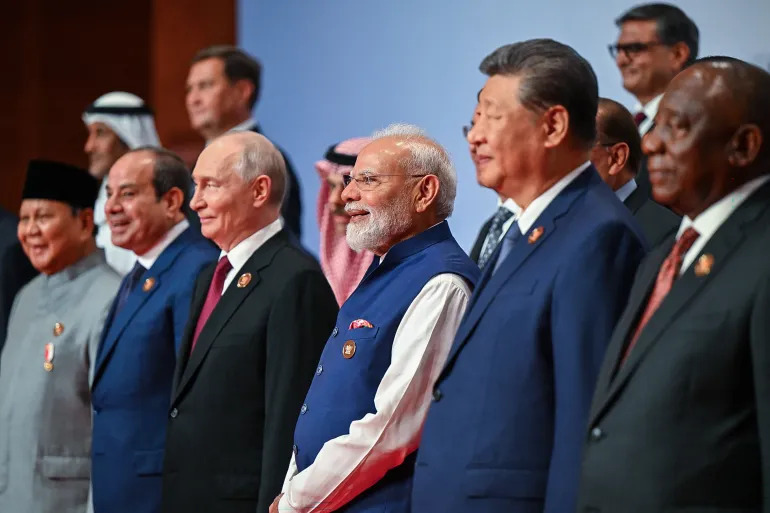
The international trading landscape is undergoing one of its most turbulent periods since the establishment of the modern global economic framework following World War II. Unilateral trade restrictions, escalating tariffs, and rising geopolitical friction have put unprecedented strain on global supply chains and multilateral institutions. At the center of this mounting instability is the paralysis of global trade adjudication facilities, leaving developing and developed nations alike without an effective forum to resolve commercial grievances fairly. During the recent high-level summit held in New Delhi, leaders from the expanded BRICS economic bloc expressed deep concern over growing protectionism and called for an immediate restoration of a fully functional WTO dispute settlement mechanism to uphold stability, predictability, and fairness in global trade.
Representing over forty percent of the global economy and more than twenty-five percent of international trade volume, the member countries of BRICS, including founding members Brazil, Russia, India, China, and South Africa, along with newer members like Indonesia, Egypt, Ethiopia, Iran, and the United Arab Emirates, voiced unified opposition to discriminatory unilateral policies. As economic uncertainty spreads across both emerging and developed markets, understanding the structural causes of current trade friction and the urgent need to reform global trade governance has become essential for policymakers and business leaders around the world.
The Growing Crisis of Multilateral Trade and Rising Protectionism
For several decades, global economic integration expanded under the premise that clear, predictable, and non-discriminatory rules benefited all participating nations. Tariff reductions negotiated under multilateral frameworks enabled developing countries to integrate into global value chains, driving economic growth and lifting millions of people out of poverty. However, the international trading system has increasingly diverged from these foundational principles.
In recent years, the widespread deployment of unilateral tariffs and non-tariff barriers has disrupted established commercial relationships. Rather than resolving commercial differences through negotiated agreements or formal multilateral arbitration, major economic powers have increasingly resorted to aggressive tariff regimes, national security exemptions, and punitive trade measures. These unilateral policies distort international market dynamics, raise production costs for global manufacturers, and disproportionately penalize developing economies that rely on open export markets to finance domestic development. When nations bypass multilateral rules, smaller and mid-sized economies are left vulnerable to economic coercion without adequate recourse.
Understanding the Paralysis of the WTO Dispute Settlement Mechanism
To appreciate why global trade friction has escalated so rapidly, one must examine the operational breakdown at the World Trade Organization. For decades, the two-tier adjudication system served as the bedrock of global commercial rule enforcement. When trade disagreements arose, member states could submit their claims to an independent panel, whose decisions could subsequently be reviewed by a permanent Appellate Body comprising seven independent international jurists.
However, the entire framework was crippled when key appointments to the Appellate Body were blocked, preventing the court from maintaining a quorum. Without a functioning appeals court, any party involved in a trade dispute can simply appeal an adverse panel decision into a legal void, effectively preventing the ruling from becoming legally binding. This institutional paralysis has severely compromised the enforcement of trade commitments. Reestablishing a binding, transparent, two-tier WTO dispute settlement mechanism is widely regarded by international economists as an essential prerequisite for preventing trade wars and restoring confidence in global governance. Without an operational judicial arm, international trade agreements lose their enforceability, encouraging further unilateralism.
Key Takeaways From the BRICS Summit and the New Delhi Declaration
The gathering of BRICS leaders in New Delhi produced a comprehensive policy consensus known as the New Delhi Declaration. This forty-five-page document outlines a shared strategic vision regarding global governance, sustainable development, and trade equity. A central theme of the declaration is the urgent need to protect the multilateral trading system against unilateral actions that breach international norms.
While avoiding direct confrontational rhetoric against specific national governments, the declaration strongly criticizes the rise of unilateral tariff and non-tariff measures. BRICS leaders emphasized that arbitrary trade barriers worsen existing global economic disparities, hamper technology transfers, and disrupt critical cross-border supply chains. Furthermore, the declaration explicitly demanded the immediate appointment of new Appellate Body members to restore a fully binding, two-tier WTO dispute settlement mechanism. By presenting a unified front, the bloc demonstrated that emerging economies are determined to reshape international institutions so they reflect contemporary economic realities rather than historical power dynamics.
Impact on Emerging Economies and Indonesia's Trade Strategy
Emerging market nations are particularly vulnerable to sudden shifts in global trade policy. Indonesia, which officially joined the BRICS bloc after years of close cooperation with major developing economies, faces complex commercial headwinds. Indonesian exporters have recently encountered double-digit tariffs in key Western markets, where trade policies are increasingly tied to unilateral regulatory requirements and labor standard assessments.
Under the leadership of President Prabowo Subianto, Indonesia has advocated strongly for international economic relations based on mutual respect, non-discrimination, and sovereign equality. At the New Delhi summit, Indonesian leadership emphasized that global trade networks must remain open and transparent to enable domestic economic transformation. To protect national industries while maintaining strong international trade links, Indonesia is actively pursuing a balanced trade policy. This involves deepening trade integration within Southeast Asia, expanding commercial ties with fellow BRICS partners across the Global South, and advocating for an operational WTO dispute settlement mechanism that guarantees a fair playing field for all nations, regardless of their economic size.
The Dangers of Tariff Escalation and Currency Weaponization
The proliferation of high import tariffs is frequently accompanied by the strategic use of financial and currency measures to exert geopolitical pressure. During summit deliberations, leaders warned against the weaponization of international financial networks and global trade mechanisms. When access to international clearing systems, reserve currencies, or commodity markets is restricted or subjected to secondary sanctions, the stability of global commerce is severely compromised.
In response to these risks, many developing nations are exploring local currency settlement mechanisms to conduct bilateral and multilateral trade. Settling commercial transactions in local currencies reduces exposure to exchange rate volatility and minimizes foreign currency liquidity risks. However, as trade experts note, shifting toward local currency settlement is designed to complement global trade stability rather than create fragmented economic blocs. Restoring a functional WTO dispute settlement mechanism remains essential because local currency frameworks cannot substitute for clear, universally recognized trade rules and impartial legal adjudication.
Rebuilding Trust and Establishing a Balanced Multilateral Trading System
Resolving the current crisis in international trade requires a concerted effort by all major economies to rebuild trust and modernize global institutions. A modern, resilient multilateral trading system must accommodate the legitimate development goals of emerging nations while addressing real concerns regarding state subsidies, intellectual property, and environmental sustainability.
To achieve this balance, member states must engage in constructive negotiations at the World Trade Organization. Unblocking the appointment of judges to the Appellate Body should serve as the immediate priority. Once the judicial process is restored, member countries can work collaboratively to update trade rules to address digital commerce, green technology supply chains, and industrial subsidies. By choosing institutional reform and legal compliance over unilateral economic power, the global community can construct a stable trading environment that supports sustainable economic growth, fosters innovation, and promotes shared prosperity across both the Global South and the developed world.
Read More