





 Tuesday, 15-09-26








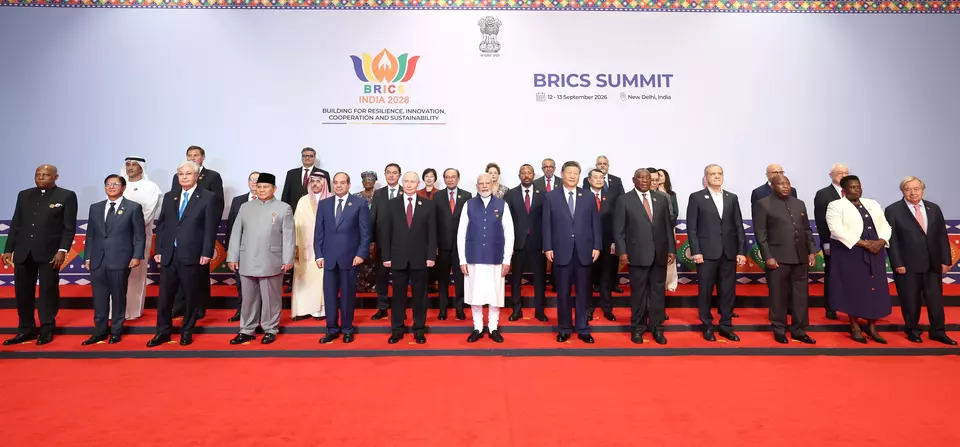
The global economic landscape is undergoing a structural realignment as developing economies seek alternative mechanisms to fund vital national development. Across Asia, Africa, Latin America, and Eastern Europe, infrastructure deficits remain a formidable barrier to long-term productivity and climate resilience. Traditional multilateral lenders often impose stringent conditionalities or face capital constraints that limit their ability to meet the massive financing needs of emerging markets. In response to these challenges, member countries of the BRICS bloc have prioritized innovative risk-mitigation tools to attract institutional capital. At the center of this strategy is the BRICS Multilateral Guarantee framework, a collaborative credit enhancement mechanism designed to derisk development projects, reduce borrowing costs, and mobilize international private capital for the Global South.
By offering comprehensive guarantees against political, commercial, and currency risks, this initiative aims to bridge the persistent gap between institutional investors looking for yield and developing nations requiring sustainable infrastructure investment. As global interest rates fluctuate and sovereign credit ratings face ongoing pressure, establishing localized credit enhancement mechanisms has evolved from a theoretical discussion into an urgent financial strategy.
The Strategic Shift Toward Risk Mitigation in Emerging Markets
For decades, international private investors have recognized the vast growth potential of emerging and developing economies. However, institutional asset managers, sovereign wealth funds, and private pension funds often hesitate to deploy long-term capital into large-scale infrastructure projects due to perceived risk profiles. Factors such as currency volatility, regulatory unpredictability, political instability, and macro-financial shocks frequently elevate project capital costs to unsustainable levels.
To overcome these barriers, modern development finance relies heavily on blended finance and risk-mitigation instruments. The introduction of the BRICS Multilateral Guarantee reflects a growing realization that public funds alone cannot cover the trillions of dollars required for global infrastructure development. Instead of relying solely on direct state-funded loans, multilateral institutions must leverage limited public capital to attract substantial volumes of private sector investment. By absorbing high-level risks, guarantee mechanisms improve project creditworthiness, allowing projects in developing nations to secure favorable interest rates and longer repayment tenures from international capital markets.
Decoding the Mechanics of the BRICS Multilateral Guarantee Framework
The operational blueprint for this credit enhancement system draws inspiration from established multilateral guarantee models, such as the World Bank's Multilateral Investment Guarantee Agency. However, the BRICS Multilateral Guarantee is specifically tailored to address the unique structural needs of member states and partner nations in the Global South. Designed to function without requiring immediate, massive capital injections from member state treasuries, the framework utilizes existing multilateral balance sheets to issue credit guarantees.
Under the guidance of the New Development Bank, the initial phase of the guarantee rollout involves pilot transactions focused on high-priority development sectors. Based on established guidelines, the initiative aims to leverage public capital at a ratio of one to five, or even one to ten, for private capital mobilization. This means that every dollar of public capital committed as a financial guarantee could unlock between five and ten dollars of private institutional investment. By providing coverage against non-commercial risks such as breach of contract, expropriation, currency inconvertibility, and political disruption, the framework significantly lowers risk premiums for international lenders.
Catalyzing Private Investment for Sustainable Infrastructure
Sustainable development requires dedicated capital allocation toward green energy transition, water management, digital connectivity, and transport logistics. However, renewable energy and climate resilience projects often feature high upfront capital costs and long gestation periods, making them particularly sensitive to elevated borrowing costs. The deployment of the BRICS Multilateral Guarantee directly targets these financial bottlenecks by lowering the weighted average cost of capital for green infrastructure projects.
When clean energy developers or public-private partnership utilities prepare large-scale solar arrays, wind farms, or modern grid systems, securing credit guarantees enables them to issue investment-grade project bonds. Institutional investors who operate under strict risk mandates can then participate in financing these green assets. Consequently, the guarantee framework serves as a bridge between ESG-conscious global capital pools and high-impact sustainable infrastructure opportunities in developing regions. Lowering financing costs accelerates the transition toward low-carbon energy systems while ensuring that electricity tariffs remain affordable for local industries and domestic consumers.
The Role of the New Development Bank and Expanding Global Footprints
Central to the implementation of this credit enhancement initiative is the New Development Bank, headquartered in Shanghai. Established over a decade ago by Brazil, Russia, India, China, and South Africa, the multilateral institution has steadily expanded its operational footprint and member base. The decision to house the pilot phase of the BRICS Multilateral Guarantee within the bank allows the group to utilize existing operational structures, risk management protocols, and credit ratings without creating redundant bureaucratic bodies.
As the bank continues to approve tens of billions of dollars in cumulative project financing, expanding its membership has become a strategic priority. Non-founding member countries such as Bangladesh, Egypt, the United Arab Emirates, and Algeria have joined the institution to access alternative development capital. By offering specialized guarantee instruments alongside direct loans, the bank enhances its value proposition for incoming member nations. The institutional flexibility to provide local currency financing paired with risk guarantees offers emerging markets a compelling alternative to traditional Western-led financial institutions.
Implications for Indonesia and the Broader Global South
Indonesia's active engagement with the BRICS platform and its growing collaboration with multilateral development entities highlight the nation's ambitious economic transformation agenda. To achieve sustained economic growth and meet national industrial goals, Indonesia requires massive capital investments in transportation logistics, nickel processing, renewable power grids, and urban infrastructure. Utilizing mechanisms like the BRICS Multilateral Guarantee allows domestic industrial projects to access broader international funding pools at reduced interest rates.
For the broader Global South, the expansion of credit guarantee mechanisms represents a step toward financial sovereignty and economic self-determination. Developing countries have long argued that global financial architecture inadequately represents their interests and disproportionately penalizes emerging market risk profiles. By constructing indigenous financial safety nets, risk-mitigation facilities, and trade settlement frameworks, developing nations can better insulate their domestic economies from external financial shocks, interest rate volatility, and currency pressures originating in developed markets.
Long Term Outlook for Global Financial Architecture Realignment
The evolution of risk-mitigation mechanisms within emerging trade blocs signals a broader restructuring of global economic governance. As multilateral institutions adapt to multi-polar realities, financial instruments that combine risk sharing, private sector mobilization, and sustainable development will dictate the future of international capital flows. The implementation of the BRICS Multilateral Guarantee serves as a practical demonstration of how emerging economies can reform financial tools to serve mutual development objectives.
Success over the coming decade will depend on rigorous technical execution, transparent risk assessments, and the successful completion of pilot transactions across diverse geographic regions. If executed effectively, this framework will not only unlock billions of dollars in private capital for critical infrastructure, but will also establish a resilient model for development finance that empowers emerging economies for generations to come.
Read More