





 Sunday, 25-10-26








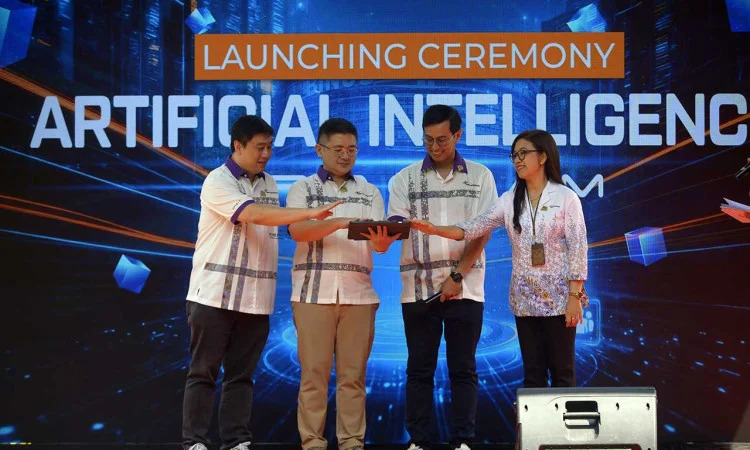
As Southeast Asia continues to establish itself as a primary driver of global digital transformation, higher education institutions across the region are under growing pressure to modernize their academic offerings. Indonesia, with its rapidly expanding tech ecosystem and vibrant digital economy, stands at the very forefront of this shift. In response to the accelerating demand for specialized technical talent, BINUS University has taken a decisive step forward by officially launching its specialized academic initiative focused on cutting-edge intelligent systems. The official launch of the BINUS University Artificial Intelligence Program marks a pivotal moment for Indonesian academia, addressing an urgent national necessity for highly skilled professionals capable of designing, building, and governing advanced computational models.
The modern global economy is undergoing a fundamental shift toward automation, algorithmic decision-making, and high-performance computing. From enterprise analytics to automated computer vision, emerging technologies are no longer optional additions to corporate strategies; they are core infrastructure. However, despite the exponential increase in demand for machine learning capabilities, the talent gap remains a significant hurdle for enterprises throughout Southeast Asia. By introducing a structured, university-level pathway dedicated specifically to deep technical mastery, BINUS University aims to bridge this gap, ensuring that local graduates possess world-class skills tailored to modern market demands.
The Growing Need for AI Competency in Southeast Asia
The digital landscape across ASEAN member states has experienced unprecedented acceleration over the past decade. Rapid smartphone adoption, expanding cloud infrastructure, and a burgeoning venture capital scene have cultivated a fertile environment for technological innovation. Nevertheless, sustained economic growth in this arena depends heavily on human capital development. Without a steady pipeline of engineers, researchers, and data strategists, local industries risk relying on imported intellectual property rather than developing homegrown solutions.
Indonesia, boasting the largest population and digital economy in the region, faces both unique opportunities and complex challenges. Local businesses across diverse sectors, including financial technology, logistics, agriculture, e-commerce, and healthcare, are seeking ways to integrate predictive analytics and automated systems into their operations. However, traditional computer science curricula often treat intelligent computing as a single elective module rather than a standalone discipline. The creation of a specialized program allows students to immerse themselves thoroughly in the mathematics, ethics, and engineering principles required to excel in this competitive domain.
Core Curriculum and Academic Pillars of the Program
To prepare students for the fast-paced realities of modern software architecture, the curriculum of the BINUS University Artificial Intelligence Program reflects an expansive approach to higher education. Rather than focusing solely on theoretical mathematics or basic programming syntax, the coursework balances foundational computational theory with direct applied experience. Students are introduced early in their academic journey to advanced mathematical concepts, including linear algebra, multivariable calculus, probability, and discrete structures, which form the mathematical backbone of neural network operations.
Beyond foundational mathematics, the program branches into critical technical specializations that reflect modern industrial practice. Course modules encompass deep learning architectures, reinforcement learning, natural language processing, computer vision, and high-performance computing infrastructure. Students learn to implement software using industry-standard frameworks, equipping them with practical proficiency in building, training, and deploying complex models. Furthermore, algorithmic optimization and hardware acceleration are given significant focus, ensuring that graduates understand how to execute computational tasks efficiently at enterprise scale.
Equally important is the integration of theoretical coursework with hands-on lab projects. Students learn how to navigate real-world data constraints, such as missing values, biased datasets, and uncurated sensor streams. By training algorithms under realistic engineering parameters, students learn to appreciate the subtle distinction between theoretical performance in clean benchmark environments and practical reliability in production systems.
Bridging Academia and Industry Innovation
A major strength of modern educational frameworks lies in their capacity to connect classroom theory with real-world industry demands. Through the BINUS University Artificial Intelligence Program, students gain direct access to industry partnerships, practical corporate internships, and collaborative research initiatives. By working alongside established technology firms, tech startups, and government research bodies, students apply their developing skill sets to genuine commercial and societal challenges.
This practical orientation helps bridge the historical divide between academic research and commercial software engineering. Enterprise partners often bring real datasets and operational challenges to student project labs, giving undergraduates an authentic preview of professional expectations. Students learn how to communicate complex technical concepts to non-technical stakeholders, manage software development lifecycles using agile methodologies, and document code for team environments.
Furthermore, this hands-on alignment enhances employability upon graduation. Employers increasingly seek candidates who possess not only theoretical knowledge, but also a portfolio of deployed projects and practical familiarity with modern deployment pipelines. By fostering continuous interaction with technology leaders, BINUS University ensures that its academic roadmap evolves alongside technological advancements in cloud infrastructure, custom hardware accelerators, and large-scale enterprise automation.
Empowering the Next Generation of Tech Leaders
Career opportunities for graduates equipped with deep technical knowledge in intelligent automation extend far beyond traditional software houses. Financial institutions require machine learning specialists to design real-time fraud detection algorithms, algorithmic trading platforms, and credit risk evaluation tools. In healthcare, intelligent systems are increasingly used to analyze medical imaging, accelerate drug discovery, and personalize patient monitoring regimens.
Similarly, supply chain management and logistics networks rely on predictive analytics to optimize delivery routes, manage warehouse inventory, and forecast demand fluctuations. By graduating from the BINUS University Artificial Intelligence Program, graduates are positioned to enter these high-impact industries as data engineers, machine learning operations architects, computer vision specialists, and AI product managers. Their expertise enables regional enterprises to reduce operational costs, increase productivity, and innovate faster in an increasingly competitive marketplace.
Beyond corporate careers, the program creates a solid base for aspiring entrepreneurs and venture builders. As access to computing infrastructure democratizes, young founders can launch scalable software products that solve hyper-local problems in agriculture, public transportation, and educational access. By providing students with foundational business knowledge alongside advanced engineering training, the university cultivates an entrepreneurial mindset capable of driving local technological sovereignty.
Ethical Considerations and Responsible AI Development
As algorithmic systems assume greater influence over public life, ethical considerations must remain central to modern technological design. Automated decisions in hiring, lending, law enforcement, and media delivery can inadvertently perpetuate social biases or violate personal privacy if left unchecked. Consequently, responsible innovation forms a foundational pillar of modern technical education.
Students enrolled in the program explore critical topics such as algorithmic fairness, data governance, privacy-preserving machine learning, and explainable model architecture. They are trained to audit training datasets for systemic bias, evaluate model transparency, and implement safeguards against malicious exploitation. By instilling ethical responsibility alongside technical proficiency, the institution ensures that its graduates build systems that are not only technologically powerful, but also safe, fair, and aligned with human welfare.
Moreover, understanding regulatory frameworks prepares students to navigate complex compliance landscapes. As governments around the world construct policy frameworks for autonomous technology, tech professionals must be equipped to guide their organizations toward full compliance and transparent practices.
The Broader Impact on Indonesian Technological Sovereignty
Developing domestic capability in advanced computing is essential for national competitiveness in the twenty-first century. Nations that fail to cultivate local technical expertise risk becoming passive consumers of foreign technology, subject to external dependencies and economic vulnerabilities. By building rigorous academic infrastructure at home, Indonesian higher education contributes significantly to national technological sovereignty.
The launch of specialized academic tracks accelerates local research and development, fostering intellectual property that reflects local languages, regional economic structures, and unique cultural contexts. For example, natural language processing models tailored specifically to Indonesian regional dialects can improve public service accessibility for millions of citizens. Similarly, computer vision models trained on tropical agricultural datasets can assist local farmers in crop health monitoring and yield prediction.
In the long term, sustaining a robust domestic community of software architects, data scientists, and engineers inspires secondary and primary education systems to bolster science, technology, engineering, and mathematics education. It demonstrates to young students across the country that world-class innovation can originate locally, encouraging greater participation in technical fields and strengthening the broader national innovation pipeline.
Conclusion
The establishment of dedicated academic programs in cutting-edge computing marks a transformative chapter for higher education in Indonesia. Ultimately, the BINUS University Artificial Intelligence Program serves as a powerful catalyst for regional innovation, providing the talent, research capabilities, and ethical foundation necessary to navigate a technology-driven future. As artificial intelligence continues to reshape global industries, initiatives like this ensure that Indonesia remains an active creator and leader in the global digital economy.1
Read More