





 Sunday, 27-09-26








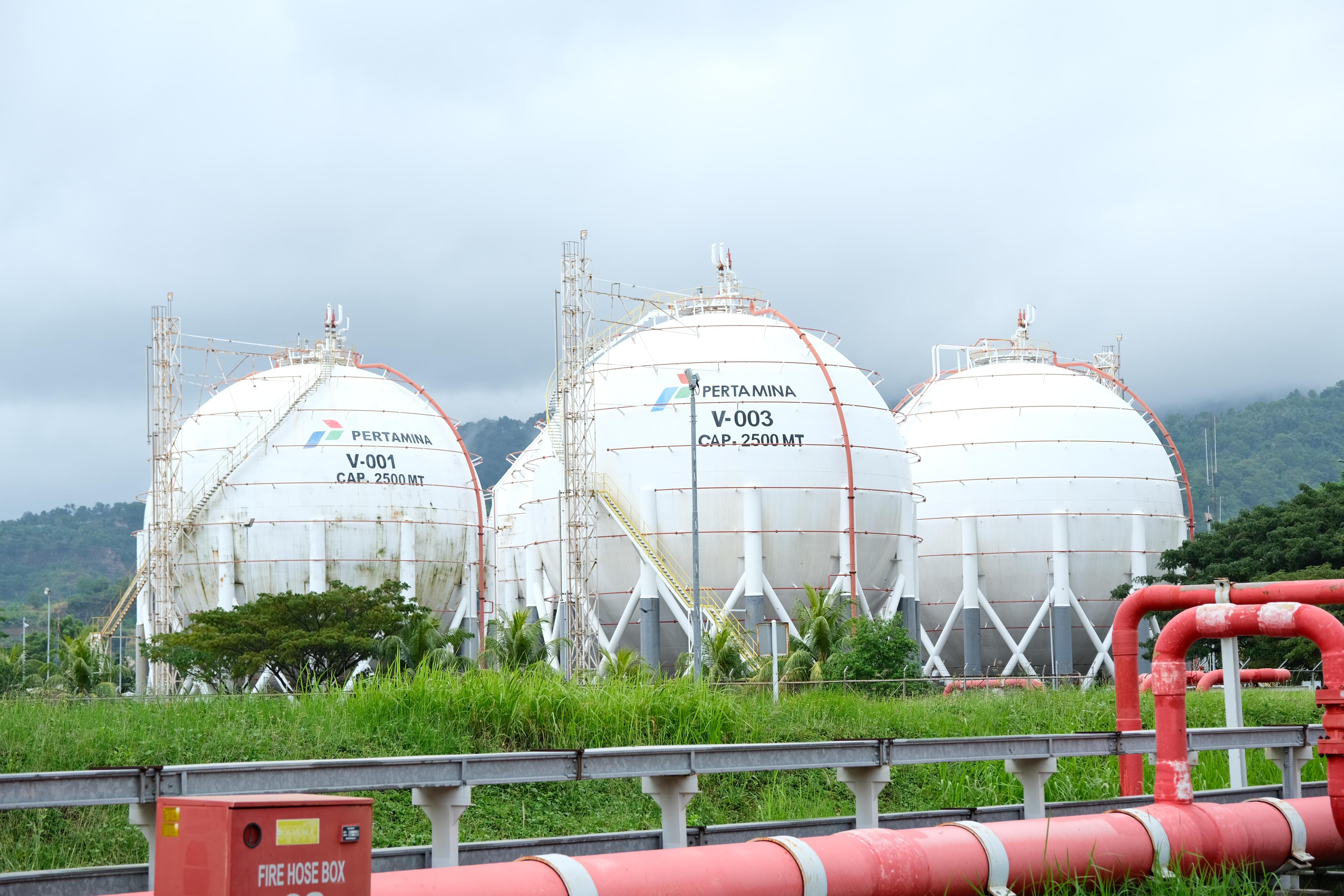
Indonesia is seeking ways to cut its massive liquefied petroleum gas (LPG) subsidy bill, which finances cooking fuel for most households. About 90% of Indonesian homes use LPG cylinders for cooking, thanks to a long-running kerosene-to-LPG conversion program. In 2025, the country consumed roughly 9.24 million tonnes of LPG, with over 80% of that volume imported from abroad. These imports cost about Rp130–140 trillion (USD 7.9–8.5 billion) a year in foreign exchange. The government also subsidizes 3-kg LPG cylinders heavily: each one carries roughly IDR 30,000 in subsidy. In total, subsidized LPG cost the state some IDR 87 trillion (about USD 5.3 billion) in 2025. At today’s prices, the burden has only grown as global fuel prices rise. Faced with this fiscal pressure, Indonesian officials are investigating new solutions to make household cooking cleaner and cheaper.
Exploring Alternatives to Imported LPG
To reduce LPG import costs and subsidies, the government is exploring multiple fuel-switching strategies. Energy Minister Bahlil Lahadalia has proposed a nationwide electric stove program for low-income households, aiming to replace LPG with cleaner induction cooking. Analysts point out that investing in electric stoves could pay off quickly: one study estimated that a Rp105 trillion (USD 6 billion) program to equip households with induction cookers would recoup nearly Rp200 trillion (USD 11.7 billion) in avoided LPG subsidies within five years. However, rolling out such a program requires time, funding, and reliable electricity access. The ministry is still assessing technical and economic factors before any large-scale deployment.
Another option is to switch homes from LPG to domestically sourced natural gas. Indonesia has ample gas reserves, so replacing even a fraction of LPG could ease import dependence. Some pilot projects are testing 3-kg CNG (compressed natural gas) cylinders as a household fuel. In theory, CNG can be 30–40% cheaper than LPG. Yet experts caution that a broad shift to CNG faces huge infrastructure hurdles. Households would need new gas pipelines, compression stations, storage facilities and distributors built nationwide. Kitchens would require regulators, gas meters, leak detectors and modified stoves to handle CNG’s higher pressure. These upgrades make the transition slow and costly. Economists also note that even with pipelines, domestic gas prices (including opportunity costs) often remain higher than the subsidized LPG price. In short, switching millions of homes from LPG to CNG alone may not deliver net savings in the near term.
A third path is replacing LPG with dimethyl ether (DME) made from coal, a project championed by some state-owned enterprises. But coal-to-DME is currently very expensive: it requires its own subsidies because producing DME costs more per unit than the LPG it would replace. Independent analysis finds that coal-based DME could impose an even heavier subsidy burden than LPG. In contrast, electric stoves appear the most cost-effective route for reducing LPG subsidies, though even that solution is still in planning.
What Is ANG and How Does It Work?
Amid these discussions, Indonesia’s research community has introduced an innovative concept: adsorbed natural gas (ANG) technology. In August 2026, the National Research and Innovation Agency (BRIN) announced that it is developing an ANG storage system that could significantly cut LPG subsidies. Unlike standard CNG tanks that compress methane at 200–250 bar, ANG uses porous adsorbent materials (often metal-organic frameworks, or MOFs) to pack gas molecules onto surfaces at much lower pressures. In practical terms, ANG storage allows a cylinder to hold far more gas than a conventional CNG bottle of the same size, while operating at about 30 bar. This pressure level is safe for households and reduces the need for heavy, high-pressure cylinders.
For example, BRIN researchers report that a cylinder roughly the size of a standard 3-kg LPG tank – but filled with ANG-packed methane – could provide fuel for around 15 days of cooking, instead of the 10 days typical for an LPG tank. This gain (about 1.5 times longer duration) comes purely from improved storage efficiency. In short, each refill lasts longer. The ANG innovation was developed in collaboration with Japanese scientist Susumu Kitagawa (2025 Nobel laureate in Chemistry) and relies on advanced MOF materials to achieve the high storage density. These materials have enormous internal surface areas that “adsorb” (not absorb) gas molecules. The result is a potential new technology for household fuel.
Benefits of ANG Technology
Adsorbed natural gas storage offers multiple benefits for Indonesia if deployed. First, because it uses domestic natural gas instead of imported LPG, it directly reduces foreign-exchange spending. BRIN Chairman Arif Satria notes Indonesia has abundant natural gas reserves, yet it still imports large volumes of LPG to meet demand. By switching to ANG-fueled canisters, those domestic gas resources could be consumed locally, strengthening energy security and keeping money inside the country.
Second, ANG cylinders operate at lower pressure, which enhances safety and lowers infrastructure costs. At around 30 bar, ANG tanks avoid the extreme pressures of CNG tanks, making them lighter and less specialized. Lower pressure reduces the risk of leaks or ruptures. It also means that storage and distribution networks (trucks, filling stations, etc.) can be simpler and cheaper. In essence, ANG converts natural gas into a form that can ride on existing LPG-style cylinders, altering only the internal filling method.
Third, ANG can substantially reduce subsidy spending. According to BRIN’s own calculations, if ANG were fully implemented, annual LPG subsidy costs could fall by up to Rp26 trillion (about USD 1.5 billion). This figure comes from extending the life of each cylinder: if one 3-kg cylinder lasted 15 days instead of 10, households would need fewer cylinders per month. In turn, the state would spend less subsidizing each household’s fuel. Over the long term, that reduction in subsidy outlay would add up into huge savings. BRIN emphasizes that ANG is still experimental, but even in pilot form it represents one of their “flagship energy research projects” with strong promise.
Finally, BRIN scientists are actively improving the system. Current prototypes have achieved the 1.5× endurance improvement, and researchers are working toward doubling the storage capacity in future versions. If successful, a 3-kg ANG cylinder could last 20 days or more on one fill, further cutting costs and import needs. Because ANG technology only requires standard cylinder sizes, the logistics for swapping out tanks remain similar to LPG, easing adoption.
Implementation and Outlook
Adsorbed natural gas storage is still in the experimental phase, but plans are accelerating. BRIN aims to complete pilot testing of ANG technology by late 2026 and start commercial roll-out in 2027 as a household cooking fuel alternative. President Prabowo Subianto has personally urged the agency to speed up development, recognizing the potential of ANG to reduce LPG dependency and improve energy security. The government will need to develop standards and new regulations for ANG canisters, but because the approach still uses gas cylinders (albeit packed differently), the transition for suppliers and consumers could be easier than installing new pipelines or power grids.
Meanwhile, officials continue to evaluate multiple pathways: continuing induction stove trials, seeking more efficient LPG distribution, and investing in renewable energy. ANG technology will likely complement, not replace, these efforts. If successful, ANG cylinders could be introduced alongside regular LPG cylinders, giving households the choice of a cleaner, domestically sourced gas. Over time, larger-scale ANG use could significantly cut Indonesia’s LPG import bill.
In summary, adsorbed natural gas storage technology is emerging as a homegrown energy innovation for Indonesia. By enabling compressed gas to be stored more efficiently, ANG could make natural gas a practical and affordable cooking fuel. This could save the government billions in subsidies and reduce foreign fuel dependence. However, its success will depend on rigorous testing, infrastructure adaptation, and consumer acceptance. Policymakers and Indonesian families will be watching closely as pilots continue and the technology moves toward commercialization.
Read More