





 Thursday, 24-09-26








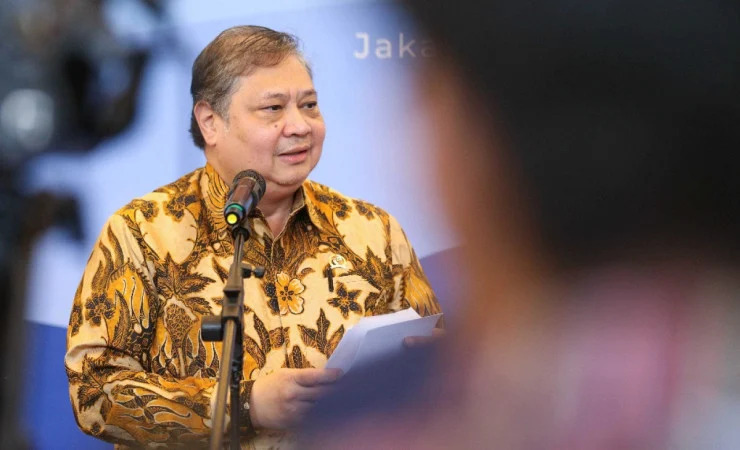
The global technology landscape is experiencing a massive transformation driven by artificial intelligence and advanced computing requirements. In a significant announcement that highlights Southeast Asia as a rising technology hub, Coordinating Minister for Economic Affairs Airlangga Hartarto revealed that United States technology giant Nvidia plans to make a landmark commitment. The company is preparing to invest approximately 4.5 billion US dollars, equivalent to around 80.1 trillion to 80.55 trillion Indonesian Rupiah, to develop computing facilities and semiconductor infrastructure in Batam, Kepulauan Riau.
This announcement underscores a pivotal step forward for the Southeast Asian digital economy. As artificial intelligence adoption accelerates globally, the demand for robust server capacity, high-speed connectivity, and advanced graphics processing hardware has soared. The strategic choice of Batam as the primary destination for this project reflects Indonesia's competitive advantages in location, power availability, and land resources.
Strategic Location and Regional Advantages of Batam
Batam has long served as a vital industrial zone due to its direct proximity to Singapore, located just across the Malacca Strait. Over the past few years, the Indonesian government has aggressively promoted the region as a major digital bridge. The establishment of Special Economic Zones, including Nongsa Digital Park, has turned Batam into an attractive location for global tech firms looking to expand their footprint without encountering the land and power limitations faced by neighboring city-states.
The planned Nvidia data center investment in Indonesia is set to take advantage of these established special economic zones. Airlangga Hartarto highlighted that Indonesia possesses key advantages over regional competitors, including abundant land for expansive facilities, scalable electricity supplies, growing green energy options, and sufficient water resources for complex cooling systems. These factors are crucial for high-density artificial intelligence computing infrastructure, which consumes large amounts of power and requires reliable thermal management.
Strengthening National Computing and Semiconductor Capabilities
The massive 4.5 billion dollar investment is not merely about constructing physical warehouses filled with server racks. It represents a fundamental building block for national computing power and semiconductor capabilities in Indonesia. By hosting advanced chip technology and high-performance computing clusters locally, the nation aims to establish greater digital sovereignty and reduce its reliance on external cloud services.
With the Nvidia data center investment in Indonesia, the country moves closer to building a self-sustaining ecosystem capable of training complex artificial intelligence models domestically. Airlangga explained during the FEKDI x IFSE event in Jakarta that expanding national computing infrastructure is essential for long-term technological independence. Establishing local high-performance facilities ensures that sensitive data, national research, and commercial artificial intelligence applications remain grounded within national borders while offering low latency to domestic users.
Accelerating the Growth of the Digital Economy
Indonesia's digital economy has expanded rapidly over the past decade, driven by e-commerce, digital financial services, and logistics technology. Current estimates place the country's digital market value at approximately 180 billion US dollars, with projections pointing toward 400 billion US dollars by the year 2030. Achieving this ambitious growth target requires hardware infrastructure that can handle millions of transactions, complex machine learning algorithms, and real-time data processing.
The integration of the Nvidia data center investment in Indonesia into the national digital strategy will accelerate this economic transition. High-capacity computing infrastructure acts as a magnet for software developers, technology startups, and research institutions. When foundational computing resources become available locally, domestic companies can innovate faster, lower their operational costs, and deploy artificial intelligence solutions tailored to regional needs. Consequently, digital economy expansion becomes a resilient driver of national growth that remains steady despite global trade fluctuations and geopolitical uncertainties.
Capacity Expansion and Infrastructure Scalability
Prior to this major commitment, Indonesia's data center capacity hovered around 800 megawatts. While this capacity supported initial cloud migration and internet growth, it fell short of the immense requirements demanded by generative artificial intelligence workloads. Pipeline projects currently under development are expected to raise total capacity to approximately 1.3 gigawatts in the coming years.
The proposed Nvidia data center investment in Indonesia will significantly boost this trajectory. Expanding capacity from megawatt levels to gigawatt scales requires coordinated planning between government ministries, utility providers, and private sector investors. Ensuring stable electrical grids and accelerating green energy adoption will be critical to supporting this high-density infrastructure without straining public utilities.
Challenges and Resource Management Considerations
While the economic potential of this giant investment is immense, local stakeholders and environmental experts emphasize the need for careful resource management. High-performance computing centers require vast amounts of electrical power and millions of liters of water daily for cooling purposes. In regions like Batam, where water resources rely heavily on rainfall collected in reservoirs, balancing industrial demands with local public needs is essential.
To make the Nvidia data center investment in Indonesia fully sustainable, project developers and local authorities are exploring innovative cooling technologies, closed-loop water systems, and dedicated renewable energy solutions, such as floating solar power systems. Addressing these environmental and infrastructural factors early will ensure that industrial growth does not compromise local community access to clean water and affordable electricity.
Positioning Indonesia as Southeast Asia's Artificial Intelligence Leader
This major initiative in Batam builds upon Nvidia's existing partnerships in the region, including its previous collaboration with Indonesian telecommunications giant Indosat Ooredoo Hutchison to build an artificial intelligence center in Surakarta, Central Java. By expanding its footprint into Batam with a multi-billion-dollar allocation, Nvidia confirms Indonesia's growing status as an essential digital hub in Southeast Asia.
Furthermore, Indonesia's active participation in global technology governance, such as becoming a founding member of the World AI Cooperation Organization, complements these physical infrastructure investments. By pairing policy frameworks with world-class facilities, the country is well-positioned to lead Southeast Asia in artificial intelligence innovation and semiconductor integration.
Looking Ahead to a Transformative Tech Ecosystem
The commitment announced by Minister Airlangga Hartarto marks a major milestone in Indonesia's economic evolution. Converting raw industrial potential into a high-value technology economy requires bold investments, precise execution, and forward-thinking policy.
As implementation proceeds in the Batam Special Economic Zone, the Nvidia data center investment in Indonesia will serve as a catalyst for job creation, tech talent development, and digital transformation. By connecting advanced hardware infrastructure with a rapidly growing market, Indonesia is laying the foundation for a vibrant, resilient, and sovereign digital future.
Read More