





 Friday, 25-09-26








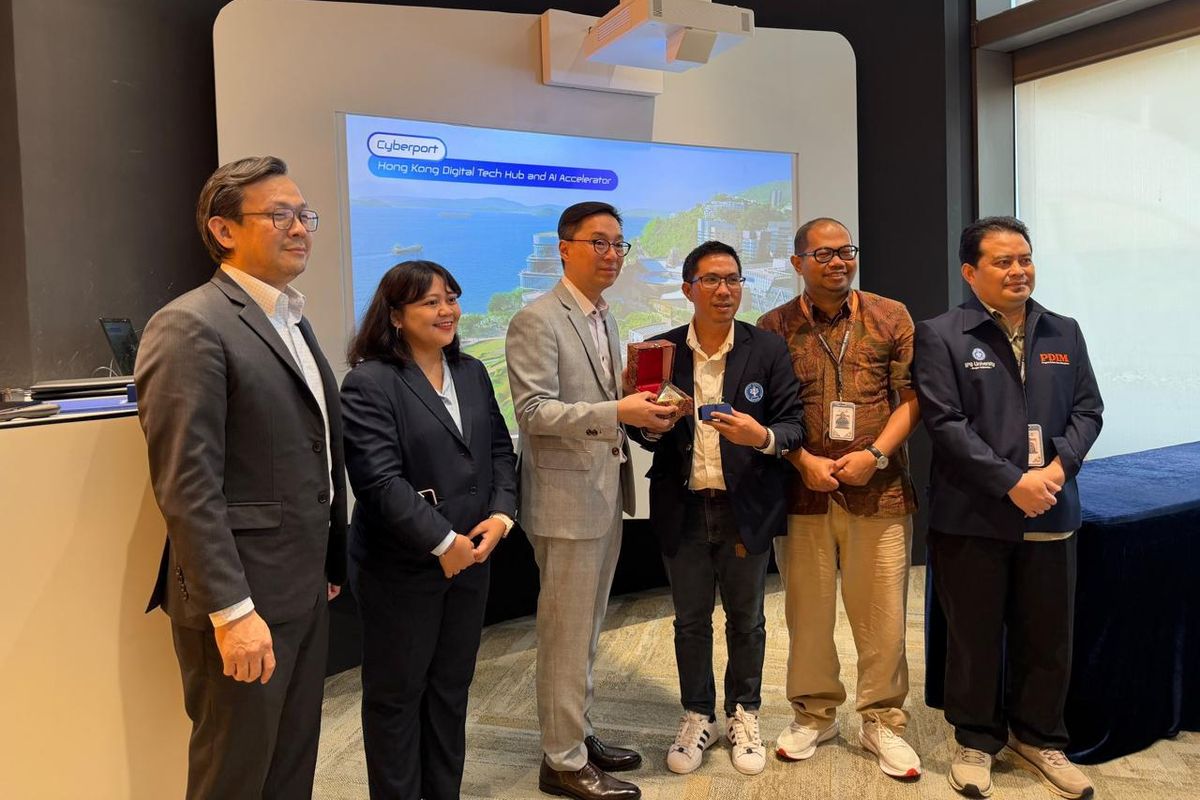
The rapidly evolving global digital economy requires strategic alliances that transcend national borders, combining academic excellence with advanced technological ecosystems. A premier example of this global synergy is the strategic alliance formed between Hong Kong flagship digital tech community, Cyberport, and IPB University (Institut Pertanian Bogor), one of Indonesia foremost higher education institutions specializing in agriculture, biosciences, and technology. The newly established Cyberport IPB technology collaboration marks a major milestone in strengthening cross-border innovation networks across Asia. By uniting Cyberport vibrant venture ecosystem, high-tech infrastructure, and access to capital markets with IPB University world-class scientific research, field experimentation facilities, and deep talent pool, this alliance sets a transformative blueprint for joint technological development.
Understanding the Significance of Cross-Border Strategic Partnerships
In an increasingly interconnected global economy, isolated research initiatives often struggle to achieve maximum commercial potential. Academic institutions possess cutting-edge scientific expertise, yet they frequently encounter structural challenges when translating theoretical models into scalable, market-ready digital products. Conversely, technology parks and startup hubs like Cyberport excel at nurturing venture growth, securing early-stage investment, and offering infrastructure, yet they rely on continuous streams of groundbreaking scientific talent and applied research.
Through the Cyberport IPB technology collaboration, both institutions effectively bridge this historic structural gap. Hong Kong serves as a crucial international financial node and a gateway to global investors, while Indonesia stands as the largest digital economy in Southeast Asia with an expanding agricultural and industrial base. By linking Cyberport comprehensive digital ecosystem with IPB University academic rigor, the partnership establishes a robust corridor for knowledge transfer, investment flow, and technology distribution. This framework empowers innovators to design products that solve real-world problems in emerging markets while remaining aligned with international commercial standards.
Key Pillars Driving the Cyberport IPB Technology Collaboration
To translate strategic high-level intentions into tangible, long-term operational success, a core driver of the Cyberport IPB technology collaboration is its focus on structural integration across multiple domain verticals. The initiative does not operate merely as a ceremonial arrangement; instead, it creates functional channels designed to foster active enterprise building, joint intellectual property creation, and talent incubation.
First, the partnership emphasizes incubator-to-incubator cooperation. IPB Science Techno Park, which nurtures dozens of deep-tech and agritech spin-offs annually, will establish formal linkage programs with Cyberport renowned incubation platform. This allows Indonesian startup founders to access Hong Kong investor network, venture capital funds, and modern sandbox environments. Simultaneously, Hong Kong startups seeking entry into Southeast Asia can leverage IPB University local testing sites, agricultural networks, and regulatory insight to customize their technologies for regional deployment.
Second, joint research and technical development constitute a pivotal column of this alliance. By combining Cyberport capabilities in artificial intelligence, Internet of Things (IoT), and big data analytics with IPB University deep knowledge of biosciences, natural resource management, and precision agriculture, research teams can co-develop enterprise solutions tailored for complex ecological and industrial application.
Advancing Agricultural Technology and Sustainable Innovation
Agriculture remains a foundational sector for Southeast Asian economies, yet traditional farming practices face unprecedented pressure from climate change, supply chain inefficiency, soil degradation, and rising global food demand. Modernizing this vital sector requires integrating sophisticated digital tools into traditional agricultural workflows. Under the umbrella of the Cyberport IPB technology collaboration, researchers and entrepreneurs are uniting to accelerate the development of sustainable agritech solutions.
IPB University has long been recognized as a trailblazer in agricultural science, developing high-yield crop varieties, smart irrigation mechanisms, and bio-based pest control methods. However, integrating these biological innovations with automated sensor networks, satellite imagery algorithms, and predictive AI requires specialized digital tech expertise. Cyberport brings this essential digital capabilities matrix to the partnership.
Together, the entities are working on smart farming platforms that deploy low-power sensor arrays to collect real-time data on soil moisture, nutrient levels, and local microclimates. This data is processed through advanced machine learning models developed through joint research, offering smallholder farmers and commercial plantation operators actionable insights to optimize fertilizer use, conserve water, and boost harvest yields. Furthermore, blockchain-based supply chain tools developed within Cyberport digital community are being evaluated to enhance traceability for Indonesian agricultural exports, ensuring complete transparency from farm to global table.
Empowering Tech Startups and Talent Exchange in Asia
Human capital is the cornerstone of any sustainable technology transformation. A central goal of this venture is creating a dynamic pathway for student entrepreneurs, young engineers, and academic researchers to operate smoothly across international borders. Analyzing how the Cyberport IPB technology collaboration fosters cross-border incubator initiatives reveals a strong focus on talent exchanges, immersive bootcamps, and executive mentorship.
Through tailored exchange initiatives, promising student founders from IPB University will have direct access to Cyberport state-of-the-art facilities in Hong Kong, participating in pitch sessions, investor demo days, and global innovation expos. This exposure helps young founders build global perspectives early in their entrepreneurial journey, enabling them to design business models that appeal to international investors beyond domestic borders.
Likewise, tech talent, software developers, and startup founders from Hong Kong can engage directly with IPB University researchers and local field experts. This direct interaction provides Hong Kong entrepreneurs with invaluable firsthand understanding of real-world operational challenges in tropical agriculture and regional logistics. The resulting exchange creates a rich cross-pollination of ideas, encouraging the development of practical, high-impact innovations.
Commercialization Opportunities for Academic Research and Innovation
One of the historical hurdles facing university scientific research is the commercialization gap, often described in venture creation as the valley of death. Millions of dollars are spent on valuable academic research, yet many ground-breaking patents never reach commercial production due to a lack of market validation, business strategy, or venture funding.
The collaboration directly addresses this commercialization bottleneck by embedding venture acceleration methodology directly into academic research tracks. Researchers at IPB University working on bio-technologies, sustainable materials, and smart hardware can tap into Cyberport network of angel investors, venture capital syndicates, and corporate partners.
By subjecting academic innovations to commercial stress-testing, market validation, and business model design from early development phases, the success rate of university spin-off companies increases substantially. Cyberport experience in managing intellectual property rights, international patent licensing, and venture structuring ensures that IPB University academic breakthroughs receive proper legal protection and optimal market valuation when launching in global commercial sectors.
The Future Impact on Regional Innovation Ecosystems
Looking ahead, the alliance between Cyberport Hong Kong and IPB University serves as an inspiring prototype for future bilateral technological cooperation across the Asia-Pacific region. As economic ties between Hong Kong and ASEAN member states continue to deepen, collaborative technology hubs will play an indispensable role in maintaining regional competitiveness and sustainable economic expansion.
The long-term outlook for the Cyberport IPB technology collaboration remains exceptionally bright. By establishing a proven framework that combines scientific discovery with venture capital and digital infrastructure, both institutions are shaping a resilient, forward-looking innovation ecosystem. This partnership not only elevates the technological capability of Indonesia and Hong Kong, but also delivers sustainable, scalable solutions to some of the most pressing environmental, food security, and technological challenges of the twenty-first century.
Read More