


 Tuesday, 10-11-26


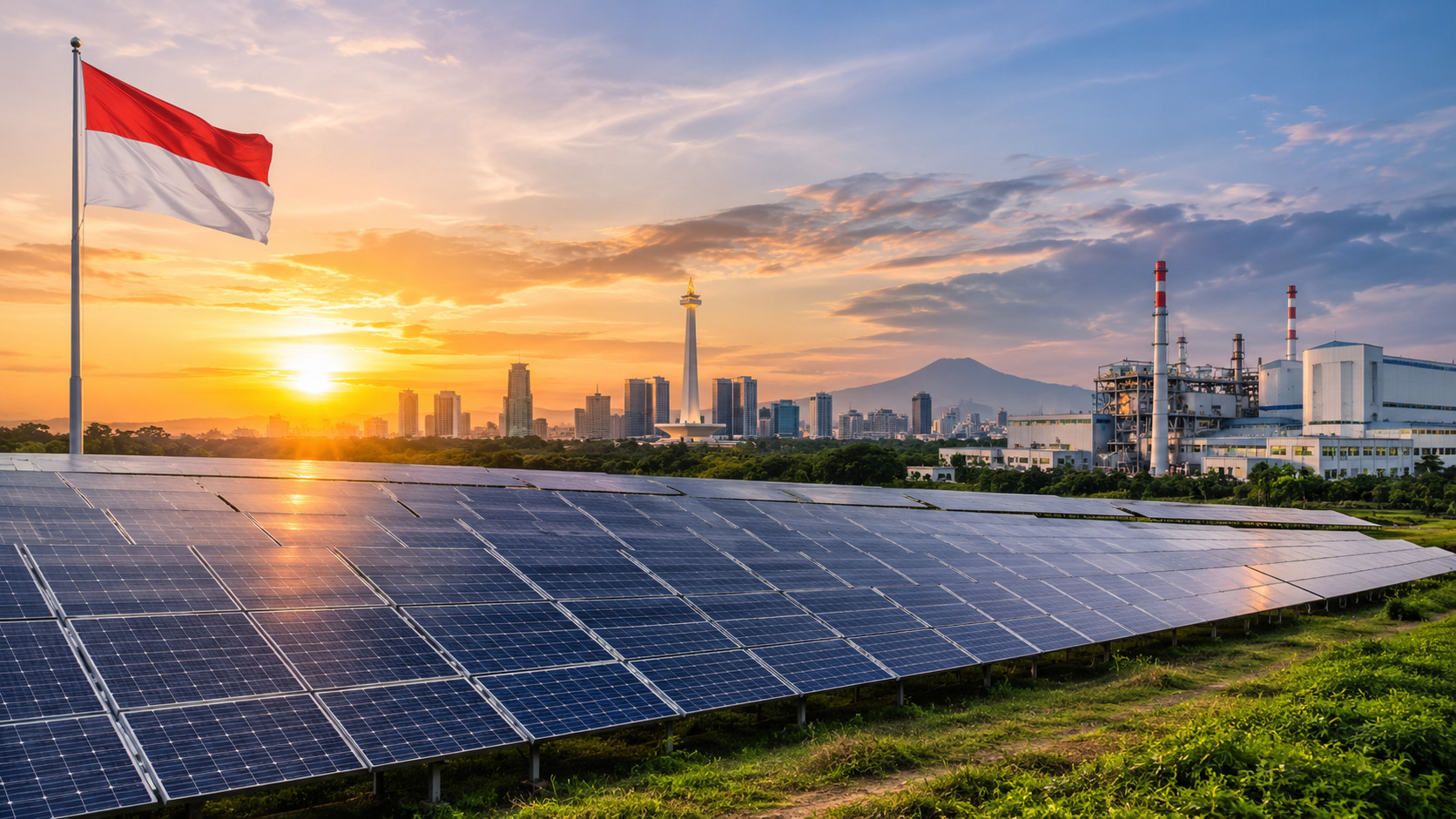
Indonesia's ambition to develop 100 gigawatts peak (GWp) of solar power capacity is opening a significant investment opportunity for international energy companies, particularly from China. However, the scale of financing, manufacturing and infrastructure required to achieve the target raises a more important question: can Indonesia turn foreign investment into a competitive domestic renewable-energy industry?
The opportunity is becoming increasingly relevant as China strengthens its position in the global energy market. China's energy investment is projected to reach US$940 billion in 2026, the highest among individual countries, according to its Global Energy Transition Report 2026. Meanwhile, Indonesia has estimated that its 100-GWp solar initiative will require approximately US$73 billion, equivalent to more than Rp1,140 trillion, in investment.
The investment gap is substantial. Indonesia needs to accelerate solar deployment, expand domestic manufacturing capacity and develop the electricity infrastructure required to accommodate a much larger share of variable renewable energy. Chinese companies could provide equipment, engineering expertise and industrial capital, but relying on foreign suppliers alone would not address the structural challenges.
The central issue for Indonesia is therefore not simply attracting Chinese capital. It is establishing investment partnerships that strengthen domestic manufacturing, improve technological capabilities and create long-term value across the country's energy supply chain.
China's Energy Investment Strength Creates a Major Opportunity
China's position in the global renewable-energy industry provides Indonesia with a potential strategic partner as the country accelerates its energy transition.
According to the Global Energy Transition Report 2026, released by the China Enterprise Reform and Development Society on November 7, China's total energy investment is projected to reach US$940 billion in 2026. The report also highlights China's dominant position in renewable-energy manufacturing, with the country supplying approximately 80% of the world's solar photovoltaic modules and 70% of wind-power equipment. [1][2]
A distinction is important when interpreting the investment figure. Although Bloomberg Technoz's November 9 headline describes the US$940 billion as renewable-energy investment, the underlying Chinese report coverage identifies it as total energy investment. The International Energy Agency (IEA) similarly estimates China's overall energy investment at approximately US$945 billion in 2026, within a global energy investment market projected to reach US$3.4 trillion. Approximately US$2.2 trillion globally is expected to go towards clean energy, electricity networks, storage, nuclear power, low-emission fuels and electrification.
This distinction does not diminish China's importance. Instead, it provides a clearer picture of the scale and structure of its energy industry.
China's renewable-energy infrastructure has expanded considerably. By the end of 2025, its installed renewable-energy generation capacity had reached approximately 2,337 gigawatts, accounting for 60.1% of the country's total installed power-generation capacity. China also represented 63.6% of newly installed renewable-energy capacity worldwide during that year, according to figures cited by Bloomberg Technoz from China's industry report.
The country's competitive advantage extends beyond electricity generation. Its established manufacturing ecosystem encompasses solar modules, photovoltaic components, inverters, batteries and other equipment required for renewable-energy deployment.
This creates a commercial opportunity for Indonesia. Rather than developing its solar industry entirely from the beginning, the country can work with established Chinese manufacturers and engineering companies to accelerate project development and industrial capabilities.
However, the distinction between importing technology and developing domestic industrial capabilities will become increasingly important. Access to affordable equipment may accelerate solar installations, but it does not automatically establish a competitive local manufacturing industry.
For investors, Indonesia's opportunity lies in combining China's manufacturing capabilities with the country's domestic market, industrial land, workforce and renewable-energy resources.
Indonesia's 100-GWp Solar Ambition Exposes a Massive Industrial Gap
Indonesia's solar development target represents one of the country's most ambitious renewable-energy initiatives.
President Prabowo Subianto officially launched the 100-GWp solar power program on August 25, 2026, targeting completion within three years. The initiative began with 14 solar power projects across West Java, Central Java, East Java, Bali, the Bangka Belitung Islands and the Riau Islands, with a combined planned capacity of approximately 5.3 GWp.
The Ministry of Energy and Mineral Resources estimates that the entire program will require approximately US$73 billion, equivalent to more than Rp1,140 trillion. The government also projects annual state-budget savings of Rp73.9 trillion and cumulative employment opportunities of approximately 5.52 million jobs through the program. These figures represent government projections rather than realized economic outcomes.
The scale of the investment requirement becomes more challenging when measured against Indonesia's current solar manufacturing capabilities.
According to the Center of Economic and Law Studies (CELIOS), Indonesia needs to develop at least 30 GW of solar power capacity annually to meet the government's target. However, domestic solar module manufacturing capacity is estimated at only 1.6 GW to 3 GW per year.

The manufacturing gap is particularly significant. Current domestic module capacity represents only around 5% to 10% of the estimated annual installation requirement. This means that unless domestic manufacturing expands rapidly, imported solar panels, particularly from China, will remain important for meeting near-term deployment requirements.
For Indonesia, this creates two possible investment outcomes.
The first is a procurement-led expansion, where foreign manufacturers supply most of the equipment while domestic companies focus primarily on project construction and installation. The second is an industrial development strategy, where international partnerships establish manufacturing facilities, transfer production capabilities and gradually increase local participation across the solar supply chain. The second approach could generate considerably more long-term economic value. It would create opportunities beyond solar installation, including photovoltaic cell manufacturing, module assembly, battery production, engineering services and component supply.
However, the investment requirements must also be viewed against Indonesia's existing electricity development plans. PLN's Electricity Supply Business Plan (RUPTL) 2025-2034 targets an additional 17.1 GW of solar generation capacity, alongside a separate 3-GW rooftop solar allocation. The plan also includes 6 GW of battery energy storage systems and 4.3 GW of pumped-storage capacity. These figures belong to a different planning framework and should not be directly equated with the government's 100-GWp initiative. Nevertheless, the difference makes coordination between national solar targets, PLN's generation plans and actual project procurement an important issue for investors.
The government needs to provide greater clarity on how the 100-GWp initiative will be incorporated into electricity planning, financing arrangements and grid-development schedules. Without that coordination, investment announcements could move faster than the infrastructure and procurement mechanisms required to deliver the projects.
Chinese Investment in Indonesia Needs to Move Beyond Mineral Processing
Indonesia already has a substantial investment relationship with China, particularly in industrial manufacturing and mineral processing. However, historical investment distribution suggests that renewable energy still has considerable room to grow.
According to BKPM data reported by ANTARA, realized mainland Chinese investment in Indonesia reached US$38.34 billion between 2021 and the first half of 2026. The investment generated employment for approximately 553,492 Indonesian workers.
The sectoral distribution reveals where Chinese capital has historically concentrated.
Basic metal industries accounted for US$17.2 billion, representing approximately 45% of the total. Transportation, warehousing and telecommunications received US$5 billion, while chemicals and pharmaceuticals attracted US$3.9 billion.

The electricity, gas and water category represented approximately 4% of mainland Chinese investment during the period. This category covers broader utility activities and should not be interpreted as renewable-energy investment alone. Nevertheless, the figures reveal a clear opportunity to diversify Chinese investment into Indonesia's energy infrastructure and clean-technology industries. The experience of Indonesia's nickel-processing industry demonstrates how foreign investment can support the development of industrial ecosystems. Chinese capital has helped establish large-scale industrial operations, particularly in Sulawesi and North Maluku, where mineral processing has attracted major manufacturing investments.
A similar industrial development model could potentially be applied to solar energy, provided that investment arrangements generate stronger domestic value creation. Recent developments at Jababeka indicate that investment discussions are gradually expanding into new sectors.
The ASEAN-China Industrial Cooperation Forum, held on November 3-5, 2026, in Jababeka, Cikarang, brought together approximately 200 delegates and presented 16 investment-ready projects in Indonesia. The forum generated eight memorandums of understanding through business matching and networking activities. Its focus included artificial intelligence and the digital economy, healthcare and pharmaceuticals, and green and new energy. The development is relevant because it highlights the broader direction of Indonesia-China industrial cooperation. Chinese companies are being encouraged to explore opportunities beyond traditional manufacturing and mineral processing. For Jababeka, the development of new investment partnerships could also strengthen the attractiveness of its industrial estates and other economic zones.
However, the eight MoUs should be treated as preliminary cooperation agreements rather than confirmed investment realization. Their financial value, project financing arrangements and implementation schedules require further disclosure.
There are also opportunities to connect energy investments with Indonesia's expanding digital economy. As AI infrastructure and data centers require increasingly reliable electricity supplies, access to renewable energy could become a competitive consideration for industrial and technology investors. This means that solar power, battery storage and electricity infrastructure could support more than the energy transition. They could also influence Indonesia's ability to attract investment into other high-growth industries.
Financing and Grid Infrastructure Will Determine Project Viability
While China can provide equipment, industrial expertise and potential project partners, Indonesia's solar ambitions require a diversified financing structure. CELIOS estimates that even if energy financing associated with China's Belt and Road Initiative were redirected towards renewable energy, it would cover only around one-eighth of the 100-GWp solar program's financing requirement over ten years. This is a scenario-based estimate from the think tank, not a confirmed financing commitment from China.
The implication is that Chinese investment alone cannot close the funding gap. Indonesia will need participation from domestic financial institutions, international investors, multilateral development banks and government-linked investment vehicles, including Danantara. A combination of project finance, equity investment, infrastructure funding and concessional financing could provide a more sustainable structure for large-scale renewable-energy development.
The financing challenge also extends beyond solar power plants.
Integrating a substantial amount of solar generation into Indonesia's electricity system requires investments in transmission, distribution, energy storage and grid flexibility. PLN's RUPTL 2025-2034 provides an indication of the infrastructure requirements. The plan estimates total investment needs of approximately US$188 billion across the electricity sector during 2025-2034. This includes US$34 billion for additional variable renewable-energy generation from wind and solar, US$4 billion for battery energy storage systems, and US$24 billion for transmission lines and substations. It also allocates US$11 billion for distribution infrastructure and US$5 billion for end-to-end smart-grid development.
The planned infrastructure includes 47,758 kilometers of transmission lines and associated substations, alongside 197,998 kilometers of distribution lines and related substations.
These figures demonstrate why solar energy investment must be considered as part of a much broader electricity infrastructure strategy.
Solar generation is variable because output depends on sunlight availability. Without sufficient storage capacity, transmission infrastructure and flexible generation, additional solar capacity may not translate into dependable electricity supply when and where demand occurs. This creates another investment opportunity for Chinese technology and infrastructure companies, particularly in battery storage, grid-management systems, power electronics and engineering, procurement and construction services. Indonesia's financing requirements also reflect a wider regional challenge.
According to the IEA's Southeast Asia Energy Outlook 2026, energy investment across Southeast Asia exceeded US$100 billion in 2025, increasing approximately 30% from the previous year. Despite this growth, the region accounted for only around 3% of global energy investment, compared with 5% of global energy demand and 9% of the world's population. For Indonesia, attracting more private capital will therefore be essential to developing the electricity infrastructure needed to support industrial expansion. The priority should be to create bankable projects with clear procurement processes, predictable power purchase agreements, transparent tariffs and reliable grid connections. Without these conditions, even large investment announcements may struggle to progress into financially sustainable projects.
Indonesia Must Secure Technology Transfer and Domestic Industrial Value
Indonesia's ability to develop a competitive solar industry will depend largely on how investment partnerships are structured. Importing affordable solar modules can accelerate renewable-energy deployment, but it does not necessarily strengthen domestic industrial capabilities.
A more strategic approach would involve linking access to large-scale solar projects with progressive local manufacturing commitments.
CELIOS has recommended a phased domestic-content strategy, beginning with module assembly, followed by solar-cell manufacturing and eventually the production of higher-value components such as wafers and solar glass.
It also recommends incorporating training requirements for Indonesian engineers and technicians into engineering, procurement and construction contracts. Competitive and transparent procurement through PLN and Danantara would help avoid excessive dependence on a single supplier. These recommendations could form the foundation of a more balanced partnership with Chinese manufacturers. However, global developments in solar technology introduce another consideration.
On October 18, Reuters reported that China had proposed export controls covering 12 technologies associated with solar-equipment manufacturing. The proposal includes restrictions on technologies used in advanced photovoltaic production, including TOPCon, heterojunction technology and back-contact solar cells. Certain technologies used in manufacturing thin wafers, perovskite and tandem solar cells would also face proposed export prohibitions.
The proposal was still undergoing consultation, scheduled to close on November 15, 2026. It should not be interpreted as a blanket ban on Chinese solar panels or as a finalized prohibition on all technology transfers. Nevertheless, it highlights the strategic importance of securing long-term manufacturing partnerships and technology access. For Indonesia, establishing assembly facilities alone may not be sufficient to create a competitive solar industry. Domestic manufacturers also need access to production expertise, reliable supply chains, engineering capabilities and opportunities to participate in higher-value segments.
This is particularly important as solar technologies continue to evolve and manufacturing competition becomes increasingly concentrated among countries with established industrial ecosystems. Future investment agreements should therefore consider joint manufacturing arrangements, technical training, research partnerships, local supplier development and clear provisions for technology licensing. These measures could help Indonesia reduce long-term dependence on imported equipment while building an industrial base capable of serving both domestic and regional demand.
The broader opportunity is to position Indonesia not merely as a destination for Chinese solar exports, but as a strategic manufacturing and infrastructure partner within Southeast Asia's clean-energy supply chain. China has the manufacturing scale, industrial experience and technological ecosystem that Indonesia needs. Indonesia, meanwhile, offers a growing electricity market, natural resources, industrial land and a large workforce. The commercial success of this partnership will ultimately depend on how much of that investment translates into domestic manufacturing, engineering expertise, skilled employment and reliable clean electricity. For Indonesia, the real measure of solar energy investment will not be the number of foreign companies entering the market, but the long-term industrial capabilities they help establish.
Read More