





 Friday, 25-09-26








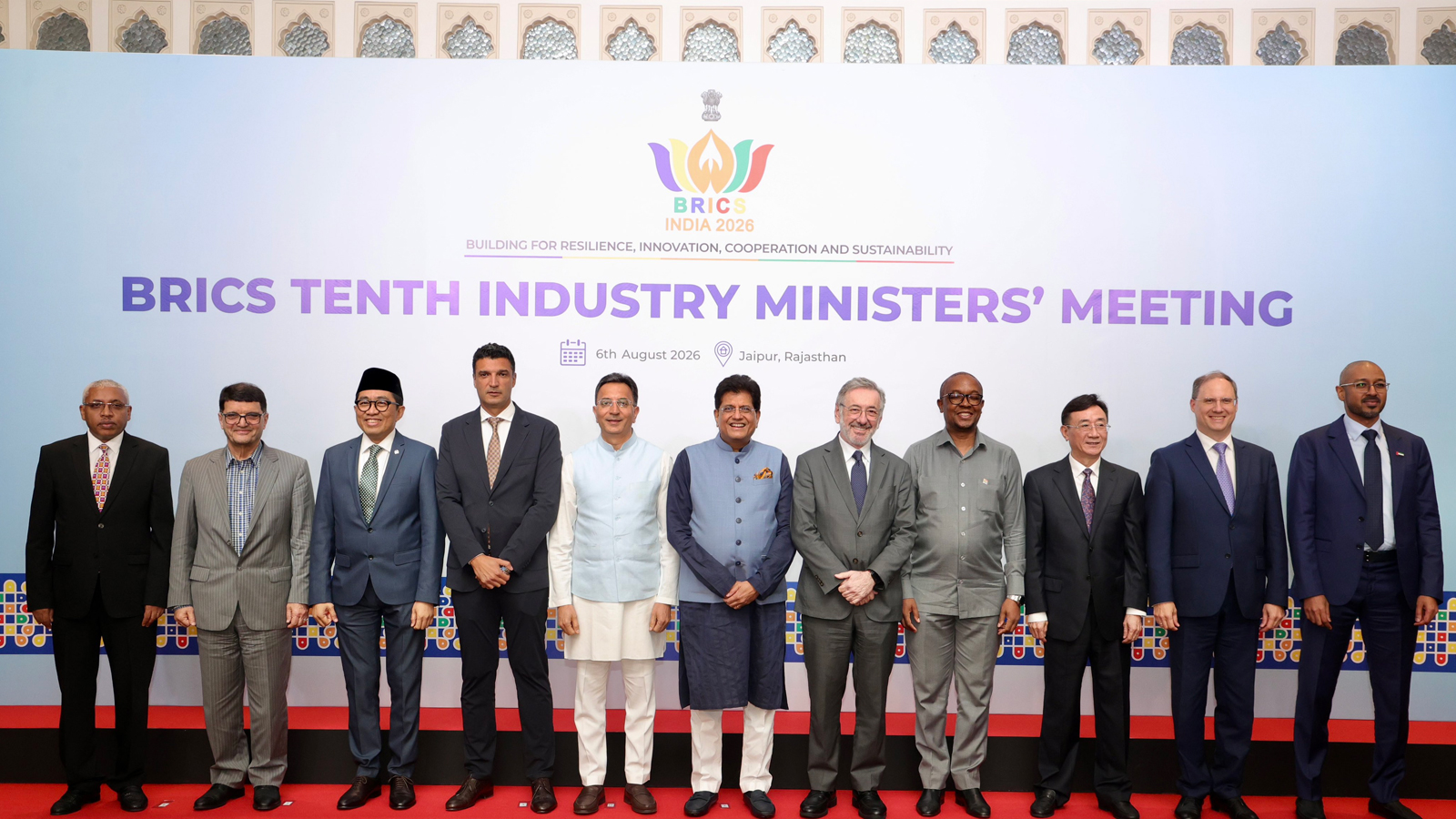
Indonesia is driving industrial transformation through strategic cooperation with BRICS nations. Deputy Industry Minister Faisol Riza noted that Indonesia views BRICS as a “strategic platform” to strengthen industrial cooperation and derive real benefits for national industry development. The government aims to ensure that this industrial transformation not only increases competitiveness, but also opens broad opportunities for investment, innovation, trade, and job creation.
The Role of Manufacturing in Indonesia’s Economy
Indonesia’s manufacturing sector is a critical pillar of the national economy. In the first quarter of 2026, manufacturing contributed over 19% of Indonesia’s GDP, employed more than 20 million workers, and accounted for over 82% of total exports. This strong performance highlights the sector’s potential to drive growth and competitiveness. It also underlines why Indonesia is focusing on industrial transformation, as modernizing factories and adopting advanced technologies are seen as key to maintaining global competitiveness.
Indonesia’s industrial strategy includes both broad policy shifts and specific programs. For example, the government is improving the national industrial data infrastructure (SIINas) to strengthen planning and supply chain resilience. These changes help factories become more efficient and better connected, reinforcing the foundation for technology-driven production. At the same time, the government is actively promoting new industrial hubs, such as solar panel manufacturing, to transition to cleaner, low-carbon industries.
- Contribution to GDP: >19% (Q1 2026)
- Employment: >20 million workers (Q1 2026)
- Export share: >82% of Indonesia’s exports (Q1 2026)
BRICS Partnership on New Industrial Revolution
Indonesia’s participation in BRICS offers a cooperative platform to boost its industrial transformation. After joining the expanded BRICS group in 2025, Indonesia has been active in initiatives like the Partnership on New Industrial Revolution (PartNIR) Advisory Group. In these forums, Indonesia emphasizes aligning its industrial strategy with those of fellow developing economies, tackling common challenges through joint programs. For example, the PartNIR agenda in 2026 included industrial innovation, green manufacturing, workforce development, and supply-chain resilience as key themes.
At the 2026 BRICS Industry Ministers meeting, member countries identified four priority areas for industrial cooperation:
- SMEs and IKM Development: Programs to increase SMEs’ access to financing, technology, and international markets. SMEs make up about 99.8% of Indonesia’s industrial firms, employ 65% of the industrial workforce, and contribute over 21% of manufacturing value added. Strengthening small and medium enterprises is therefore essential for national transformation.
- Startup Innovation: The Startup4Industry program has linked over 2,500 technology startups with manufacturers, investors, and universities. These startups work on artificial intelligence, smart manufacturing, robotics, green technology, and semiconductors, providing important momentum for innovation in the industrial sector.
- Logistics and Data: Indonesia introduced the National Industrial Information System (SIINas) to integrate industry data. This platform improves planning, logistics efficiency, and supply chain resilience by connecting factories, inventory, and transportation data. Better data integration makes the industrial network more responsive to disruptions.
- Solar Panel Manufacturing: Indonesia presented the development of its photovoltaic (solar panel) industry as part of a shift toward low-carbon manufacturing. Growing local solar production strengthens clean energy supply chains and supports the national energy transition.
Green Industry and Clean Energy
Industrial competitiveness increasingly requires sustainability. Indonesia’s transformation plans emphasize green industries and renewable energy. Solar energy, in particular, is being integrated into industrial strategy. The country has vast solar potential, and developing a domestic solar panel industry can both reduce emissions and create new industrial value chains. By investing in solar manufacturing and other low-carbon technologies, Indonesia aims to lower factory energy costs and meet climate goals. For example, factories powered by solar and other renewables can become more efficient and eco-friendly while supporting broader decarbonization efforts.
BRICS cooperation supports this green shift. Discussions have highlighted environmentally friendly practices, decarbonization, and circular economy initiatives as core parts of industrial policy. Indonesia can learn from partners like India and China, which are building large renewable energy manufacturing bases. Collaboration may include joint projects in energy storage, grid modernization, and green supply chains, ensuring that energy transition goes hand-in-hand with industrial growth.
Startups and Innovation Ecosystem
Startups play a crucial role in Indonesia’s industrial transformation by bringing new technologies and business models. The Startup4Industry initiative (mentioned above) has actively fostered connections between innovative tech firms and established manufacturers. For instance, one startup might use AI to optimize production schedules, while another develops energy-efficient machinery. This entrepreneurship drives experimentation and can fill niche needs in the industrial ecosystem.
Indonesia is also collaborating on international startup networks through BRICS. Officials have discussed creating a BRICS Incubator Network and a BRICS Startup Knowledge Hub to facilitate cross-border collaboration in innovation and investment. This means promising Indonesian startups could access larger markets and foreign capital through partnerships with peers in other BRICS countries. By strengthening its startup ecosystem, Indonesia hopes to accelerate technology transfer and attract global investment into its industrial sector.
Digitalization and Workforce Development
Digital technologies are transforming manufacturing processes worldwide. In Indonesia, the government is encouraging factories to adopt smart systems, robotics, and data analytics as part of the Industry 4.0 push. For example, sensors and IoT devices can enable predictive maintenance or real-time quality monitoring, enhancing productivity. Indonesian officials have highlighted that building a “smart manufacturing” ecosystem is essential for resilience in this new industrial era.
Workforce training is another pillar of transformation. New industrial technologies require skilled workers. The government and educational institutions are expanding training in areas like automation, AI, and industrial design. BRICS discussions have emphasized that strengthening workforce competence is a key foundation for industrial transformation. Collaboration through BRICS can support joint training programs and research projects (e.g., via the BRICS Centre for Industrial Competencies), helping to prepare a workforce capable of driving the next-generation manufacturing revolution.
Supply Chains and Logistics Resilience
Efficient supply chains are a vital part of industrial transformation. Disruptions in global logistics can hamper production and export growth. Indonesia is addressing this through better integration and data use. The SIINas platform (mentioned above) is one example: by sharing production data, demand forecasts, and resource availability across ministries and businesses, Indonesia can optimize inventory levels and transportation routes. This data-driven approach helps firms respond more quickly to global disruptions.
Within BRICS, Indonesia also advocates for collaboration on logistics and supply chain coordination. For instance, multilateral cooperation on trade facilitation, standards, and infrastructure in the region could open new markets for Indonesian products. Such efforts complement Indonesia’s goal to diversify its trade partners and secure supply lines for key industrial inputs, reinforcing supply-chain resilience amid global shifts.
Challenges and Future Outlook
The path to industrial transformation in Indonesia presents challenges. Acquiring advanced machinery and setting up renewable infrastructure require significant investment. Smaller firms may need financial support or public-private partnerships to modernize. Workforce training must scale up to match technology adoption. Regulatory consistency and infrastructure (energy, transport, digital) are also critical to attract investment.
However, Indonesia’s strategy and BRICS cooperation aim to mitigate these issues. International partnerships can ease funding and skills gaps by sharing expertise and resources. Indonesia’s Industry Minister Agus Gumiwang Kartasasmita has stressed that aligning policies and leveraging BRICS networks can accelerate its industrial modernization. As Deputy Minister Faisol Riza noted, BRICS cooperation “opens larger space for Indonesian industry to participate in global value chains and accelerate national manufacturing transformation”.
Overall, by combining industrial transformation efforts with smart policy and international collaboration, Indonesia is poised to upgrade its manufacturing base. Embracing digital innovation, green technology, and a dynamic startup sector will be key to creating high-value industries that can compete globally. Through platforms like BRICS PartNIR and related initiatives, Indonesia seeks to ensure this transformation is inclusive, sustainable, and aligned with global trends.
Read More