





 Tuesday, 22-09-26








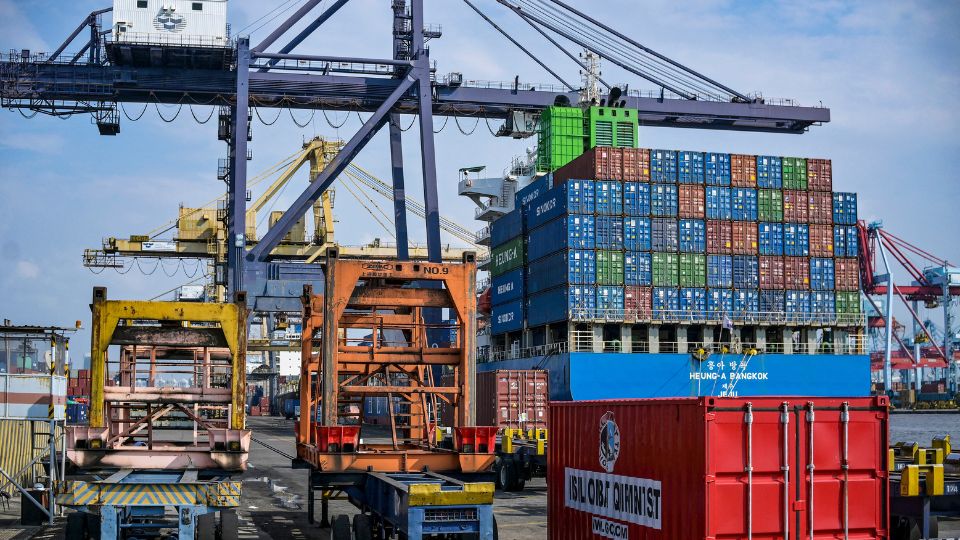
A Smaller Deficit, But Not Yet A Return To Comfort
Indonesia’s trade balance improved in June, but the story is more nuanced than the headline number suggests. According to Jakarta Globe, the country recorded a trade deficit of about $450 million, a sharp improvement from the $1.61 billion deficit in May. The result showed that the Indonesia trade deficit was narrowing, yet the country still remained in the red for a second straight month after a long surplus streak ended in May.
The biggest reason for the improvement was stronger export performance and a slightly less severe trade gap than many economists had expected. Reuters reported that exports rose 8.84% while imports increased 34.27%, and the June deficit came in smaller than the $790 million forecast in a Reuters poll of economists. Even so, the external balance remained under pressure because of higher energy import costs and a jump in oil and gas shipments.
What Pushed The Indonesia Trade Deficit Wider Earlier In The Year
To understand the June data, it helps to look back at what happened in May. Jakarta Globe noted that Indonesia broke its six year surplus run in May, when the trade balance fell to a $1.61 billion deficit as crude price spikes related to the Iran war increased oil import costs. That month marked a meaningful shift for Southeast Asia’s largest economy, which had relied on a long stretch of monthly trade surpluses since 2020.
The June deficit did not come from a collapse in export activity. Instead, the problem was concentrated in oil and gas. BPS deputy Ateng Hartono said the $3.49 billion negative oil and gas trade balance, especially for oil products and crude, drove the June shortfall. Jakarta Globe also reported that oil and gas imports soared 105.15% year on year to $4.56 billion, with Singapore and Malaysia among Indonesia’s top energy suppliers.
That contrast matters because it shows the Indonesia trade deficit is being driven by a specific sector rather than by broad weakness across the export base. In simple terms, Indonesia is still selling goods abroad, but it is paying much more to bring in energy. That makes the shape of the trade balance very different from a general slowdown story.
Exports Stayed Strong Enough To Keep The Damage Limited
The good news is that exports continued to provide an offset. Jakarta Globe reported that Indonesia posted a $3.04 billion surplus in non oil and gas trade in June, supported by palm oil and other goods. The article also said Indonesia’s goods trade surplus reached $3.58 billion in the first half of 2026, which means the broader export machine remained intact even after the May and June deficits.
Official BPS data paints a similar picture for the earlier part of the year. BPS said Indonesia’s trade balance for January to May 2026 recorded a surplus of $4.03 billion, supported by a non oil and gas surplus of $16.31 billion. Imports were rising at the same time, but the export base was still large enough to absorb most of the pressure from the oil and gas side.
Reuters added an important detail to that story by noting that export growth in June helped cushion the blow from heavy import demand. The agency said exports climbed 8.84% year on year, driven by products such as nickel and palm oil, while imports rose much faster because of energy needs. That combination explains why the Indonesia trade deficit improved, but did not disappear.
Why The First Half Of 2026 Still Looks Better Than The Headline Suggests
The June deficit can easily sound alarming when viewed in isolation, but the first half numbers tell a more balanced story. Indonesia’s trade surplus for January to May already stood at $4.03 billion, and even after the June deficit, Jakarta Globe reported a first half surplus of $3.58 billion. That is a smaller cushion than earlier in the year, but it is still a positive result for the broader economy.
That matters for investors because trade balance trends influence confidence in external stability, foreign exchange flows, and policy expectations. When exports stay resilient, the economy can absorb short term import shocks more easily. When imports rise because of energy needs, the market watches closely to see whether the pressure is temporary or structural. In June, the evidence pointed to a temporary but serious energy driven squeeze rather than a collapse in trade competitiveness.
The data also highlights how dependent Indonesia remains on commodity cycles. Palm oil, nickel, and manufactured goods continue to support the non oil side, while fuel and crude imports can quickly drag the balance into deficit. That is why the Indonesia trade deficit is not just a statistic. It is a live indicator of how energy costs, commodity demand, and global prices are interacting with domestic trade flows.
Oil, Palm Oil, Nickel, And The Trade Mix That Shapes The Outcome
Indonesia’s trade picture is not determined by one sector alone. The country benefits from a broad export basket, but some products matter more when the economy faces pressure. Jakarta Globe specifically mentioned palm oil among the contributors to the non oil and gas surplus, while Reuters pointed to nickel products and palm oil as important export drivers in June. That helps explain why the country could still post healthy export growth even while the overall balance remained negative.
At the same time, energy imports have become the swing factor. Jakarta Globe reported that Singapore and Malaysia were key energy suppliers, and that oil and gas imports rose sharply in June. Reuters added that oil and gas imports surged 105.15% year on year. In practical terms, that means even a strong export month can be partially overwhelmed if the country has to import much more fuel than usual.
This is why analysts focus on the composition of trade, not just the final headline number. A modest deficit driven by energy can be very different from a deficit caused by weak exports and falling industrial demand. In June, the Indonesia trade deficit was painful, but the structure of the data suggests the core export base still had enough strength to stay afloat.
What Economists And Policymakers Will Watch Next
Economists were already expecting a deficit in June, but many thought it would be closer to $1 billion. Jakarta Globe said Bank Danamon Indonesia lead economist Irman Faiz had projected a deficit of around $700 million, citing lower crude prices and softer capital goods imports. The final result beat the worst expectations, even though it still pointed to a weaker external position than earlier in the year.
That gap between expectations and reality matters because it influences how markets interpret the next few months. If energy costs stabilize, the trade balance could recover quickly. If oil imports stay elevated, the deficit could continue longer than expected. Reuters noted that economists remain concerned about external risks, including slower demand from China and the potential effect of a weaker rupiah on import costs.
For policymakers, the key issue is resilience. Indonesia does not need every month to deliver a surplus, but it does need enough export strength to offset temporary import shocks. The current data suggests the country still has that capability, especially when commodities and manufactured goods perform well. The challenge is keeping the Indonesia trade deficit from becoming a longer lasting trend tied to fuel dependence.
The Outlook For The Rest Of 2026
Looking ahead, the most important question is whether June was an energy spike or the start of a more persistent pattern. The available data leans toward the former, because exports remained solid, the non oil and gas balance was still positive, and the first half surplus stayed intact. Still, the country cannot ignore the speed at which oil and gas imports can reshape the monthly trade balance.
The trade balance will also depend on the global commodity cycle. If palm oil, nickel, and other key export lines remain healthy, they can keep supporting the non oil surplus. If energy prices rise again, however, the deficit could widen even if export growth stays respectable. That is the central tension in Indonesia’s external trade story right now.
For businesses, the lesson is straightforward. Trade data should not be read as a single monthly headline. It should be read as a signal about energy exposure, export competitiveness, and currency sensitivity. For now, Indonesia still has a workable trade base, but the June reading shows that a strong export economy can still be challenged by a sudden surge in imported fuel costs. The Indonesia trade deficit narrowed in June, yet it also reminded markets that external balance can turn quickly when energy prices move against the country.
Read More