





 Tuesday, 22-09-26








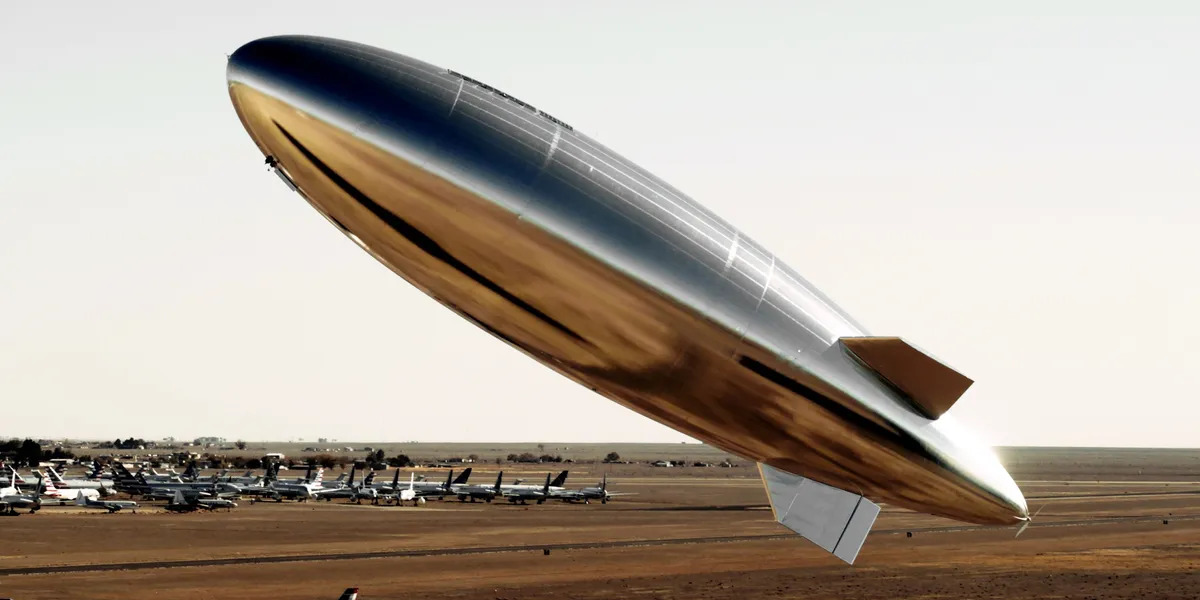
For decades, global telecommunications networks have relied primarily on an infrastructure of ground-based cell towers and orbiting satellites. While terrestrial towers deliver high-speed mobile connections, they remain geographically constrained by mountains, oceans, and remote terrains. Conversely, satellites cover vast geographical areas but can suffer from higher signal latency and require specialized hardware. To bridge this gap, telecommunications pioneers are elevating network infrastructure directly into the stratosphere. SoftBank Corp., in strategic collaboration with American aerospace innovator Sceye Inc., recently achieved a breakthrough in airborne telecom testing. By leveraging high-altitude airships, the joint initiative successfully demonstrated how a stratospheric HAPS cellular network can function as a virtual cell tower floating miles above the Earth.
High Altitude Platform Station (HAPS) technology operates in the stratosphere, positioned roughly 60,000 feet above sea level. At this altitude, airships hover far above commercial airline traffic and turbulent weather systems, providing an unobstructed line of sight to the ground below. The flight trials conducted by SoftBank and Sceye represent a major milestone toward commercializing airborne telecommunications. By transmitting LTE and 5G signals directly to standard, unmodified smartphones, this collaborative effort demonstrates that the dream of ubiquitous, global mobile coverage is rapidly approaching reality.
The Engineering Behind High Altitude Platform Stations
To appreciate the significance of this milestone, one must understand the unique mechanical and environmental physics governing the stratosphere. Operating between 18 and 20 kilometers above the Earth's surface requires specialized technology. At this height, atmospheric pressure drops dramatically, temperatures plunge well below freezing, and solar radiation intensifies. Sceye's high-altitude airships are engineered to endure these harsh conditions using ultra-lightweight composite materials, helium lift systems, and advanced solar-powered propulsion.
Unlike conventional satellites that orbit at high velocities or terrestrial towers fixed to physical land, a stratospheric platform can maintain a geostationary position over a target region for extended periods. Solar panels integrated across the airship envelope generate electricity during daylight hours, charging onboard energy storage systems that power the platform throughout the night. Building a resilient stratospheric HAPS cellular network requires balancing power consumption between propulsion motors, navigation systems, and high-capacity telecommunication payloads.
The payload carried by Sceye's airship functions essentially like the hardware found on a terrestrial mobile tower, scaled down in weight and optimized for energy efficiency. Equipped with specialized beamforming antennas and advanced base transceiver stations, the system projects focused radio frequency coverage across thousands of square kilometers. Consequently, a single airship floating in the stratosphere can deliver cellular coverage equivalent to hundreds of ground-based cell towers combined.
Breakthrough Findings from the SoftBank and Sceye Trial
The recent field testing conducted by SoftBank and Sceye validated critical performance metrics required for practical telecom deployment. During the trial, Sceye's helium-filled airship ascended into the stratosphere over testing grounds in New Mexico. Once stabilized at altitude, the onboard payload established seamless wireless communications with terrestrial base stations and ground devices.
A central objective of the test was confirming direct-to-device connectivity. In conventional satellite communications, end users typically require external satellite dishes or dedicated ground terminals to receive signals. In contrast, the successful demonstration of this stratospheric HAPS cellular network proved that standard mobile devices could connect directly to airborne equipment without requiring hardware modifications or specialized mobile applications. Engineers executed video calls, data transfers, and voice communications between unmodified smartphones on the ground and the stratospheric payload.
Furthermore, the trial evaluated handoff capabilities between airborne signals and ground infrastructure. In a real-world environment, mobile users moving across coverage boundaries must transition smoothly between ground towers and stratospheric platforms without experiencing dropped calls or packet loss. SoftBank's proprietary spectrum management technology allowed the system to dynamically assign bandwidth and manage network traffic, ensuring consistent service quality. The success of these tests confirms that stratospheric airships can seamlessly integrate into existing telecommunication architectures.
Comparative Technical Architecture Across Telecommunications Models
To understand where HAPS fits into the global communications landscape, it is helpful to compare it against existing delivery models. Terrestrial towers offer superior bandwidth and minimal latency but suffer from restricted coverage radiuses and vulnerability to physical damage. Low Earth Orbit (LEO) satellite constellations provide broad global coverage but involve high launch costs, complex satellite constellation management, and potential signal attenuation challenges.
The table below highlights the structural and operational differences between these three primary communication layers:

As demonstrated by the architectural comparison, HAPS occupies an optimal middle ground. It delivers latency metrics nearly indistinguishable from ground infrastructure while matching the wide-area coverage advantages traditionally reserved for orbital space assets.
Strategic Applications for Disaster Relief and Rural Connectivity
The practical implications of stratospheric connectivity extend far beyond routine commercial cellular service. One of the most urgent use cases for airborne telecommunications is disaster recovery and emergency response. When natural disasters such as earthquakes, hurricanes, or major floods strike, terrestrial cell towers are frequently destroyed or rendered inoperable due to power outages and optical fiber severances.
In regions prone to natural hazards, a stratospheric HAPS cellular network provides indispensable resilience. Emergency response teams can deploy stratospheric airships to restore continuous communications across devastated zones within hours. Because the airship floats high above localized weather disruptions and physical ground destruction, rescue workers, government agencies, and affected citizens can maintain vital communication links when terrestrial infrastructure fails completely.
Another crucial application lies in bridging the global digital divide. According to international telecommunication reports, billions of people around the world still lack reliable high-speed internet access. Installing ground-based towers across isolated islands, dense tropical rainforests, or mountainous terrains is often economically unfeasible for telecom operators. Stratospheric airships resolve this economic bottleneck by delivering cost-effective coverage over vast, remote territories. For island nations such as Indonesia or archipelago territories across the Pacific, floating stratospheric towers offer a scalable method to connect rural populations, remote schools, and maritime commerce without laying expensive undersea cables or building thousands of remote ground towers.
Future Regulatory Frameworks and Technological Roadmaps
While the technical achievements of SoftBank and Sceye mark a giant leap forward, several operational and regulatory hurdles must be addressed before commercial stratospheric networks achieve widespread global adoption. Chief among these challenges is international spectrum allocation and regulatory harmony. Because radio frequencies cross international boundaries, telecommunication providers must work closely with the International Telecommunication Union (ITU) to secure dedicated spectrum bands designated for HAPS operations without interfering with terrestrial mobile networks or aviation radars.
Additionally, platform endurance remains a continuous focus for aerospace engineers. Operating in the stratosphere requires energy management systems that can reliably sustain continuous flight over several months or even years. Advances in next-generation solid-state batteries, high-efficiency solar cells, and automated station-keeping algorithms will be critical to extending mission durations and reducing operational maintenance costs.
Overcoming these hurdles will require sustained industry collaboration. Commercializing the stratospheric HAPS cellular network will depend heavily on international regulatory approvals and cross-border spectrum coordination among telecommunications authorities worldwide. As leaders in the HAPS ecosystem continue refining airship endurance and payload capacity, industry analysts expect commercial stratospheric services to begin initial deployment within the coming years, transforming how mobile networks are engineered worldwide.
The collaborative trials conducted by SoftBank and Sceye represent a pivotal moment in the evolution of global connectivity. By successfully proving that helium-powered stratospheric airships can deliver direct LTE and 5G connections to standard smartphones, the two companies have laid the foundation for a three-dimensional network architecture. Combining terrestrial ground towers, stratospheric platforms, and space-based satellites creates a resilient telecom infrastructure capable of reaching every corner of the Earth. Ultimately, the advent of the stratospheric HAPS cellular network promises to close the global digital divide, deliver life-saving communications during crises, and launch a new era of airborne telecommunications.
Read More