





 Sunday, 25-10-26








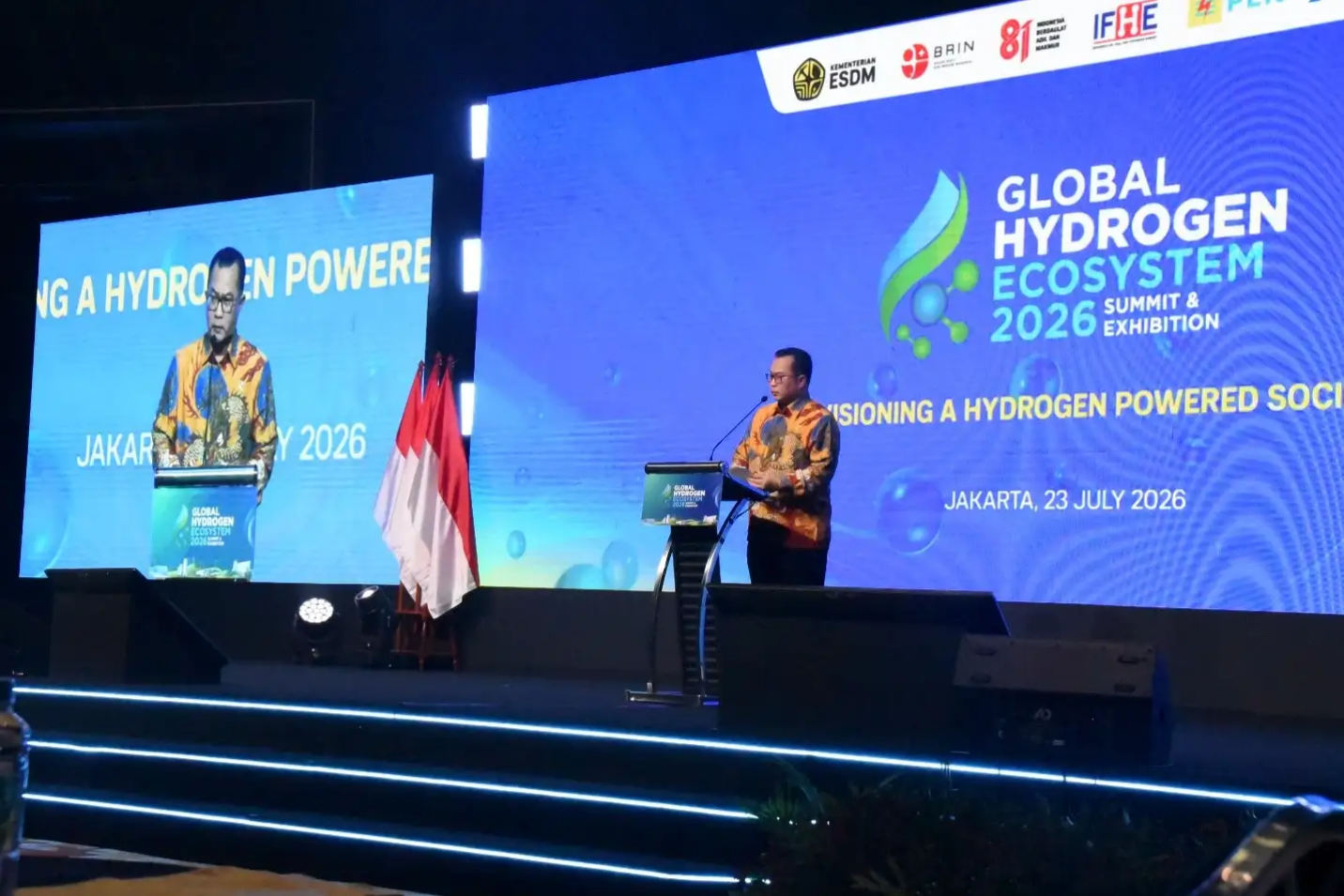
Hydrogen development in Indonesia requires a strong ecosystem that connects research institutions, government, industry, and other stakeholders to support the country's energy transition, according to the National Research and Innovation Agency (BRIN) during the Global Hydrogen Ecosystem Summit & Exhibition (GHES) 2026 in Jakarta (23/07).
BRIN Head Prof. Arif Satria said the agency is developing hydrogen research from upstream to downstream through various research centers to produce technologies that support the national energy transition while improving access to clean energy.
BRIN Focuses Hydrogen Research on Real-World Needs
Arif said hydrogen development should be built through a collaborative ecosystem instead of relying only on technological advances.
"The issue of energy transition, particularly hydrogen development, must be built through an ecosystem."
He said BRIN develops research based on actual needs to increase the opportunity for commercialization.
"The research we develop is based on needs. If research is developed based on needs, I believe the results will be easier to commercialize."
Biohydrogen Research Targets Clean Energy for Coastal Communities
During GHES 2026, held at the Jakarta Convention Centre from July 21 to July 23, BRIN researchers presented studies highlighting hydrogen's potential as part of Indonesia's renewable energy system.
Prof. Dwi Susilaningsih, a researcher at BRIN's Research Center for Applied Microbiology, presented biohydrogen production technology using biomass and microbial agents through a fermentation process.
She said the technology is intended to become part of an integrated energy system that utilizes multiple renewable energy sources instead of serving as a standalone energy source.
"The target is coastal areas or small islands that still lack sufficient energy. Hydrogen can strengthen existing energy systems by utilizing various renewable energy sources."
Dwi said heat generated during hydrogen production could also be used for seawater desalination, allowing the same system to provide both energy and clean water for island communities.
She said laboratory research on photofermentation and dark fermentation has been completed, but the next challenge is scaling the technology to the pilot plant stage and industrial implementation.
"In the laboratory, photofermentation and dark fermentation have been completed. Now the challenge is moving to the pilot plant stage. Will the results remain the same as in the laboratory?"
Dwi said there is no guarantee that technology performing well in laboratories will deliver the same results at industrial scale, making collaboration with industry essential.
"We invite industries and hydrogen users to collaborate in developing this technology."
Electric Boat Innovation Supports Clean Transportation
BRIN is also expanding the use of clean energy in transportation through electric boat technology.
Aam Muharam, a researcher at BRIN's Research Center for Transportation Technology, said the agency's electric boats have been implemented in Morotai, North Maluku, and on the Maron River in East Java.
The boats are used by fishermen, for transporting seaweed harvests, and as transportation for schoolchildren.
"The electric boats in Morotai are also used to transport schoolchildren. This greatly helps reduce the expenses that parents have to pay."
Aam said electric boats have much lower operating costs than boats powered by fuel, but successful implementation also depends on supportive regulations and policies.
"If only the technology is implemented without ecosystem support, it will certainly not operate optimally. Regulatory and policy support are important factors to make this technology attractive for development."
He added that communities in several locations have responded positively to the technology.
"In several locations, communities have already experienced the benefits of boat electrification, and they are asking when this technology will be implemented again or expanded."
BRIN Seeks Stronger Industry Collaboration
BRIN continues to develop biohydrogen production technology, promote clean energy applications in transportation, and strengthen collaboration with industry to build Indonesia's national hydrogen ecosystem.
PHOTO: BRIN
This article was created with AI assistance.
We make every effort to ensure the accuracy of our content, some information may be incorrect or outdated. Please let us know of any corrections at [email protected].
Read More