





 Saturday, 24-10-26








A Milestone For Batam-Singapore Connectivity
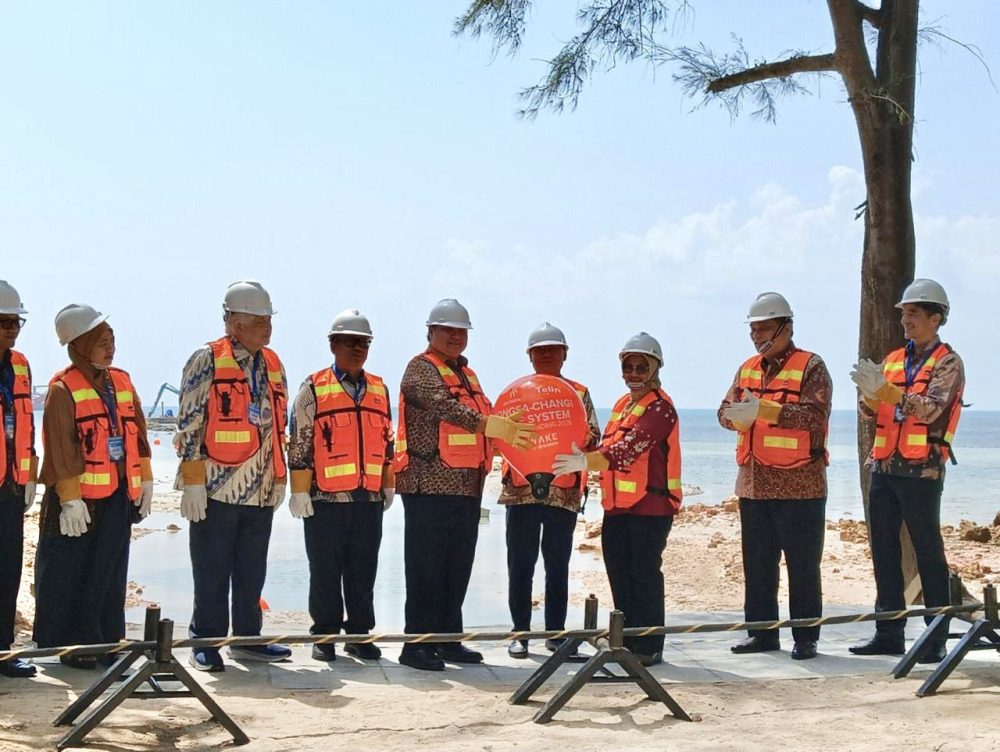
The Nongsa-Changi Cable has officially entered operation, marking a major step for Batam’s growing role in Southeast Asia’s digital infrastructure. Local reporting in Batam said the submarine cable is now operating between Batam and Singapore, while officials at the landing ceremony emphasized that the project is expected to attract new investment through stronger digital connectivity. The announcement also fits a wider push to position Batam as a hub for data center growth and artificial intelligence activity.
This is not just another infrastructure story. The Nongsa-Changi Cable is part of a broader shift in how companies and governments think about digital capacity in the region. The cable helps create a faster, more resilient route between one of Asia’s busiest connectivity nodes, Singapore, and Batam’s fast-developing digital ecosystem. For a city that wants to become more than an industrial and logistics base, that matters.
What The Nongsa-Changi Cable Actually Does
At a technical level, the Nongsa-Changi Cable is a 50-kilometer submarine cable system linking Batam’s Nongsa Digital Park and Changi in East Singapore. Earlier project disclosures said the system would include a minimum of 24 fiber pairs and was designed to support data intensive services, DC-to-DC connectivity, and high-density AI applications. Those are not buzzwords. They are the basic requirements for modern digital infrastructure.
The project was developed by Telin and BW Digital, whose 2024 announcement said the cable was intended to meet rising demand for connectivity and resilience between Singapore and Batam. The companies framed the system as a way to interconnect data centers and build a seamless data transfer corridor. That makes the Nongsa-Changi Cable especially relevant for cloud operators, content providers, telecoms, and other businesses that depend on reliable cross-border capacity.
In practical terms, the cable gives Batam a more direct digital route to Singapore. That matters because Singapore remains one of the region’s biggest data center and interconnection markets, while Batam has become an important spillover location for capacity, land, and energy. The Nongsa-Changi Cable strengthens that relationship by improving the physical layer underneath the region’s digital economy.
Why Officials And Investors Care
Officials in Batam are treating the launch as a strategic moment. Gokepri reported that the cable operating in Batam is expected to attract new investment, and other local coverage described the landing ceremony as a sign that Batam is moving deeper into its role as a digital gateway. That is consistent with the government’s broader narrative around Batam as a future hub for data centers and AI infrastructure.
The policy angle is important as well. A separate report on the landing ceremony said the Ministry of Marine Affairs and Fisheries stressed that marine permits are now processed digitally through the Online Single Submission system, making the process more transparent and legally certain for investors. That point may sound administrative, but it matters because infrastructure projects like the Nongsa-Changi Cable depend on predictable permitting and a stable regulatory environment.
For investors, the message is straightforward. Batam is not just talking about digital transformation. It is building the physical connections that make digital transformation investable. That includes power supply, land, landing stations, and subsea connectivity. The Nongsa-Changi Cable sits in the middle of that stack, which is why the launch has received attention beyond telecom circles.
The Latency Story Behind The Launch
One of the strongest selling points of the Nongsa-Changi Cable is latency. Telin’s cable page describes NCC as a high-capacity, low-latency subsea system that establishes one of the shortest and most direct connectivity routes between Nongsa Digital Park and Singapore. A later industry report said the system is designed to deliver less than 2 milliseconds of latency between Batam and Singapore, which is exactly the kind of performance operators want for real-time applications.
That matters more now than it did even a few years ago. AI workloads, cloud services, financial systems, and content delivery platforms all benefit from low-latency links. When a region can move data faster and more reliably, it becomes easier to host distributed workloads and to shift demand away from congested markets. The Nongsa-Changi Cable is therefore not only a telecom asset. It is a competitiveness tool.
There is also a resilience angle. The project was presented as a way to provide more diverse and secure connectivity for operators in Nongsa. That is important because single-path dependence can become a bottleneck for businesses that need uptime and redundancy. By adding a direct Batam-Singapore route, the Nongsa-Changi Cable improves network diversity and gives operators more flexibility in how they build their regional architecture.
Batam's Digital Park Is Becoming More Important
The cable’s significance is tied closely to Nongsa Digital Park, which has been developing into a larger digital campus. BW Digital’s 2025 and 2026 coverage said the Nongsa-Changi Cable would connect directly into Batam’s digital park and support a larger campus strategy built around data centers and AI-ready infrastructure. That means the cable is not a standalone project. It is one component of a broader industrial ecosystem.
This ecosystem approach is what makes Batam interesting. The city already benefits from proximity to Singapore, and its positioning in the Singapore Strait gives it a geographic advantage. But geography alone is not enough. What Batam needs is infrastructure that makes it viable for modern digital workloads. The Nongsa-Changi Cable helps provide that layer, alongside power development and planned data center investment in Nongsa.
The result is a more credible story for regional spillover. If Singapore remains tight on available land and capacity, Batam can absorb some of the demand. The cable helps make that possible by reducing the friction of moving data between the two locations. In effect, the Nongsa-Changi Cable strengthens Batam’s hand in the same way a major highway strengthens a city’s logistics role.
What The Launch Means For The Region
The launch also says something about Southeast Asia’s digital geography. The region is increasingly organized around a small number of interlinked corridors where compute, cloud, fiber, and power intersect. Singapore has long been one of those anchors. Batam is now becoming a more serious extension of that ecosystem, and the Nongsa-Changi Cable is a key reason why.
That could have wider implications for Indonesia. More digital infrastructure in Batam can support jobs, services, and investment that might otherwise flow elsewhere. It can also help Indonesia capture more value from regional data traffic rather than simply serving as a transit geography. When paired with local power projects and data center investment, the cable can become part of a broader economic upgrade.
The Nongsa-Changi Cable also demonstrates the growing importance of cross-border partnerships. Telin and BW Digital initially framed the project as a joint effort to build resilience and capacity for the Singapore-Batam digital corridor. That kind of collaboration is increasingly common in infrastructure, where no single company or country can efficiently build every layer alone.
A Better Starting Point For Batam's Digital Future
The bigger story is not just that the Nongsa-Changi Cable is operating. It is that Batam now has another serious tool for competing in the digital economy. If the city can continue adding power, land, policy support, and connectivity, it will become much harder to ignore as a regional digital hub. That is what makes this launch more than a ceremonial moment.
For businesses, the signal is clear. The Nongsa-Changi Cable improves route diversity, latency, and investment attractiveness in one stroke. For policymakers, it shows that infrastructure discipline can quickly translate into strategic momentum. And for Batam, it is another proof point that the city is moving from aspiration to execution.
The launch may be one step in a longer buildout, but it is an important one. The Nongsa-Changi Cable gives Batam a stronger place in the region’s digital map and creates a firmer base for the next wave of data center and AI investment.
Read More