





 Monday, 29-06-26








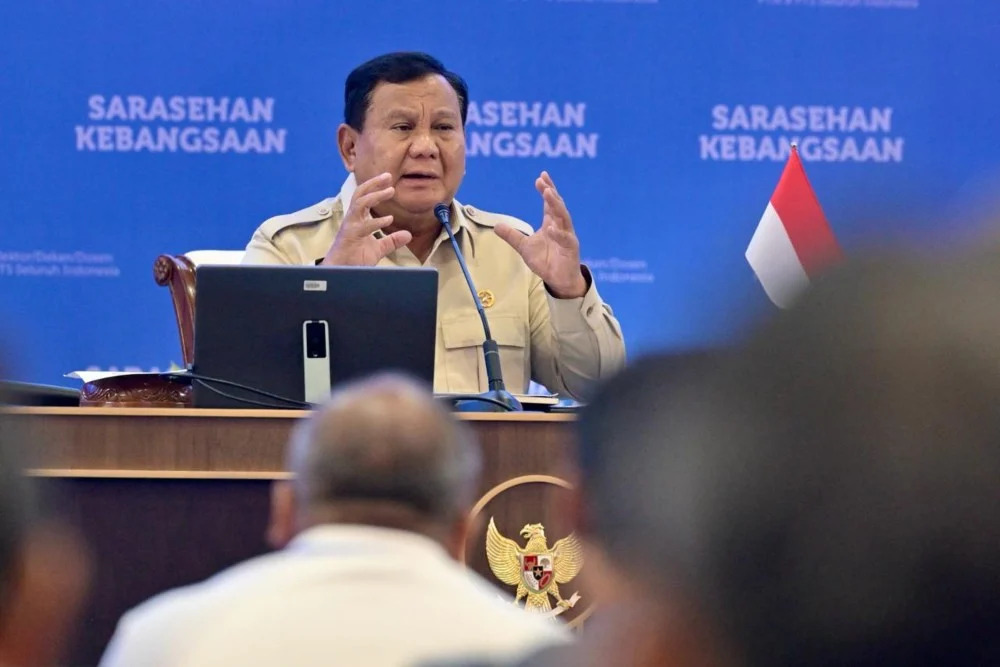
Prabowo Is Raising The Research Budget To Push Applied Innovation
President Prabowo Subianto has ordered an additional research budget of around Rp4 trillion, according to statements from State Secretary Prasetyo Hadi after the closing of the 2026 Indonesian Convention on Science, Technology, and Industry in Jakarta on June 28, 2026. Prasetyo said the president wants research spending to support work that has direct public impact, especially on waste and energy issues.
That direction is important because it shows the government is trying to move research policy away from abstract output and toward practical solutions. Prasetyo said the research roadmap is being coordinated by Bappenas, the Ministry of Higher Education, Science, and Technology, and BRIN, with the goal of placing different research streams under one grand design. He also pointed to examples such as waste to energy and the shift from LPG to CNG.
For Indonesia, the decision is not simply about adding money. It is about using a larger research budget to align universities, research institutions, and industry around problems that affect households, businesses, and the broader economy. The move fits a pattern already visible in Prabowo’s education and technology agenda. In January 2026, he raised the research funding ceiling to Rp12 trillion and tied that support to university research and BRIN collaboration.
Why The Research Budget Move Matters Now
The new research budget comes at a time when the government is pushing hard on productivity, self sufficiency, and industrial upgrading. In January, Prabowo told university leaders that research funding should support food self sufficiency, energy self sufficiency, industrialization, and downstreaming programs. That same message is now continuing in June with a sharper focus on practical outcomes.
This matters because Indonesia still needs stronger links between research output and real economic use. The government has already signaled that it wants institutions to work from a shared roadmap rather than isolated projects. Prasetyo said the point of the new structure is to make research more coordinated and more useful for solving national problems, not just producing papers or academic prestige.
The budget timing also fits the broader fiscal environment. Earlier in 2026, the government said it had saved more than Rp300 trillion through budget efficiency measures and redirected those efficiencies into productive programs. That tells investors and educators something important: the administration is willing to shift spending toward areas it views as strategically productive, and research now appears to be one of them.
The Government Wants Research That Solves Daily Problems
The clearest part of the announcement is the type of research Prabowo wants to support. Prasetyo said the president is especially interested in work that can have direct impact on the public, mentioning waste management and energy transition as examples. He specifically referred to waste to energy research and the possibility of moving from LPG toward CNG.
That focus is not accidental. Waste is a visible, recurring problem in many Indonesian cities, while energy policy remains tied to import dependence and subsidy pressure. A research budget aimed at those pain points can create more immediate value than research that stays locked inside academic journals. It can also support local governments, utilities, manufacturers, and technology providers that need tested solutions.
The emphasis on applied research also reflects a broader global trend. Countries that manage to turn science into usable technology tend to gain an edge in competitiveness, resilience, and industrial productivity. Indonesia’s approach under Prabowo suggests the administration is trying to make its research budget a tool for solving structural bottlenecks rather than a passive line item in the state budget. That is a meaningful strategic shift.
Universities And BRIN Are Being Asked To Work From One Roadmap
A major part of the policy is institutional coordination. Prasetyo said the government wants research to follow one grand design and that the roadmap is being built through coordination among Bappenas, Kemdiktisaintek, and BRIN. That matters because fragmented research systems often produce duplicated work, weak commercialization, and limited policy impact.
Prabowo’s January briefing to university leaders already pointed in this direction. He asked campuses to prioritize research that supports national development goals and said universities should strengthen collaboration with BRIN. In the June remarks, that theme appears even more explicit: the state wants academic capacity, but it wants that capacity organized around national priorities.
This gives universities a clearer role, but also a greater responsibility. Under a larger research budget, the expectation will not be only to publish more. It will be to contribute to systems that can be tested, scaled, and applied. For researchers, that can be a positive change if it comes with better funding stability and better access to government and industry partners.
The government has also made a broader political case for academic engagement. At the closing of KSTI 2026, Prabowo called on the nation’s scientific and higher education community to contribute ideas and solutions for the country’s survival and future development. He also said he wants regular consultations with rectors and professors. That suggests the research budget increase is part of a larger effort to build a more active science policy ecosystem.
What The Research Budget Could Mean For Industry
For industry, the new research budget could become more than a public sector story. If the government prioritizes waste to energy, CNG conversion, and other applied fields, the private sector may find more opportunities for pilot projects, procurement, and commercialization. That could be especially relevant for energy firms, environmental technology providers, campus startups, and industrial players looking for local innovation partners.
The policy could also strengthen the case for university industry partnerships. In January, Prabowo said the additional funding would support collaboration with BRIN and help universities contribute more directly to national goals. That opens the door for joint research on energy systems, food production, downstream processing, digital tools, and public service innovation. If implemented well, the research budget could become a bridge between academic capability and commercial adoption.
There is also a competitiveness angle. Indonesia has made clear in other national discussions that it wants stronger technological capacity to meet future economic challenges. The administration has already been thinking about science and technology as a growth engine, not just an education issue. That is why this budget decision matters to investors as well as to academics. It signals which kinds of capabilities the state wants to build next.
The Real Test Will Be Execution
The scale of the announcement is meaningful, but execution will decide whether the research budget becomes transformative or symbolic. The government says it wants a single roadmap, coordinated institutions, and projects with real world impact. That is a strong framework. The challenge is turning it into effective project selection, stable funding flows, and measurable outcomes.
Indonesia already has an example of how serious research funding can be framed. In January, Prabowo told university leaders that the state budget would support research more heavily, increasing the research funding ceiling to Rp12 trillion in 2026. The June announcement suggests that the administration is still doubling down on that direction rather than treating it as a one time gesture.
If the research budget is channeled well, it could help Indonesia address waste, energy dependence, industrial upgrading, and technology adoption at the same time. That would make the funding politically credible and economically useful. If not, it risks becoming another ambitious announcement that produces limited downstream value. The policy now has enough momentum that the country will be watching closely.
The strongest reading of the move is that Prabowo wants research to become a practical instrument of national development. The budget increase, the roadmap, and the focus on applied problems all point in the same direction. Indonesia’s next phase of science policy will be judged not by how much it spends alone, but by whether the research budget actually changes what the country can solve.
Read More