





 Sunday, 04-10-26








A New Opening For Enterprise Telecom In Indonesia
The headline around XLSMART and China Mobile B2B solutions points to a larger shift in Indonesia’s telecom market. The opportunity is not simply about selling more connectivity. It is about packaging enterprise infrastructure, cloud services, IoT, and cross-border digital tools into one commercial offer that can serve Indonesian companies with regional ambitions. That is the real business story behind this kind of move. XLSMART for Business already positions itself as an enterprise solutions provider across data connectivity, cloud services, IoT, and digital transformation, with offerings that span smart transportation, smart manufacturing, smart city, internet corporate, XL SATU BIZ, and private network services.
China Mobile International, or CMI, brings a different but highly relevant set of capabilities. Its official site describes a suite of flexible enterprise solutions that includes connectivity, cloud business, IDC services, IoT, and ICT solutions. That combination matters because Indonesian enterprises are no longer looking only for basic bandwidth. They want managed services that can support regional operations, secure data exchange, and scalable digital workflows. China Mobile B2B solutions fit that demand pattern well, especially if XLSMART wants to deepen its enterprise portfolio rather than compete only on price.
The timing is also important. XLSMART is still in the middle of proving the strength of its newly merged structure after the combination of XL Axiata and Smartfren. LightReading reported that the company launched as Indonesia’s third largest telco, with a combined market share of 25 percent and projected pro forma revenues of 45.8 trillion rupiah based on December 2024 figures. That scale gives XLSMART more room to think beyond consumer connectivity and push harder into enterprise and business solutions.
Why XLSMART Has A Strong Base To Build On
XLSMART for Business is already presenting itself as a broad digital enabler. Its official business page says the unit serves more than 330 industries and delivers enterprise grade solutions designed to improve operational efficiency, innovation, and growth. That is a meaningful foundation because it means the company is not starting from zero. It already has the product language, the customer segments, and the sales platform needed to discuss China Mobile B2B solutions in a credible way.
The company has also been investing in ecosystem partnerships. In March 2026, ZTE said it worked with XLSMART to complete more than 20,000 sites nationwide within eight months, a rollout that was framed as a new benchmark for large scale telecom deployment in Indonesia. The collaboration was described as improving coverage, reliability, and user experience while laying a foundation for future network evolution. For enterprise customers, that kind of network strengthening is essential. No B2B solution can scale properly if the underlying infrastructure is weak.
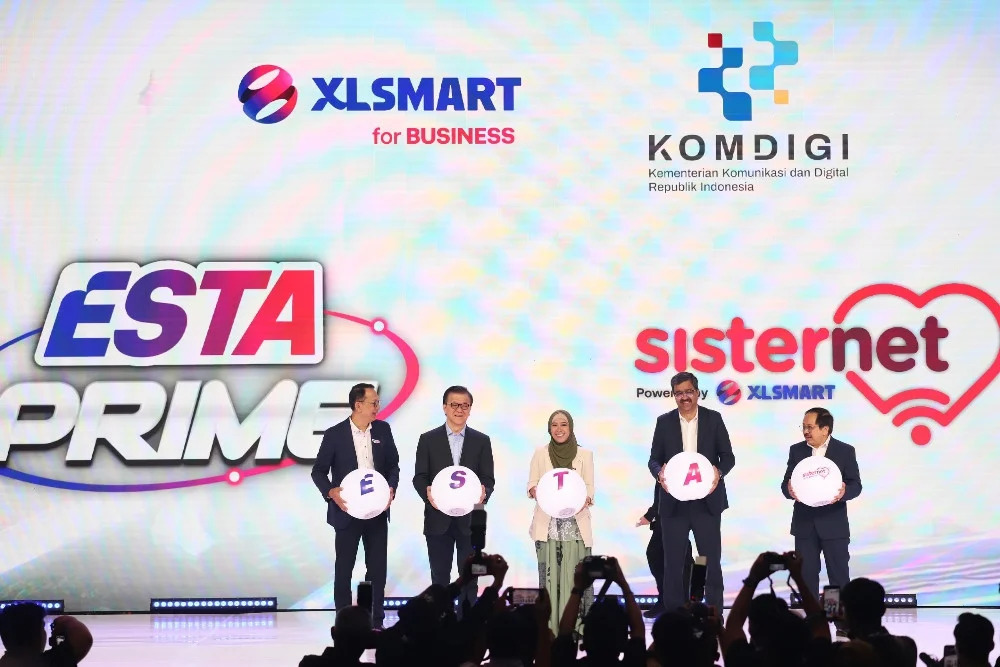
XLSMART has also been publicly leaning into AI, data, and digital transformation themes. Its official news page about BRAVO 500 Summit 2026 says the event brought together more than 2,000 corporate leaders, regulators, academics, and technology partners to discuss AI, data, and a more extensive and equitable 5G network. The same company page also highlights ESTA, a platform built around AI and data analytics. That is useful context because China Mobile B2B solutions would not be entering a blank market. They would be entering a company already trying to sell itself as a digital ecosystem enabler.
What China Mobile B2B Solutions Can Add
The strongest case for China Mobile B2B solutions in Indonesia is their breadth. CMI’s enterprise portfolio combines connectivity, cloud, IDC, IoT, and ICT. In practical terms, that can translate into managed international links, data center connectivity, cloud services for multinationals, and enterprise workflows that need reliable communication across borders. For Indonesian firms expanding into China or Chinese firms operating in Indonesia, that kind of package is commercially attractive.
That breadth matters because enterprise buyers in Indonesia are becoming more selective. They do not just want a vendor that can provide SIM cards or a corporate internet line. They want an integrated stack that can support remote operations, logistics, security, productivity, and application performance. If XLSMART can localize China Mobile B2B solutions for Indonesian industries, it could compete more effectively in sectors such as manufacturing, logistics, retail, smart city projects, and energy. XLSMART for Business already advertises solutions in those exact areas, which makes the fit more natural than it first appears.
Another advantage lies in cross border enterprise demand. Many multinational companies operating in Southeast Asia need service continuity between Indonesia, China, Singapore, and other regional hubs. China Mobile International says it serves enterprises and carriers globally, and its international footprint gives it the kind of network reach that local operators often need to complement. In that sense, China Mobile B2B solutions are not just a product bundle. They are a channel into larger regional account relationships.
Why The Market Could Be Ready Now
Indonesia’s enterprise digital market is in a transition phase. Companies are still modernizing core connectivity, but they are also looking at cloud migration, automation, and AI enabled workflows. That creates an opening for operators that can bundle multiple services into one contract. XLSMART already says its business unit delivers data connectivity, cloud services, IoT, and digital transformation support across many industries. That gives the company a platform to introduce China Mobile B2B solutions as a higher value layer rather than a standalone niche product.
There is also a strategic trust angle. Enterprise clients tend to move carefully when adopting foreign technology partnerships. A local telecom brand with a broad distribution network and a known enterprise team can reduce that hesitation. XLSMART has an advantage here because it operates domestically and already serves mobile, broadband, and corporate segments under one umbrella. That positioning can make China Mobile B2B solutions feel more accessible to Indonesian buyers who want global capability without sacrificing local support.
The broader market signal is that Indonesia’s telecom players are no longer competing only on coverage. They are competing on business relevance. ZTE’s collaboration with XLSMART, the launch of ESTA, and the BRAVO 500 Summit all point in the same direction: the market is moving toward enterprise digital infrastructure, not just consumer connectivity. In that environment, China Mobile B2B solutions could be a useful bridge between international capability and local execution.
The Real Opportunity For XLSMART
If XLSMART decides to bring China Mobile B2B solutions into the Indonesian market, the best path will likely be selective rather than broad. The most realistic starting points are private network services, cloud connectivity, enterprise communications, and IoT enabled verticals. Those are the areas where both companies already have relevant capabilities and where Indonesian demand is visibly growing.
The upside is clear. XLSMART could deepen its enterprise revenue base, improve its positioning against larger rivals, and create a stronger bridge to multinational clients. China Mobile B2B solutions could also help the company offer more sophisticated services without building every component from scratch. That matters in a market where speed to market, reliability, and ecosystem partnerships often decide who wins the contract.
The main takeaway is simple. China Mobile B2B solutions are not just another telecom product line. They represent a chance for XLSMART to move further up the value chain and become a more complete enterprise digital partner. In Indonesia’s current market, that kind of move could prove more valuable than a headline about connectivity alone.
Read More