





 Friday, 25-09-26








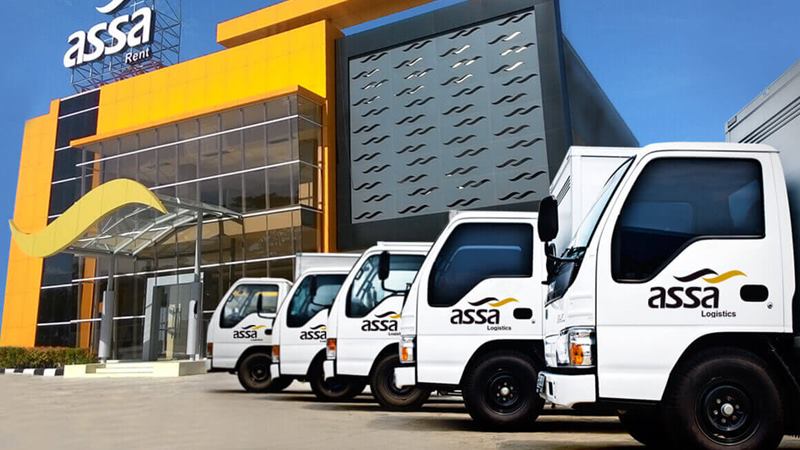
PT Adi Sarana Armada Tbk, better known as ASSA, is making a notable shift from being seen mainly as a mobility and logistics operator to becoming a more technology driven company. The company plans to expand into a transportation management system business that combines software, Internet of Things, and data communication services into one integrated offering. The move is designed to capture the growing demand for digital logistics tools and to create a new source of recurring revenue.
This is not a random diversification play. ASSA already sits inside Triputra Group’s Trading & Services portfolio, alongside other logistics and technology related businesses, and the group positions ASSA as part of an integrated mobility ecosystem. ASSA’s own corporate profile says the company already offers vehicle rental, drivers, distribution logistics, asset management, and vehicle marketplace services, so the new technology push extends an existing platform rather than starting from zero.
Why ASSA Is Moving Beyond Fleet Operations
The logic behind the transportation management system expansion is straightforward. Logistics customers are asking for more than trucks, drivers, and warehouse space. They want visibility, real time tracking, lower operating friction, and a single system that can tie together dispatch, monitoring, billing, and compliance. Liputan6 reported that ASSA sees e-commerce growth, rising supply chain complexity, and the demand for cost efficiency and transparency as the main reasons for entering this business.
That matters because the traditional logistics model is becoming harder to defend on service alone. In many markets, the winner is no longer the firm with the largest fleet, but the firm that can manage information better and respond faster. ASSA’s corporate page already emphasizes digitalization, and it has previously launched services such as Share Car, Caroline, and Anteraja. The new transportation management system push suggests the company wants to turn that operational experience into a broader technology stack.
There is also a strategic reason to build around software. A logistics company that sells a transportation management system can potentially serve both its own captive operations and outside clients. That creates a business model that is more scalable than pure asset based logistics. It also gives the company a chance to monetize data, workflow automation, and operational intelligence, which are increasingly valuable in a sector under pressure to improve margins.
Inside The Transportation Management System Plan
ASSA’s proposed platform is being built as a fully integrated transportation management system. According to the reporting, it is meant to connect planning, execution, monitoring, and administrative settlement inside one operating environment. The system would be supported by business process outsourcing functions such as order input, dispatching, delivery monitoring, operational follow up, billing, and administration, so the software is not just a dashboard but an operational layer.
The technology component is where the plan becomes more interesting. ASSA intends to integrate IoT tools so fleet visibility can improve in real time through GPS tracking, temperature and humidity monitoring for cold chain shipments, driver behavior analysis, and vehicle telematics data. In other words, the transportation management system is being designed as a live control environment, not simply a record keeping tool. That type of setup can make it easier to estimate arrival times, identify service issues, and improve compliance.
The company is also trying to formalize the move on the corporate side. Ipotnews reported that ASSA will seek shareholder approval at an extraordinary general meeting on June 17, 2026, to add four business classifications related to computer programming, software publishing, IoT consulting and design, and data communication services. Those new business lines are a legal and operational foundation for the broader transportation management system strategy.
Timing also matters. Liputan6 reported that ASSA is targeting a commercial launch in August 2026 after internal testing and system refinement. That suggests the company is treating the project as a near term product rollout, not a distant experiment. If it works, the transportation management system could become a visible new layer in ASSA’s business model within months rather than years.
Why Investors See A Real Commercial Angle
The numbers help explain why the market is paying attention. Based on a feasibility study by KJPP Ruky, Safrudin & Rekan, Ipotnews reported that the project could add around Rp7.62 billion in consolidated revenue and about Rp3 billion in annual net profit. The study also showed a positive NPV of Rp12.62 billion, an IRR of 41.93 percent, and a payback period of four years and eight months. That is a strong investment case for a transportation management system project, at least on paper.
The investment budget is also relatively modest. Liputan6 said ASSA plans to finance the expansion with internal funds, with initial spending of around Rp5.12 billion for software development, technology infrastructure, licensing, and early working capital. For a company of ASSA’s scale, that is not a transformational capital burden. It is closer to a focused bet on whether a transportation management system can become a profitable adjacent business.
What makes the case more compelling is the shift toward recurring revenue. Logistics hardware and transport assets can be cyclical, capital intensive, and vulnerable to fuel and utilization swings. Software and platform services tend to behave differently. If ASSA can sell the transportation management system to external customers across sectors, it could reduce dependency on transport volumes alone and deepen customer relationships through long term contracts and data driven services. That is the kind of business mix investors usually prefer in a competitive logistics market.
There is, of course, execution risk. A logistics software business needs more than a strong pitch deck. It needs product reliability, user adoption, integration capability, cybersecurity discipline, and support teams that understand operations as well as code. ASSA has the advantage of already operating in logistics, which should make the product more practical. Still, the success of the transportation management system will depend on whether it solves real pain points better than existing tools. That is an inference, but it follows directly from the way the company is positioning the platform.
What This Means For Indonesia’s Logistics Technology Market
ASSA’s move is part of a broader pattern in which logistics companies are trying to become technology companies with operating assets, rather than the other way around. In Indonesia, that shift is especially relevant because the logistics sector is fragmented and efficiency gaps remain large. A serious transportation management system can help narrow those gaps by improving coordination across fleets, warehouses, and customer service functions.
The market implications are significant. If ASSA can prove that an integrated transportation management system improves tracking, reduces administrative friction, and supports better delivery performance, other logistics players may feel pressure to follow. That could accelerate the adoption of software driven logistics operations across the sector. It could also push customers to expect real time transparency as a standard feature rather than a premium service.
For Triputra Group, the initiative also reinforces the group’s broader trading and services footprint. Triputra already lists ASSA, Anteraja, Autopedia, Puninar Group, and Eksad inside that business cluster, which means the group has exposure across mobility, delivery, and technology. A successful transportation management system rollout could strengthen that ecosystem by linking operational companies more tightly through shared digital infrastructure and common data workflows.
The larger takeaway is that logistics in Indonesia is moving into a more data intensive phase. Fleet ownership still matters, but software, IoT, and service visibility are becoming just as important. ASSA’s decision to expand into a transportation management system business is therefore more than a side project. It is a signal that the next growth battleground in logistics may be software enabled efficiency, not only physical capacity.
Read More