





 Thursday, 24-09-26








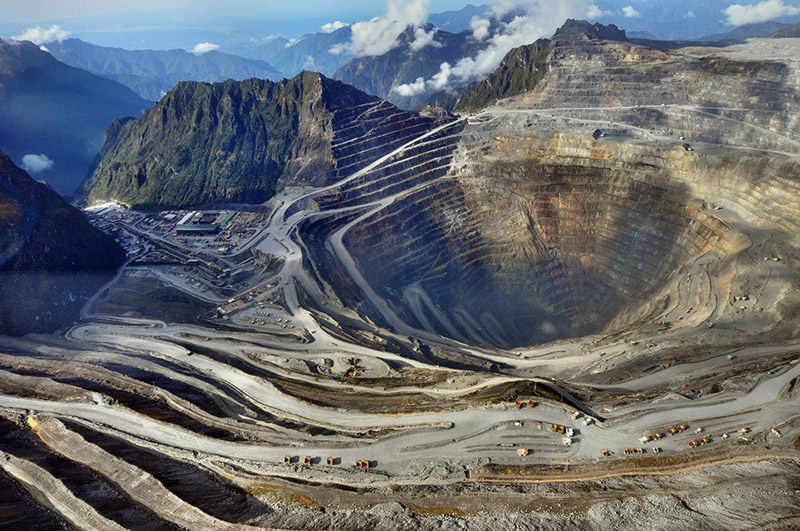
The natural resource sector of Southeast Asia occupies a critical position in global commodity markets, particularly concerning essential energy transition minerals. Within this expansive landscape, large-scale mining projects require complex, long-term planning frameworks to maintain operational stability and economic output. PT Freeport Indonesia, a prominent joint enterprise managing world-class mineral deposits in the highlands of Central Papua, has officially advanced its administrative roadmap to secure its future.
Official announcements confirm that the company formally submitted its application for a formal operating permit continuation to the central government. Although the current regulatory framework authorizes extraction activities through the year 2041, management emphasizes that securing a Grasberg IUPK extension well in advance is essential. Complex underground block-cave mining engineering demands extensive preparation periods that span decades. Evaluating this formal application provides crucial insights into how regulatory partnerships, corporate governance, and national interests align to safeguard industrial productivity.
Strategic Importance of Early Regulatory Planning
Underground mineral extraction differs fundamentally from traditional open-pit methods. Developing deep ore bodies requires immense capital investments, precise geological mapping, and meticulous scheduling that often takes fifteen to twenty years from initial conception to full production. For instance, mining zones currently generating massive revenue outputs were conceptualized and prepared over a decade before bearing fruit. Therefore, waiting until the terminal expiration date of an existing permit would create severe operational gaps and disrupt national revenue streams.
Company executives note that pursuing the Grasberg IUPK extension proactively prevents potential production bottlenecks and ensures seamless technical continuity. If approvals and long-term planning are delayed, underground development halts prematurely because engineers cannot risk capital on infrastructure that might lack operational authorization. By initiating formal dialogue and submitting required administrative frameworks early, the enterprise aims to maintain stable output levels, protect employment opportunities for tens of thousands of workers, and sustain economic contributions to the state treasury.
Economic Contributions and State Stakeholder Participation
The significance of the massive mining complex extends far beyond corporate balance sheets, serving as a pillar of regional and national prosperity. The vast mineral district generates substantial fiscal revenue for the government through corporate taxes, royalties, dividends, and regional distribution funds. Projections indicate that as downstream processing facilities reach full operational capacity, the total economic value delivered to the state will scale to unprecedented heights over the coming decades.
As part of the ongoing negotiations surrounding the Grasberg IUPK extension, structural adjustments regarding equity ownership are also taking shape. Plans include an additional share divestment framework, wherein a specific percentage of equity will be transferred to domestic state-owned holding entities under agreed terms. This progressive ownership model ensures that national participation deepens over time, allowing local stakeholders to capture a larger share of the enduring wealth generated by the nation's natural endowments while maintaining the technical expertise required for efficient extraction.
Advancing Downstream Processing and Domestic Value Addition
Industrial policy directives emphasize that raw mineral extraction must be paired with domestic processing capabilities to maximize national economic value. The company has invested heavily in constructing and operating massive domestic refining facilities designed to process copper concentrates, precious metals, and associated byproducts locally. This strategic shift transforms the country from a simple exporter of raw materials into a sophisticated hub for refined industrial metals.
The ongoing discussions regarding the Grasberg IUPK extension incorporate commitments to maintain and expand these domestic downstreaming activities. By ensuring a stable, long-term supply of raw copper feed for local refineries, the enterprise supports ancillary manufacturing sectors, including electrical equipment production and renewable energy infrastructure supply chains. This integrated industrial approach strengthens national resilience against global commodity price shocks and fosters high-tech skills transfer among local workforce participants.
Community Development and Environmental Stewardship
Sustainable mining operations must balance commercial objectives with strict environmental management and active community engagement. The remote highlands of Papua host diverse indigenous communities whose welfare remains closely intertwined with the presence of the mining enterprise. Substantial annual financial allocations are dedicated directly to regional health initiatives, educational facilities, infrastructure development, and local economic empowerment programs.
Securing the Grasberg IUPK extension guarantees that these vital community support programs will receive sustained, long-term funding. Collaborative partnerships between corporate representatives, local tribal leaders, and regional government bodies are designed to build a self-sustaining regional economy that will thrive long after the eventual closure of the mining district. Transparent reporting and adherence to rigorous international environmental standards ensure that ecological impacts are carefully mitigated throughout the operational lifecycle.
Conclusion and Future Outlook
The formal submission of the permit continuation application marks a pivotal milestone for the mining sector and the broader national economy. By addressing regulatory horizons years ahead of schedule, both the government and the corporate operator demonstrate a shared commitment to stability, transparency, and mutual growth. As administrative reviews progress, the successful finalization of the framework will cement the foundation for decades of continued industrial productivity, technological innovation, and shared prosperity.
Read More