





 Friday, 23-10-26








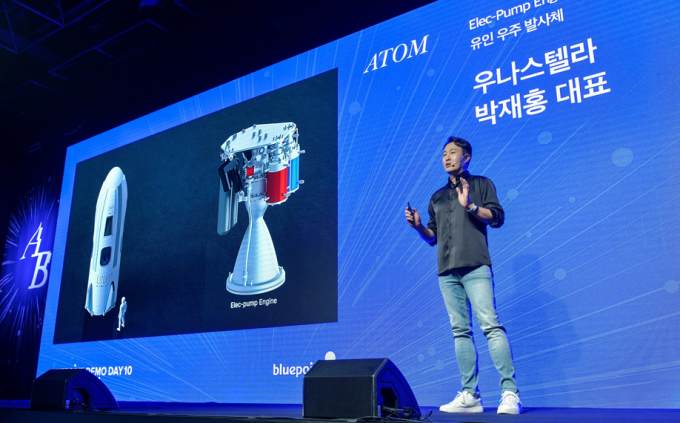
A South Korea rocket startup is getting a fresh push from investors at exactly the moment the global launch market is heating up. Unastella, a four-year-old Seoul-based company, has closed a $24 million Series B round, bringing its total funding to $44 million. The company already launched its own rocket from South Korean soil in May 2025, and it is now using this new capital to push deeper into orbital launch development and small satellite services.
The timing is important. Space investment is rising again in 2026, driven by defense-linked systems, launch capacity, and the possibility of major public market exits such as a SpaceX IPO. At the same time, governments in Asia are backing space infrastructure more aggressively, which gives the South Korea rocket startup sector more room to mature than it had just a few years ago.
What Unastella’s New Funding Means
Unastella’s new round was led by Altos Ventures, with participation from Korea Development Bank, Strong Ventures, and Hana Ventures. The startup says it is focused on building its own launch vehicles and engines, with an initial emphasis on small satellite launch services. Its near-term goal is to validate both the technology and the business model through orbital launches, while its longer-term ambition is crewed suborbital spaceflight.
That matters because the South Korea rocket startup is not trying to win the market by being the most complex or most glamorous engineering project. CEO Jae Park told TechCrunch that the company is trying to move quickly into commercial launch, and that it treats speed to market as a competitive advantage. The startup uses a kerosene and liquid oxygen propulsion system, paired with an electric motor pump instead of a traditional turbo pump, a design choice that can reduce complexity and cost.
Unastella’s first launch, UNA EXPRESS-I, took place in May 2025 and served as a full end-to-end test of the company’s system. Park said the company handles design, manufacturing, ground operations, and flight data in-house, which gives it tighter control over iteration and testing. The next vehicle, UNA EXPRESS-II, is targeted for next year and is expected to be a major milestone because reaching 100 kilometers would open the door to deeper partnerships with larger aerospace and defense firms in South Korea.
The funding round also signals that investors are willing to back a South Korea rocket startup before it becomes profitable. That is a meaningful vote of confidence, especially in a capital-heavy industry where launch delays, technical failures, and long development cycles are common. In Unastella’s case, the investor base suggests that the market sees more than a science project. It sees a plausible commercial platform.
Why South Korea Wants A Stronger Private Launch Sector
Unastella is arriving at a moment when South Korea is trying to accelerate its own space capability. The Korea AeroSpace Administration, or KASA, said in its 2026 work plan that it wants to expand commercial launch capabilities, modernize the Naro Space Center, support private launch facilities, and build the foundation for reusable launch vehicles in the 2030s. That is a strong policy signal that the government wants the private sector to take a leading role.
This policy support matters because a South Korea rocket startup does not grow in isolation. It needs launch infrastructure, testing support, regulatory certainty, and institutional partnerships. KASA’s plan explicitly calls for private-led launches, private launch facilities, orbital transfer vehicles, and satellite refueling technologies. It also says the government wants to prioritize domestic launch vehicles for public and defense satellites.
South Korea’s broader launch ecosystem has also been moving forward. Reuters reported in November 2025 that South Korea successfully launched its fourth homegrown Nuri rocket and that, for the first time, a private firm assembled the rocket under technology transferred from KARI. AP likewise reported that the mission marked an important step in the country’s independent space transportation capability. Those developments create a stronger foundation for private firms like Unastella to build on.
The commercial opportunity is growing too. TechCrunch noted that the global space launch market was worth about $15 billion in 2023 and could nearly triple to $41 billion by 2030, citing Grand View Research. Reuters has also reported that global investment in space technology hit record levels in 2025, with private investment rising 48% to $12.4 billion, while Asia remained an active funding region. For a South Korea rocket startup, that is a much more favorable backdrop than the industry had even a few years ago.
How Unastella Is Trying To Compete With Bigger Players
The competitive challenge is obvious. The global launch market is still dominated by the United States and China, and TechCrunch specifically noted that startups across Australia, India, Japan, and South Korea are racing to break into a market long controlled by those two powers. Unastella’s strategy is to compete on speed, integration, and commercial focus rather than sheer size. That is often the only realistic path for a smaller South Korea rocket startup trying to enter a crowded field.
That strategy is reflected in the company’s technical choices. Unastella uses electric motor pump propulsion, which is less traditional than the turbo pump systems favored by many rocket developers. The tradeoff is payload capacity, since the system is heavier and can leave less room for satellites. But the company appears to accept that compromise because the main goal is to get to market faster, not to maximize theoretical performance on paper.
Unastella also stands out because of its institutional links. TechCrunch reported that Korea’s national space agency has flown components on UNA EXPRESS-I and that KARI has transferred electric motor pump technology to the startup. Those relationships can matter a great deal in an industry where flight heritage, technical validation, and government credibility often determine whether a private launch company is taken seriously.
Even so, the road ahead remains steep. Unastella is not yet generating revenue, and it still needs to prove that its system can move beyond test launches into repeatable commercial service. In the launch business, one successful flight does not equal a sustainable company. The real test is whether the South Korea rocket startup can turn engineering progress into a schedule, customers, and reliable margins.
What The Funding Round Says About The Space Economy
The Unastella deal says something larger about the current state of the space economy. Investors are returning to launch and infrastructure plays because they see space as a strategic industry, not just an exciting frontier. Reuters reported that investors are watching sovereign satellite systems, missile defense, AI integration in space hardware, and the possibility of a SpaceX IPO as catalysts for the sector. That creates room for more capital to flow into smaller launch companies across Asia.
For South Korea, that environment is especially useful. The country already has a government-backed launch program, an increasingly capable domestic aerospace supply chain, and a policy push toward commercial launch facilities. Add in a startup like Unastella, and you get the early shape of a real private launch ecosystem. That is exactly the sort of structure that can help a South Korea rocket startup progress from prototype development to market entry.
There is also a regional competition story here. China already has several active launch startups, Japan has continued to develop its launch sector, and Australia has been trying to reach orbit with private vehicles. TechCrunch pointed out that Rocket Lab, originally founded in New Zealand and now listed on Nasdaq, remains the only Asian-founded company to have built a commercially viable launch business. That makes the path for a South Korea rocket startup both more difficult and more meaningful.
If Unastella can turn its engineering model into a dependable commercial service, it could become one of the first South Korean private launch firms to move beyond symbolic milestones. That would not just be a win for one startup. It would strengthen South Korea’s position in a global industry where launch access is becoming a strategic asset, not just a technical achievement.
Conclusion
Unastella’s $24 million Series B is more than a funding headline. It is a sign that the South Korea rocket startup scene is starting to attract serious capital at a moment when space launch demand, government support, and regional competition are all moving in the same direction. The company now has more resources, a clearer development path, and a stronger case for commercial relevance.
The bigger question is execution. If Unastella can deliver on its next launch milestone and prove its model in the market, it could become one of the most important private space companies in Asia. For now, its rise shows that the race to challenge U.S. and Chinese dominance in space is no longer theoretical. It is happening through companies like this one.
Read More