





 Friday, 09-10-26








Nvidia is becoming much more than a GPU company, and its next big money engine is increasingly tied to Nvidia AI Infrastructure. The reason this matters is simple. For years, Nvidia’s identity was defined by graphics processors. Today, the company is being valued as the backbone of a much larger stack that includes CPUs, networking, data center systems, inference hardware, and software for building and running AI factories. That shift explains why a headline can credibly frame a “new gold mine” that is not just about GPUs.
From GPU Maker To AI Infrastructure Platform
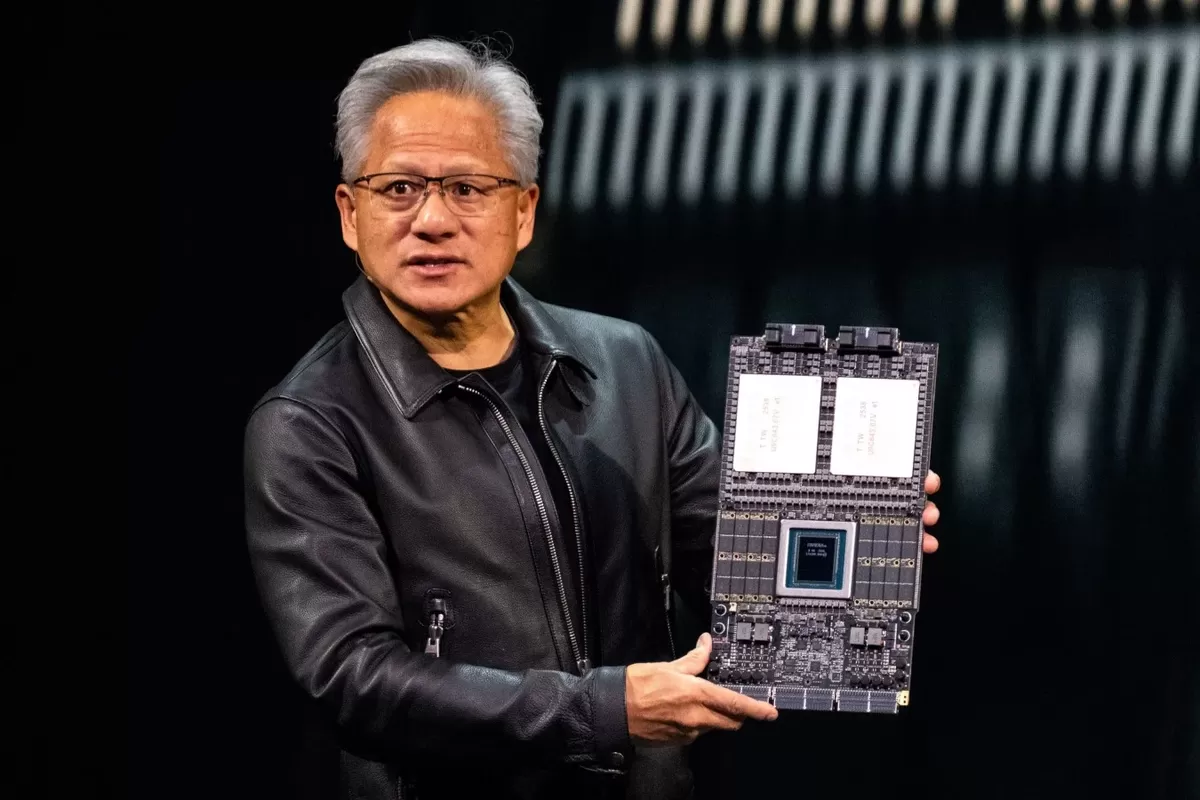
Nvidia’s recent product strategy shows a company expanding beyond a single chip category. At GTC 2026, it introduced the Vera Rubin platform, which includes multiple new chips, among them Vera CPU, Rubin GPU, networking, storage, and inference components. NVIDIA described the platform as a way to scale the world’s largest AI factories.
That is a very different business story from the old Nvidia, where the market mostly thought in terms of gaming GPUs and server accelerators. The new model is built around Nvidia AI Infrastructure, meaning the company sells the full environment needed to train, deploy, and run AI at scale. In practice, that includes chips, interconnects, data center architecture, software, and system design.
This broader stack helps explain why investors are still treating Nvidia as a growth company even after years of explosive gains. According to AP, Nvidia’s revenue in its latest quarter reached $81.62 billion, while net income climbed sharply and the company’s market value remained around the top tier of global public firms. Reuters also reported that data center sales alone reached $75.2 billion in the quarter, showing how central enterprise and cloud demand has become.
For Nvidia, the implication is powerful. A company that once depended heavily on gaming now has a far bigger opportunity in AI infrastructure, especially as cloud providers, model builders, and enterprise customers continue spending aggressively on compute capacity. That is why the “not from GPU” angle is so important. It signals a revenue base that is broadening, not shrinking.
Why The New Growth Story Goes Far Beyond Graphics
The strongest argument for Nvidia’s new growth model is that AI demand is increasingly infrastructure driven. OpenAI and NVIDIA announced a strategic partnership to deploy at least 10 gigawatts of AI data centers with NVIDIA systems, and the first gigawatt is slated for deployment in the second half of 2026 on the Vera Rubin platform. That is not a GPU story alone, it is an infrastructure story. Nvidia is also building around inference, not just training. Reuters reported in March that the company was leaning into AI inference as a revenue opportunity, and that its new chip roadmap reflects a larger market than the original GPU-centric narrative. Nvidia itself has emphasized Vera CPU and Rubin-based systems for agentic AI and broader production workloads.
That matters because inference is where AI becomes a recurring operational expense for customers. Training a model is expensive, but running it across thousands or millions of interactions can be an even more durable source of demand. In other words, Nvidia AI Infrastructure benefits not only from the next breakthrough model, but from the everyday business of serving AI to users, employees, and customers.
Nvidia’s other recent moves reinforce the same theme. Reuters reported that the company expects revenue from its Vera chips to reach around $20 billion by the end of the fiscal year, and that Huang said the Vera processor opens access to a new $200 billion market. The company also signaled that these new CPU revenues were not fully included in earlier estimates for its Blackwell and Rubin AI chip opportunity. The important takeaway is that Nvidia is no longer asking investors to value it only as a chip vendor. It is asking them to value the company as the operating layer of AI infrastructure. That includes the silicon, the networking, the storage architecture, and the platform logic that keeps AI workloads moving.
What The Numbers Say About Nvidia’s Business Momentum
The latest earnings reporting shows why the market keeps rewarding this strategy. AP reported that Nvidia’s revenue rose 85 percent in the quarter, with net income also surging, while CEO Jensen Huang described the current cycle as the largest infrastructure expansion in human history. Reuters likewise highlighted record data center sales and strong forward guidance. A key detail is that data center revenue is now the center of gravity. That segment captures cloud demand, enterprise AI spending, and new AI factory buildouts. When a single segment becomes that dominant, it changes how investors think about the company’s growth runway and resilience.
Nvidia’s strategy also looks more durable because it is layered. If one chip cycle slows, the company can still monetize networking, systems, software, and CPU adoption. If one customer segment cools, another may continue expanding. That diversification is exactly what investors like to see in a high-valuation technology company. There is also a geopolitical edge to the story. AI infrastructure is now a strategic asset for governments and corporations alike. Countries want local compute capacity, cloud control, and more resilient supply chains. Nvidia sits at the intersection of all three. Its hardware and platform strategy therefore benefits from both commercial AI adoption and national efforts to build sovereign AI capacity.
That creates a large and expanding addressable market. It is not just about selling the fastest GPU. It is about becoming the default architecture for AI factories, AI clouds, and agentic systems. That is why Nvidia AI Infrastructure can be framed as a “new gold mine.” The mine is larger than graphics, and it keeps opening into adjacent markets.
The Real Business Risk Is Execution, Not Demand
The biggest challenge for Nvidia is not whether demand exists. Demand clearly does. The harder question is whether the company can keep delivering complex systems at scale while managing supply constraints, customer expectations, and rising competition from custom chips and in-house alternatives. Reuters has noted both the massive spending environment and the pressure from rivals developing their own processors.
That is why the new business model needs more than strong chip design. It needs execution across manufacturing partners, system integration, data center partnerships, and software enablement. If Nvidia AI Infrastructure is the future, then every link in that chain has to work reliably. One weak link can slow deployments and delay revenue recognition.
Still, the direction is unmistakable. Nvidia is building a broader platform around AI factories, inference, CPUs, and networking. The company is turning from a product manufacturer into an infrastructure ecosystem provider. That is a much larger story than GPUs, and it is likely the reason the market continues to treat Nvidia as one of the defining companies of the AI era. For investors, enterprises, and policymakers, the message is straightforward. Nvidia’s next wave of value may come less from the chip everyone already knows, and more from the infrastructure layer that makes modern AI possible. That is where the next major revenue engine appears to be forming.
Read More