





 Thursday, 17-09-26








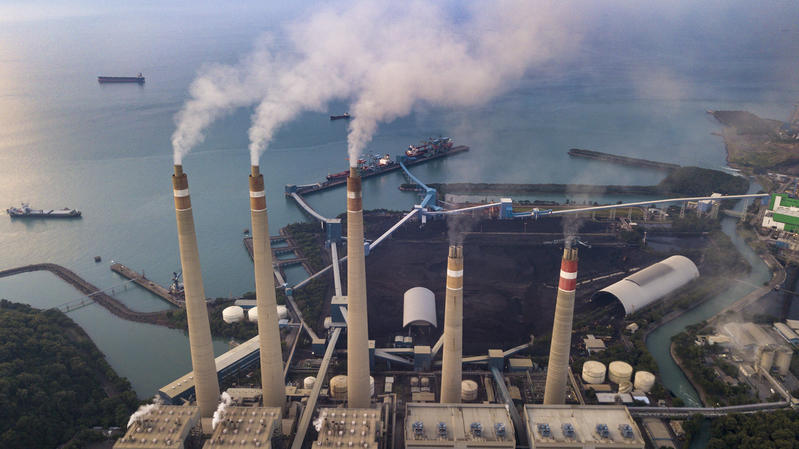
Indonesia’s rapid expansion of captive coal power risk poses a serious threat to the nation’s economic stability and its commitments to reduce emissions. Captive coal power plants are industrial-owned coal-fired facilities built to supply electricity for specific factories or processing complexes, typically not connected to the national electricity grid. While they serve strategic industrial growth, their proliferation has far-reaching implications for environmental health, the energy transition, and the trajectory of Indonesia’s broader economic competitiveness.
Indonesia has pledged to reach net-zero greenhouse gas emissions by 2060 and to stop building new coal power plants under the national energy transition plan. However, this commitment contains a notable exception: captive coal power plants can still be developed if they promise a 35 % emissions intensity reduction within ten years of operation, an accounting loophole that has raised concerns among climate researchers.
The Growth Surge of Captive Coal Power Plants
According to independent analyses by the Centre for Research on Energy and Clean Air (CREA) and Global Energy Monitor (GEM), Indonesia’s captive coal power capacity has surged dramatically. Current operational and planned captive coal capacity exceeds 31 gigawatts (GW), far outpacing earlier estimates and surpassing many nations’ entire coal fleets. Of this total, approximately 19.3 GW is already operating, 3.6 GW is under construction, and 8.16 GW remains in early planning stages.
This sharp rise contrasts with the incremental growth of on-grid coal capacity connected to the national utility PT PLN and raises the captive coal power risk for Indonesia’s official energy transition trajectory. Research indicates that between July 2024 and July 2025, captive coal additions accounted for around 80 % of all new coal generation capacity in the country.
Industrial demand, especially from energy-intensive sectors like nickel downstream processing in Central Sulawesi and North Maluku, has fueled this trend. These industries rely on reliable, continuous energy supply, which they often secure through captive coal power rather than grid electricity. Without robust on-grid infrastructure, industrial actors invest in captive plants, which they control directly, albeit at the cost of increased emissions.
Economic Implications of Captive Coal Proliferation
At first glance, captive coal power plants appear to enable industrial competitiveness by guaranteeing energy for high-intensity manufacturing. However, the Indonesia captive coal power risk extends beyond immediate industrial productivity to broader economic consequences.
Analyses suggest that excluding captive coal from national coal retirement targets may impose a cumulative economic burden of around USD 20 billion before the full decommissioning of coal assets. If air pollution from coal remains unmitigated, annual costs due to health impacts and reduced labor productivity could also rise sharply.
In regions hosting heavy industrial activity, such as Morowali and Weda Bay, the local economy may face substantial health-related costs. Projections estimate that air pollution in these hubs alone could cause approximately 5,000 premature deaths per year by 2030, along with an economic cost of roughly USD 3.42 billion per year from health care expenses, lost labor output, and environmental degradation.
Moreover, industry growth tied to high-emission power generation may undermine Indonesia’s long-term competitiveness in global markets. As major economic partners such as the European Union enforce carbon border adjustments or require sustainable supply chains, Indonesian products supported by high carbon intensity energy could face market disadvantages.
Environmental and Public Health Costs
The environmental cost of expanding captive coal capacity is tied directly to increased greenhouse gas emissions and local air pollution. Coal combustion emits high levels of carbon dioxide (CO₂), particulate matter (PM₂.₅), sulfur dioxide (SO₂), and nitrogen oxides (NOₓ), which contribute to climate change, respiratory illnesses, and cardiovascular diseases.
Residents in industrial zones near captive coal plants may experience heightened exposure to air pollution, with consequential public health costs such as increased cases of asthma, chronic bronchitis, and other respiratory conditions. While specific regional health data are still emerging, broader studies of coal plant impacts in Indonesia link coal emissions to significant health burdens and reduced life expectancy. Independent research from similar coal-dependent contexts points to elevated risks of lung cancer, stroke, and heart disease linked to coal-related air pollution.
Environmental degradation extends to soil and water contamination. Fly ash and coal combustion residues can infiltrate surrounding ecosystems, impairing agricultural productivity and freshwater quality. These impacts erode long-term economic resilience in local communities, particularly among farmers and fishers who depend on natural resources for their livelihoods.
Policy and Regulatory Challenges
A key factor in the explosive growth of captive coal capacity in Indonesia is policy design. Presidential Regulation No. 112 of 2022 enabled the construction of captive coal plants connected to national strategic projects, even as the broader national commitment sought to restrict new coal power. These regulatory exemptions have created a loophole that industries can exploit to build large coal power facilities under the banner of economic development.
Moreover, the policy framework lacks robust public monitoring and transparency mechanisms to verify whether captive plants achieve their promised emissions intensity reductions. Without comprehensive data and third-party verification, it remains unclear whether these plants adhere to required emissions performance standards, raising concerns that the captive coal power risk may be understated in official projections.
Civil society organisations and energy analysts have called for explicit inclusion of captive coal plants in national coal phase-out schedules and more stringent regulatory oversight. They also advocate for public reporting requirements, independent emissions monitoring, and alignment with Indonesia’s Just Energy Transition Partnership (JETP) commitments to accelerate decarbonisation.
Balancing Industrial Growth and Decarbonisation
Achieving a balance between industrial energy demand and emissions targets poses a complex policy challenge for Indonesia. Industrial growth, particularly in mineral processing and manufacturing, drives economic output, creates jobs, and supports export earnings. However, if it continues to rely on coal-fired captive power, the broader macroeconomic risks — including health expenses, environmental degradation, and divergence from global climate commitments — could outweigh short-term gains.
Analysts argue that enhancing grid infrastructure and integrating renewable energy sources into industrial power supply could reduce dependence on coal. Expanding reliable on-grid capacity, incentivising corporate investment in renewables, and developing energy-storage solutions are key strategies to reduce the captive coal power risk. Transitioning captive facilities to cleaner alternatives — such as gas turbines, hybrid systems with renewable generation, or connection to the national grid — can lower emissions while sustaining industrial productivity. Emerging projects in bioenergy, solar, and green hydrogen also offer potential pathways, though they require coordinated policy support and investment.
Risk Mitigation and Strategic Direction
In summary, the Indonesia captive coal power risk encompasses economic, environmental, and policy dimensions that significantly challenge the country’s ambitious climate objectives and sustainable growth agendas. While captive coal plants have facilitated industrial energy security, their unchecked rise may lock Indonesia into decades of high emissions and economic costs that outweigh the short-term benefits of localized energy control.
Addressing this risk requires deliberate policy reforms, comprehensive emissions monitoring, strategic energy planning, and alignment with global energy transition frameworks. As Indonesia seeks to navigate the path toward net-zero emissions by 2060, integrating industrial power generation into national decarbonisation strategies will be essential to safeguard both economic resilience and environmental sustainability.
Read More