





 Tuesday, 29-09-26








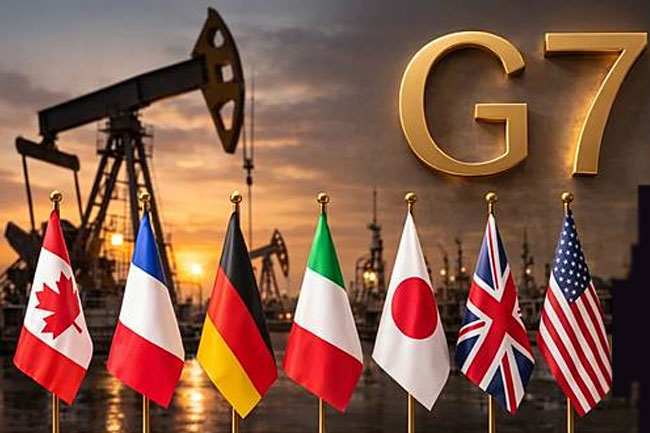
Energy security remains one of the most important strategic priorities for major economies. When geopolitical tensions disrupt supply chains or global markets experience sudden price shocks, governments rely on emergency stockpiles to stabilize domestic energy markets. For the world’s most advanced economies, these safety nets take the form of strategic oil reserves.
Countries within the Group of Seven maintain large volumes of crude oil and petroleum products stored in underground caverns, storage tanks, and other facilities. These strategic oil reserves are designed to ensure that governments can quickly release fuel into the market during supply disruptions caused by wars, sanctions, natural disasters, or sudden spikes in demand.
The importance of strategic oil reserves has grown significantly in recent years as geopolitical conflicts, trade tensions, and energy transitions reshape the global oil market. From the war in Ukraine to tensions in the Middle East and shipping disruptions in key maritime routes, governments have increasingly relied on emergency stockpiles to protect their economies.
Understanding how these reserves function provides insight into how major economies manage risk in an unpredictable energy landscape.
What Are Strategic Oil Reserves And Why They Exist
The concept of strategic oil reserves emerged in response to the global oil crises of the 1970s. During that period, supply disruptions caused by geopolitical conflicts led to severe fuel shortages and dramatic price increases across many industrialized economies.
In response, members of the International Energy Agency established coordinated emergency stockpiling systems. Countries agreed to maintain reserves equivalent to at least 90 days of net oil imports. These strategic oil reserves could be released collectively to stabilize markets during emergencies.
Today, the G7 nations continue to maintain some of the world’s largest emergency stockpiles. These reserves are typically stored in several forms:
Underground salt caverns designed for long term crude storage
Government owned oil storage terminals
Commercial stockpiles held by private companies under government mandates
Strategic petroleum product reserves including gasoline and diesel
The purpose of these reserves is not simply to maintain physical fuel supply. Instead, they also serve as an economic stabilization tool. When governments release oil from strategic oil reserves, the additional supply can help reduce price spikes and restore market confidence.
Because energy prices influence everything from transportation to manufacturing, these reserves play a crucial role in maintaining economic stability during crises.
How Much Strategic Oil Reserves G7 Countries Hold
The total volume of strategic oil reserves held by G7 countries is enormous, reflecting the scale of their energy consumption and economic output.
The United States maintains the largest emergency oil reserve in the world through its Strategic Petroleum Reserve. Stored in underground caverns along the Gulf Coast, the reserve historically held more than 700 million barrels of crude oil. Although some of that supply has been released in recent years to stabilize markets, the reserve remains a critical component of American energy security.
Japan also maintains one of the world’s largest strategic oil reserves, combining government controlled stockpiles with mandatory reserves held by private oil companies. Japan’s total reserves typically cover more than 200 days of oil imports, significantly exceeding international requirements.
European members of the G7 also maintain substantial stockpiles. Germany, France, Italy, and the United Kingdom operate reserve systems designed to ensure at least 90 days of supply coverage. These reserves include both crude oil and refined petroleum products.
Canada, while a major oil producer, relies more heavily on commercial inventories rather than large centralized government reserves.
Combined, the strategic oil reserves of G7 nations represent billions of barrels of crude oil and petroleum products. These reserves provide a powerful buffer against global supply disruptions and allow governments to coordinate responses during energy crises.
Strategic Oil Reserves And Global Energy Market Stability
One of the most important functions of strategic oil reserves is their ability to stabilize global markets during periods of volatility.
When oil supply suddenly drops due to geopolitical events or natural disasters, prices can rise rapidly. Governments can counteract this by releasing crude oil from their reserves to increase supply.
This mechanism has been used multiple times over the past several decades.
For example, coordinated releases from strategic oil reserves occurred during the Gulf War in 1991, after Hurricane Katrina in 2005, and following the disruption of Libyan oil production during the Arab Spring in 2011.
More recently, governments released significant volumes of oil in response to market disruptions linked to the Russia Ukraine conflict and global inflation pressures.
These releases are often coordinated through the International Energy Agency to ensure maximum market impact. When multiple countries release oil simultaneously, the combined supply can significantly reduce price volatility.
However, using strategic oil reserves requires careful management. If governments release too much oil too quickly, reserves may become depleted. Replenishing these stockpiles can take years and may require purchasing oil at higher prices.
As a result, policymakers must balance short term economic relief with long term energy security considerations.
Strategic Oil Reserves In A Changing Energy Landscape
The global energy landscape is undergoing a major transformation as countries pursue renewable energy and decarbonization strategies. Yet despite the growth of renewable power, oil remains a critical energy source for transportation, industry, and global trade.
Because of this reality, strategic oil reserves continue to play a vital role even as countries invest in cleaner energy technologies.
Electric vehicles are gradually reducing gasoline demand in some markets, but aviation, shipping, petrochemicals, and heavy industry still rely heavily on petroleum products.
At the same time, geopolitical tensions continue to threaten supply stability. Conflicts in oil producing regions, shipping disruptions in critical maritime chokepoints, and sanctions targeting major exporters can all affect global supply.
For this reason, policymakers increasingly view strategic oil reserves as a key element of national security rather than merely an economic safeguard.
Some experts also argue that the energy transition may actually increase the importance of these reserves in the short term. As investment in fossil fuel production slows due to climate policies, global oil markets could become more sensitive to supply disruptions.
In such scenarios, strategic oil reserves may provide an essential buffer while the world transitions toward alternative energy systems.
The Future Of Strategic Oil Reserves
Looking ahead, the role of strategic oil reserves may evolve alongside changes in global energy demand.
Some countries are exploring ways to modernize reserve management by integrating advanced monitoring technologies and digital logistics systems. These tools can improve response times during emergencies and optimize storage efficiency.
There is also growing discussion about expanding strategic reserves to include other critical energy resources such as natural gas, refined fuels, or even key minerals required for clean energy technologies.
However, oil is likely to remain central to emergency energy planning for the foreseeable future.
Despite rapid growth in renewable energy capacity, global oil demand remains above 100 million barrels per day. This massive consumption level means that supply disruptions can still have severe economic consequences.
As long as oil continues to power transportation systems and global trade networks, strategic oil reserves will remain one of the most important tools governments have for protecting their economies from energy shocks.
For the G7 nations, these reserves represent more than just stored barrels of crude oil. They are a strategic safeguard designed to protect economic stability, support global energy markets, and ensure that nations remain prepared for the unexpected challenges of an increasingly volatile world.
Read More