





 Monday, 12-10-26








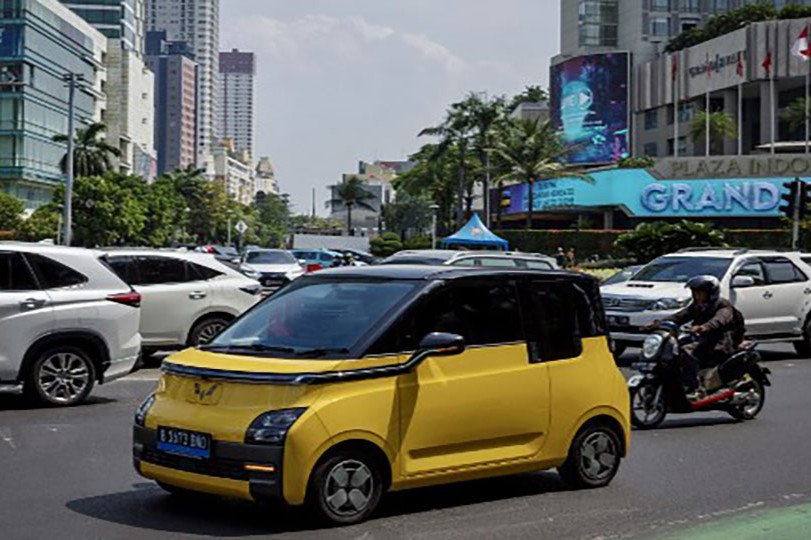
In Indonesia’s capital, Chinese brands have rapidly become part of everyday urban life. Compact Chinese electric vehicles now move through Jakarta’s busy streets, while milk-tea chains and hot pot restaurants are increasingly visible across shopping malls.
The shift feels abrupt for many residents. “It’s all very sudden – they just came to this country, all the brands, including cars and drinks, without us knowing,” said Kavin Hibrizy Pradipto Eska, a 20-year-old university student.
He described how Chinese products now span multiple categories, reshaping consumer visibility in a short period of time. Brands such as Mixue and Haidilao are part of this growing presence in Jakarta’s retail and food landscape.
Chinese EVs and Technology Drive Market Penetration
Chinese companies are expanding globally as domestic demand weakens and trade barriers in the United States restrict access to traditional markets. Economists describe this expansion as a “tsunami of exports” across industries, from EVs to consumer goods.
Automakers such as BYD and Geely are pushing aggressively into Southeast Asia, including Indonesia, where policy conditions are more favorable compared to Western markets.
Indonesia offers preferential tax incentives for manufacturers willing to build local factories, making it a strategic destination for Chinese EV expansion. At the same time, companies face intense competition and oversupply at home, further accelerating their overseas push.
For 27-year-old bank officer Bramantya Adji Pratama, Chinese cars stand out in the market. He described them as “the most innovative, and they have the most features,” reflecting growing consumer confidence in their technological capabilities.
Changing Perceptions of “Made in China” Among Young Indonesians
A generational shift is reshaping how Chinese products are perceived in Indonesia. Older associations of low-quality goods are gradually being replaced by perceptions of innovation, affordability, and design.
Eski Badillah, a 35-year-old loan officer, recalled that “20 years ago” Chinese products were often dismissed. “Before, like 20 years ago, people would say: ‘Oh, what is this? It’s made in China,’” he said. “We probably would laugh at it, the idea of a car or motorcycle from China.”
He added that perceptions have changed significantly. “These days, that has changed. The image of Chinese brands has become more positive.” Eski now considers purchasing an EV from BYD in the future.
For younger consumers like Kavin, China is increasingly associated with the future. He said, “China is just, like, the future for me,” adding that he plans to buy a Chery Tiggo hybrid due to its affordability and design appeal.
US Brands Face Pressure as Consumer Preferences Shift
While Chinese brands expand their footprint, US companies are facing headwinds in Indonesia. Global chains such as McDonald’s, Starbucks, and KFC are experiencing reduced traction among young consumers amid boycott movements linked to US foreign policy positions on the Gaza conflict.
Although the intensity of these campaigns has eased since 2023, their influence continues to affect purchasing behavior, particularly among younger demographics.
Digital platforms are also amplifying shifts in consumption. ByteDance, through its platform TikTok, has helped make Indonesia one of the largest global markets for livestream shopping.
Beauty brand Skintific has leveraged influencer-driven livestreams featuring product demonstrations and discounts, shaping consumer engagement habits. One user, Lutfiah, 29, said her perception of China improved through products she uses daily, influenced by social media exposure and livestream marketing.
Economist Tauhid Ahmad from the Institute for Development Economics and Finance in Jakarta noted that younger Indonesians are increasingly influenced by perceptions of China as a technologically advanced and economically strong country, rather than historical narratives.
He also pointed out that Chinese cultural content, including dramas, has gained popularity in Indonesia, surpassing South Korean entertainment trends from a decade earlier.
PHOTO: CHINA GLOBAL SOUTH PROJECT/ANTONIA TIMMERMAN
This article was created with AI assistance.
We make every effort to ensure the accuracy of our content, some information may be incorrect or outdated. Please let us know of any corrections at [email protected].
Read More