





 Thursday, 17-09-26








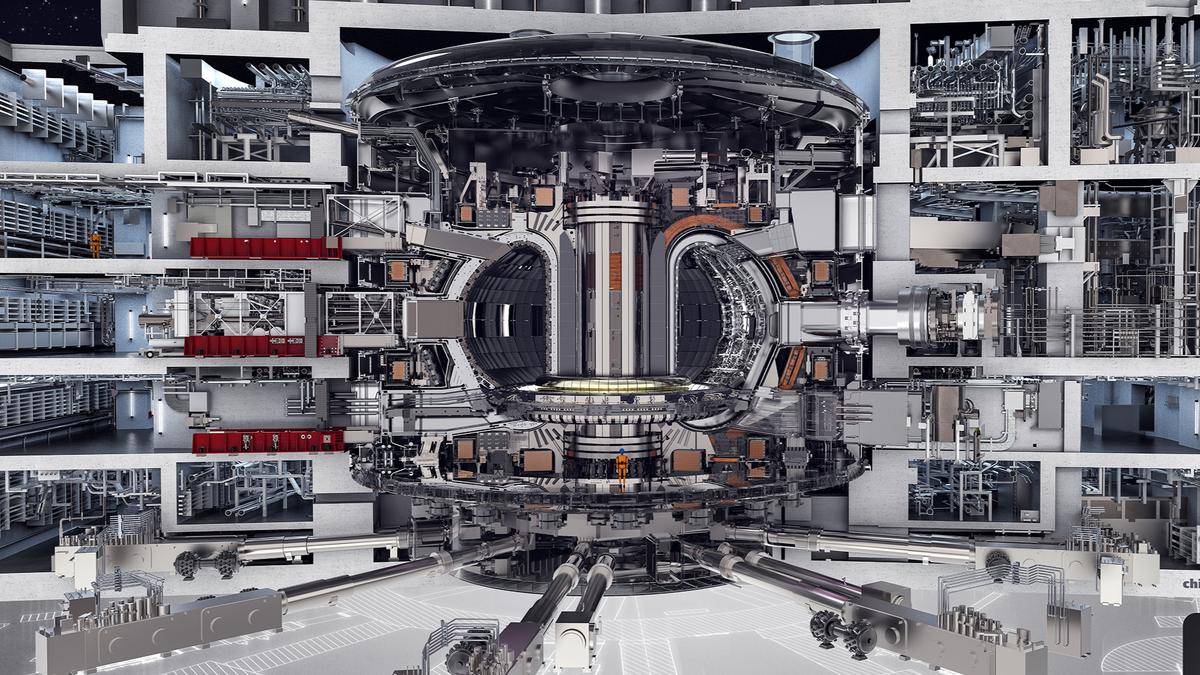
China’s progress in nuclear fusion research has vaulted the country back into the global spotlight, this time not for economic growth or geopolitical strategy, but for a potentially transformative leap forward in clean energy. At the heart of this development is the Experimental Advanced Superconducting Tokamak, commonly known as EAST, which Chinese scientists refer to as the “artificial sun”. This facility is not a metaphorical device but a sophisticated nuclear fusion reactor that closely emulates the reaction powering the Sun, offering a potential roadmap to virtually limitless, low-carbon energy.
Fusion energy has long been a “holy grail” for scientists and energy experts because its fundamental physical process, fusing light atomic nuclei into heavier ones, can produce enormous amounts of power with minimal environmental impact. Unlike current nuclear fission reactors, which split atoms and generate long-lived radioactive waste, fusion produces negligible radioactive waste and no greenhouse gas emissions. For decades, fusion was seen as perpetually on the horizon, a technical challenge that required maintaining extreme temperatures and pressures to sustain the reaction. Today, China’s breakthroughs suggest that this future may be closer than once believed.
Inside China’s Artificial Sun Fusion Energy Project
The EAST reactor, situated in Hefei, Anhui Province, is a tokamak-type device, a doughnut-shaped vacuum chamber surrounded by powerful magnets that confine and heat plasma, a superheated state of matter, to conditions necessary for nuclear fusion. The goal is to replicate the Sun’s core reaction on Earth: combining hydrogen isotopes like deuterium and tritium to form helium, releasing an immense amount of energy in the process.
On a technical level, sustaining fusion requires temperatures exceeding 100 million degrees Celsius, far hotter than the core of the Sun. EAST regularly achieves temperatures multiple times hotter than the actual Sun to create and hold plasma. Recent experiments conducted at the facility have produced stable high-temperature plasma for a duration that breaks previous records and point toward longer sustained operations in the future.
The major milestone documented in international scientific literature is EAST’s ability to maintain plasma stability beyond theoretical limits that many researchers once thought impenetrable. By carefully managing plasma interaction with reactor walls and optimizing heating parameters, scientists have kept plasma stable at extreme densities, surpassing a limit known in the fusion community as the Greenwald Limit. This achievement is not just a new experimental benchmark but a critical step toward practical fusion ignition, where the reactor produces more energy than it consumes.
China’s achievements in fusion research reflect years of sustained investment in high-field superconducting magnets, advanced plasma diagnostics, and collaborative research. EAST is part of a broader strategic effort that includes the country’s ongoing contributions to global fusion projects, such as ITER (International Thermonuclear Experimental Reactor) in France, where Chinese science and engineering teams provide key components and expertise for one of the largest fusion experiments ever attempted.
Why This Matters for Clean Energy
The global energy system is in a transitional phase. Many nations are racing to reduce carbon emissions and shift away from reliance on fossil fuels. Renewable energy technologies like wind and solar have achieved wide adoption, but they face intermittency challenges and storage limitations. Fusion energy, if successfully commercialized, could provide a continuous, carbon-free power supply without the storage problems that renewables sometimes encounter.
For countries facing rapid energy demand growth, fusion holds particular promise. China, the world’s largest energy consumer, has set ambitious targets to peak carbon emissions and achieve carbon neutrality by 2060. The progress of the artificial sun project aligns with these long-term goals by potentially offering a scalable and environmentally sustainable energy source. While renewable energy and energy efficiency improvements remain central to near-term climate strategies, fusion could drastically reduce reliance on fossil fuels over the longer term.
Moreover, fusion power could enable new industrial capabilities. Industries such as desalination, hydrogen production, and heavy manufacturing require vast amounts of steady power. Fusion energy could supply base-load electricity in large capacity, helping industrial economies reduce emissions without compromising growth or competitiveness.
Challenges Before Commercial Deployment
Despite its potential, nuclear fusion remains in the research and development phase. A fusion reactor must achieve net energy gain—that is, all energy consumed to initiate and sustain the fusion must be less than the energy produced by the reaction. To date, current experimental reactors—including EAST—still use more input energy than output energy. This is partly due to the stability and confinement challenges inherent in plasma physics.
Another challenge lies in reactor materials. The enormous heat and neutron flux created during fusion reactions can damage reactor walls and internal structures. Scientists are exploring high-performance materials capable of enduring these conditions over extended operational lifetimes. Moreover, scaling reactors from experimental facilities to commercial power plants will require rigorous safety, regulatory, and economic evaluation.
Investment and international collaboration are essential. Projects like ITER, which involve dozens of countries working together, exemplify how global cooperation accelerates scientific progress. China’s participation in such collaborations strengthens knowledge exchange, reduces duplication of effort, and builds a shared foundation for fusion energy implementation around the world.
International Implications of Fusion Research
China’s advancements are being watched closely by the international scientific community. Breakthroughs at EAST are likely to inform design improvements and operational strategies for next-generation fusion reactors globally. Lessons learned on plasma control, magnetic confinement, and high-temperature superconductivity are applicable far beyond the borders of China.
For many countries, the success of fusion energy could rewrite national energy strategies and climate commitments. Nations with limited renewable resources, or those dependent on imported energy, may particularly benefit from investments in fusion research and eventual fusion power generation. Furthermore, fusion’s minimal environmental footprint aligns with broader commitments to reduce carbon emissions and limit global warming below critical thresholds.
Future Outlook and Conclusion
While practical fusion power plants remain years or even decades away, China’s artificial sun fusion energy breakthroughs mark a significant scientific milestone. Sustained plasma operation at extreme conditions not only represents incremental progress but also signals that one of humanity’s oldest scientific objectives, harnessing the power of the stars, may be approaching reality.
As research continues, fusion energy could complement existing renewable technologies, providing stable, high-output power that supports industrial and residential demand alike. The global energy ecosystem stands to benefit from these developments, but realizing fusion’s promise will require continued innovation, international collaboration, and substantial investment. The artificial sun may still be experimental, but its advancements illuminate a future where clean, abundant energy is within reach.
Read More