





 Tuesday, 22-09-26








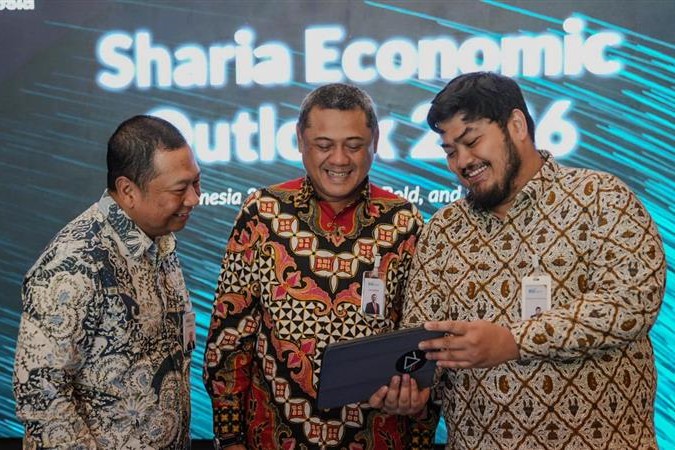
PT Bank Syariah Indonesia Tbk (BSI) projected that Indonesia’s economy will remain resilient in 2026, with expected growth of around 5.28%, supported by strong household consumption, government priority programs, and the rising role of the national sharia economy (04/12).
The forecast was delivered in the BSI Sharia Economic Outlook 2026 under the theme “Indonesia 2026: Resilient, Bold, and Promising,” prepared by the BSI Office of Chief Economist. Chief Economist Banjaran Surya Indrastomo explained that the analysis is built on eight pillars: global trade normalization, asset reallocation to emerging markets, the strengthening of the Rupiah, priority government programs, the “Purbaya Effect,” consumption resilience, downstreaming progress, and key economic indicators.
He stated that these combined factors give Indonesia a relatively strong base entering 2026, despite persistent global uncertainty.
Global Shifts Shape Risks and Opportunities for 2026
BSI’s economists noted that global growth in 2026 is projected at around 3.2% by the IMF, with ASEAN expected to become one of the most attractive growth regions as the global economic center continues shifting toward Asia.
They also highlighted five major global dynamics: sovereign debt risks, possible asset bubbles from elevated market valuations, ongoing trade tensions, fragmented growth patterns, and shifting trade structures driven by AI-powered productivity. Banjaran said that these conditions will make investors more selective while AI gradually transforms global trade.
As global inflation eases, The Fed is projected to cut its policy rate by about 50 bps to 3.25–3.50% in 2026, followed by lower U.S. bond yields. This normalization opens space for asset rotation into emerging markets.
Gold remains a preferred safe-haven asset. Using World Gold Council data, the BSI team noted that central banks continued raising gold reserves, while investment demand through Q3 2025 exceeded the previous year. Global gold prices also stayed near record highs. Banjaran said that strong demand and a relatively weaker U.S. Dollar keep the gold business outlook attractive for 2026.
Domestic Growth Drivers: Consumption, Investment, and Policy Programs
BSI projects Indonesia’s economic growth at 5.28% in 2026, higher than the estimated 5.04% in 2025, supported by stable household consumption, increasing domestic investment—especially PMDN—and fiscal spending that remains expansionary but prudent.
Inflation in 2026 is expected to remain within target at around 2.94%, with key risks coming from volatile food due to climate-related conditions. The BI Rate may gradually decline to 4.25% by the end of 2026. Banjaran stated that monetary easing is possible but will not be aggressive, as Rupiah stability and inflation expectations remain priorities.
Rupiah stability is expected to be supported by potential foreign capital inflow recovery, foreign-exchange reserves near US$150 billion, and optimization of SRBI instruments and the domestic bond market. The 10-year SBN yield is projected to average around 6.49% in 2026.
Government programs—such as nutritious meal initiatives, health and education strengthening, MSME support, and food-energy programs—are expected to boost domestic demand and stimulate investment from agriculture to food logistics.
Expansion of Sharia Finance and the Growing Halal Industry
Sharia finance is expected to maintain momentum as part of national economic growth. Total sharia financial assets are projected to increase from Rp3,158 trillion in 2025 to about Rp3,508 trillion in 2026, growing 14.8%.
Sharia banking assets are projected to reach Rp1,205 trillion, with financing at Rp794 trillion growing nearly 11.9%, and third-party funds reaching Rp952.9 trillion growing 12.55%. Banjaran stated that sharia finance has become one of the pillars of the national financial sector.
Indonesia’s halal industry is also expected to strengthen trade and consumption. Domestic halal consumption is projected to reach US$259.8 billion in 2026, growing about 5.88% and representing more than 30% of household consumption. Halal products contribute 20% of non-oil and gas exports, projected to rise to US$73.9 billion with a growth of around 8.73%.
The BSI Muslim Consumption Index shows that Muslim consumption is “growing but more selective,” especially in halal food and beverages, halal cosmetics, health, education, and pilgrimage travel.
Zakat, infak, sedekah, and other religious social funds (ZIS-DSKL) are projected to grow from Rp44.56 trillion in 2025 to Rp52.66 trillion in 2026, rising 18.17% year-on-year. The BSI team noted that rising public preference may strengthen economic equity when connected with formal sharia financing and government empowerment programs.
The “Purbaya Effect” and Sectoral Momentum Toward 2026
The BSI team described the “Purbaya Effect” as a combination of more expansionary yet prudent fiscal and financial policies. The placement of Rp276 trillion in excess budget funds (SAL) in the banking sector—including BSI—is expected to improve liquidity, lower the cost of funds, and support a return to double-digit financing growth, to stimulate economic activity and help restore the middle class.
Downstreaming remains a key medium-term growth engine. BSI’s sectoral projections indicate acceleration in manufacturing, trade, accommodation and food services, transportation, and information and communication services, all expected to grow above the national average in 2026.
Investment in Q3 2025 reached Rp491.4 trillion, rising 13.9% year-on-year, with PMDN at Rp279.4 trillion and PMA at Rp212 trillion. The BSI team expects downstreaming and policy priorities to position PMDN as the main investment driver, while PMA becomes more selective and focuses on high-value, export-oriented sectors.
Banjaran emphasized that Indonesia has a strong opportunity to enter a more inclusive growth phase in 2026, noting that global risks, financial-market depth, and the need for quality jobs remain challenges. He stated that with the right policies and full use of sharia economic potential, Indonesia can move toward more inclusive and sustainable growth.
PHOTO: BSI
This article was created with AI assistance.
Read More