





 Tuesday, 06-10-26








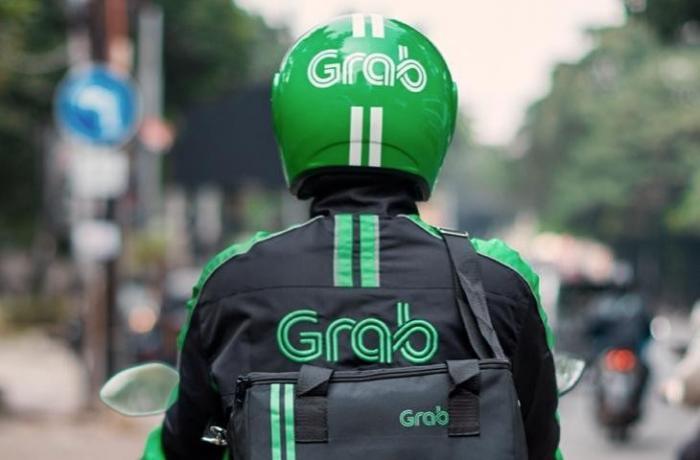
Grab Indonesia says policies on the status and protection of driver partners should consider the characteristics of platform-based work, which differ from conventional employment relationships (02/10).
Grab Indonesia Chief of Public Affairs Tirza Munusamy said the company understands the different views surrounding the status and protection of driver partners in the online transportation ecosystem.
She said Grab had also received information about dozens of communities with thousands of active members in various regions that did not want to be classified as workers or employees.
“The policies being formulated need to consider the characteristics of platform-based work, which are different from conventional employment relationships,” Tirza said in a written statement to CNBC Indonesia on Friday (02/10).
Grab Says Driver Flexibility Should Be Maintained
According to Grab, driver partners can decide when to work, accept or reject orders, and use more than one platform.
The company said this flexibility is important to maintain access to income opportunities that are open and adaptable.
Grab said fully treating partnerships as permanent employment relationships, including applying identical rights and obligations, could have consequences that need to be considered.
“Conventional employment relationships generally regulate working hours, workforce capacity, and operational structures in a more fixed manner,” Tirza said.
She said fully applying such a structure to platform work could limit drivers’ choices in deciding when to work and whether to use more than one platform.
Grab also said this could reduce open access for people seeking flexible income opportunities.
Grab Proposes a Microbusiness Approach
In Indonesia, Grab considers an approach that allows driver partners to develop as microbusiness operators relevant to the characteristics of platform partnerships.
According to Tirza, this approach could maintain drivers’ flexibility to manage their working hours, accept or reject orders, join without difficult requirements, and use more than one platform.
Drivers could also receive access to various forms of microbusiness support, including tax incentives, People's Business Credit (KUR) financing, training, and business capacity development.
Grab said social protection for driver partners could also continue to be strengthened through this approach.
Currently, driver partners can access BPJS Ketenagakerjaan through the Non-Wage Recipient (BPU) scheme for self-employed workers. Grab has expanded access through easier registration and payment within its ecosystem.
The company also provides free BPJS Ketenagakerjaan protection for high-performing driver partners.
Labor Protection Bill Covers Digital Platform Workers
Previously, provisions on the protection of online motorcycle taxi drivers began to emerge through the Draft Law on Employment Protection.
Under the draft law, online motorcycle taxi drivers could fall under the category of Digital Platform Workers. This refers to people employed or assigned to work for business entities and/or individuals through digital technology.
The category covers workers whose jobs are carried out through digital platforms and have flexible working characteristics.
Article 49 of the draft law states that Digital Platform Workers have flexibility in working time, task organization, and workplace.
Their compensation would not only be based on completing tasks. It could also be determined by application algorithms and incentives or bonuses based on performance.
Proposed Rights for Online Motorcycle Taxi Drivers
The draft law also provides Digital Platform Workers with rights to social security protection.
Online motorcycle taxi drivers would also have the right to establish or join a Workers' Union or Labor Union under Article 50.
Article 51 states that further provisions concerning Digital Platform Workers will be regulated through a law.
The Employment Protection Bill therefore provides an initial framework for the status and rights of digital platform workers, including workers earning income through applications such as online motorcycle taxi platforms.
PHOTO: MNC MEDIA/GRAB
This article was created with AI assistance.
We make every effort to ensure the accuracy of our content, some information may be incorrect or outdated. Please let us know of any corrections at [email protected].
Read More