





 Tuesday, 06-10-26








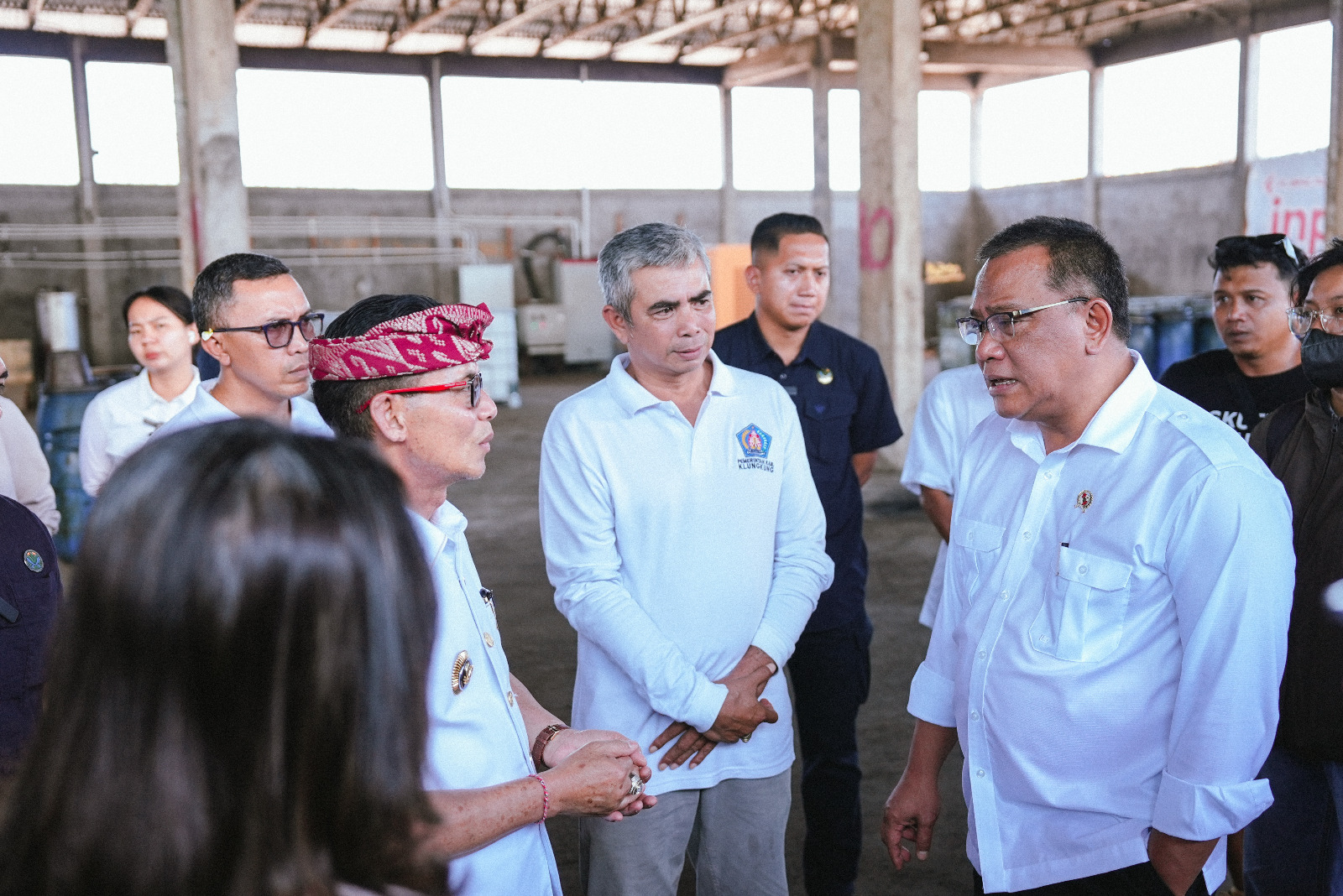
Indonesia's Ministry of Environment and the Environmental Control Agency (KLH/BPLH) is preparing to connect waste-derived energy produced by regional waste facilities with large industries.
The initiative is intended to ensure that alternative fuel made from processed waste has clear buyers and can support more sustainable waste management.
Minister of Environment and Head of BPLH Moh Jumhur Hidayat made the statement while inspecting the TOSS Center Gema Santi in Klungkung Regency, Bali, on Saturday (03/10).
KLH/BPLH Plans to Connect Waste-Derived Energy With Industry
The government sees a need to connect regional waste processors with industrial buyers so that waste processing can develop alongside a reliable market for the resulting energy products.
At the TOSS Center Gema Santi, Minister Jumhur observed waste processing using pyrolysis technology. The process heats waste without oxygen to produce alternative fuels for industrial use.
The processed waste can produce an alternative fuel to replace diesel, as well as compacted organic waste products that can be used as a substitute for coal.
Jumhur also praised the Klungkung Regency Government for involving the private sector in its waste management efforts.
"Like the Klungkung Regency Government here, which has a good initiative to process its waste by implementing a circular economy. That is a good practice," Minister Jumhur said during the inspection.
Waste Processing Turns Local Waste Into Alternative Fuel
One of the main challenges facing regional waste-derived products is finding buyers. KLH/BPLH therefore plans to take a broader role by helping connect regional producers of green energy with industries operating at the national level.
The ministry said it is prepared to facilitate communication when regional producers face difficulties in finding buyers.
"The government will encourage it if there are difficulties regarding buyers and so on, later we will try to communicate. Because on the other hand, buyers have also contacted us (KLH). They are looking for where there are products like this, please let us know so they can obtain them," Jumhur said.
For energy-intensive industries, the use of fuel made from processed waste could provide an alternative to coal and natural gas. The initiative also involves the use of organic biomass as an energy source.
KLH/BPLH to Link Waste Producers With Industrial Buyers
The distance between Bali and industrial centers on Java remains a challenge for the development of a market for waste-derived energy. According to Jumhur, however, the issue can be addressed through careful business calculations.
One approach is to combine waste processing from several regencies to create a larger volume. A larger volume could reduce costs per unit and make the products more attractive to businesses.
Jumhur illustrated the approach by comparing waste processing volumes of 1,000 tons and 100 tons.
"For example, processing waste that produces 1,000 tons compared with producing 100 tons could have the same number of human workers, but the result is greater with 1,000 tons. That means the cost per unit, the cost incurred, is lower. Usually, business people will look at it that way," he said.
Aggregating Waste From Several Regions Could Cut Costs
The strategy is expected to address the economic challenges associated with transporting and processing waste-derived energy. By combining waste from several regions, producers could increase their output while lowering the cost for each unit produced.
KLH/BPLH said connecting waste management with the market should create benefits for all parties involved, including regional governments, waste management operators and industrial buyers.
The ministry also expects the approach developed in Klungkung to become a national pilot model. Through the model, other regions could develop waste processing into energy while maintaining environmental cleanliness.
Klungkung Waste Management Targeted as National Model
The Klungkung initiative demonstrates how regional waste processing can be linked with industrial demand for alternative fuel. KLH/BPLH is seeking to expand this connection by helping producers find buyers and by encouraging business models that can operate at a larger scale.
The government expects the approach to support the continued development of waste processing in regions while creating a clearer market for the energy products generated from waste.
PHOTO: MINISTRY OF ENVIRONMENT
This article was created with AI assistance.
We make every effort to ensure the accuracy of our content, some information may be incorrect or outdated. Please let us know of any corrections at [email protected].
Read More