





 Wednesday, 30-09-26








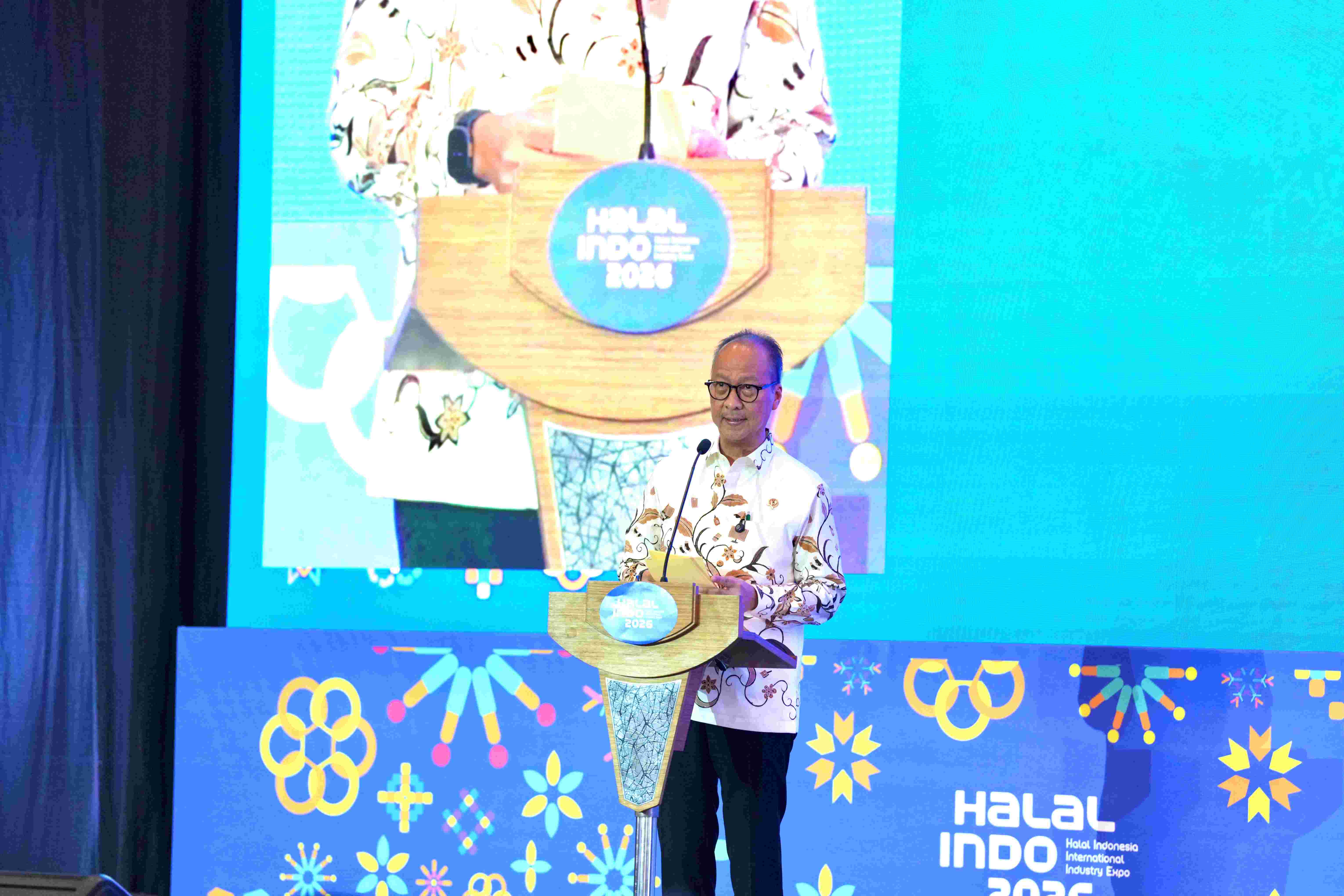
Indonesia’s halal industry is being strengthened through industrial development, business collaboration and the expansion of supporting infrastructure, as the government seeks to increase the country’s role in the global halal value chain.
The Ministry of Industry (Kemenperin) said the Industrial Festival x Halal Indo 2026 generated business transaction commitments worth Rp622 billion, alongside direct transactions of Rp8.4 billion during the four-day event (28/9).
Indonesia Halal Industry Generates Rp622 Billion in Commitments
Industrial Festival x Halal Indo 2026 was held from September 24 to 27, 2026, at ICE BSD, Tangerang. The event brought together 346 tenants showcasing products, technology, innovation and business opportunities across the halal industrial ecosystem.
The event attracted 28,707 visitors, a five percent increase from the previous year. Direct transactions reached Rp8.4 billion, up nine percent year on year, while business transaction commitments reached Rp622 billion.
Minister of Industry Agus Gumiwang Kartasasmita said Indonesia has significant potential to become one of the major players in the global halal industry, supported by its large domestic market, growing industrial base, human resources and rising public awareness of halal products.
“Indonesia must not only become a market for the world's halal products. We must take a greater role as a producer and global halal production base. Therefore, strengthening the halal industry needs to be directed toward creating added value, increasing competitiveness, while also expanding the penetration of national industrial products into international markets,” Agus said in Jakarta on Monday (28/9).
He said business meetings, networks and commitments created during the event should be followed by concrete cooperation.
“The measure of success of an exhibition is not only how many visitors it attracts, but also how much economic benefit and business collaboration can continue after the event,” Agus said.
At the closing ceremony, Kemenperin’s Head of the Agency for Standardization and Industrial Services Policy (BSKJI), Emmy Suryandari, said the event had developed beyond product promotion.
“This achievement shows that Industrial Festival x Halal Indo is not only a space for product promotion, but also a platform to bring together industry, markets and investment to strengthen the national halal industry ecosystem,” Emmy said in Tangerang on Sunday (27/9).
She said the economic achievements reflected the networks, business opportunities and collaborations created during the event. The commitments generated through the event, she added, need to be converted into concrete and sustainable business activities.
“Halal Indo 2026 may have ended, but the spirit and collaboration that have been built must not stop. All ideas, networks, cooperation and commitments that emerge must become new energy to be realized in programs and concrete actions to strengthen Indonesia's halal industry,” Emmy said.
Four Halal Industrial Estates Strengthen the Production Ecosystem
Kemenperin is also developing halal industrial infrastructure through the facilitation of four Halal Industrial Estates in Bintan, Cikande, Jababeka and Sidoarjo.
The initiative is intended to bring together industries, human resources, halal certification services, raw materials and other requirements within integrated industrial areas.
“Indonesia views international cooperation as very important so that the halal industry does not only develop as a consumption market, but also becomes an increasingly integrated global base for production, investment, innovation and trade,” Agus said.
The government said fragmentation within the halal industry can prevent strong product demand from being fully converted into investment decisions, increased production capacity and global halal value chains.
For businesses, certainty over raw materials, alignment of standards between countries, market scale and connections with supply chains are important considerations before investment decisions are made.
“Therefore, the development of the halal industry needs to be directed not only at expanding the consumer market, but also at strengthening relationships between producers, investors, technology owners and markets,” Agus said.
The development of Indonesia’s halal industry has been incorporated into the national industrialization policy through Minister of Industry Regulation No. 40 of 2025 on the 2025–2029 Halal Industry Development Roadmap.
The roadmap provides a basis for programs covering regulations and guidelines, halal infrastructure and institutional strengthening, human resource development, certification assistance, promotion and industrial cooperation.
According to Kemenperin, industrial estates are one of the instruments for establishing a more integrated foundation for the halal industry. At The 5th Summit of Halal 20 (H20) on September 18, KPAII Director General Tri Supondy said Halal Industrial Estates are designed not only to provide production space but also to bring together various supporting industrial needs within one area.
“This approach is expected to provide convenience for business actors while increasing investment attractiveness in the halal sector,” Tri said.
Halal Certification and Small Industries Gain Support
Kemenperin is also strengthening institutions and human resources supporting the halal industry.
The ministry currently has 22 Halal Inspection Institutions (LPH), four Halal Product Process Assistance Institutions (LP3H), five Halal Product Assurance Training Institutions (LP2JPH) and three Professional Certification Institutions (LSP).
These institutions are supported through training, technical guidance and competency certification for industry participants and government officials.
Small industries are also receiving assistance. As of 2026, Kemenperin had facilitated halal certification for 12,171 small industries.
The certification assistance has been complemented by promotional opportunities through Halal Indo 2026 and participation in international halal exhibitions, giving halal products from Indonesian small industries opportunities to connect with broader markets.
“Halal industry development needs to cover all business actors, both small and large industries. For small industries, access to certification and promotion is important, while for large industries, the implementation of the halal product process can become part of good industrial governance while also providing added value in competition,” Tri said.
For large-scale industries, Kemenperin is encouraging the implementation of halal product processes as part of Good Manufacturing Practices (GMP).
The effort is also supported through the Indonesia Halal Industry Awards (IHYA), which recognizes stakeholders that consistently support the growth, development and empowerment of Indonesia’s halal industry.
Indonesia Targets a Larger Role in the Global Halal Industry
Kemenperin views halal certification not only as a regulatory requirement but also as an instrument to increase added value, provide quality assurance, strengthen competitiveness and open access to global markets.
Indonesia has a large domestic market, a broad industrial base and a growing pool of human resources. These assets are being developed to support a larger role for Indonesia as a halal production base rather than solely as a market for halal products.
“To be able to penetrate and win the global market, halal certification alone is not enough. Indonesian products must have global competitiveness and be supported by a strong, integrated halal ecosystem that is ready to meet industrial needs,” Emmy said.
Kemenperin expects the transaction commitments and cooperation opportunities generated through Industrial Festival x Halal Indo 2026 to be realized through sustainable business activities.
The ministry said the move is expected to strengthen the national halal industry supply chain and expand opportunities for Indonesian products in domestic and global markets.
“Industrial Festival x Halal Indo is not merely an exhibition, but a space for collaboration. This year's achievements are a foundation for building stronger synergies so that the national halal industry becomes more productive, competitive, and capable of taking a greater role in the global halal value chain,” Emmy said.
PHOTO: MINISTRY OF INDUSTRY
This article was created with AI assistance.
We make every effort to ensure the accuracy of our content, some information may be incorrect or outdated. Please let us know of any corrections at [email protected].
Read More