





 Friday, 25-09-26








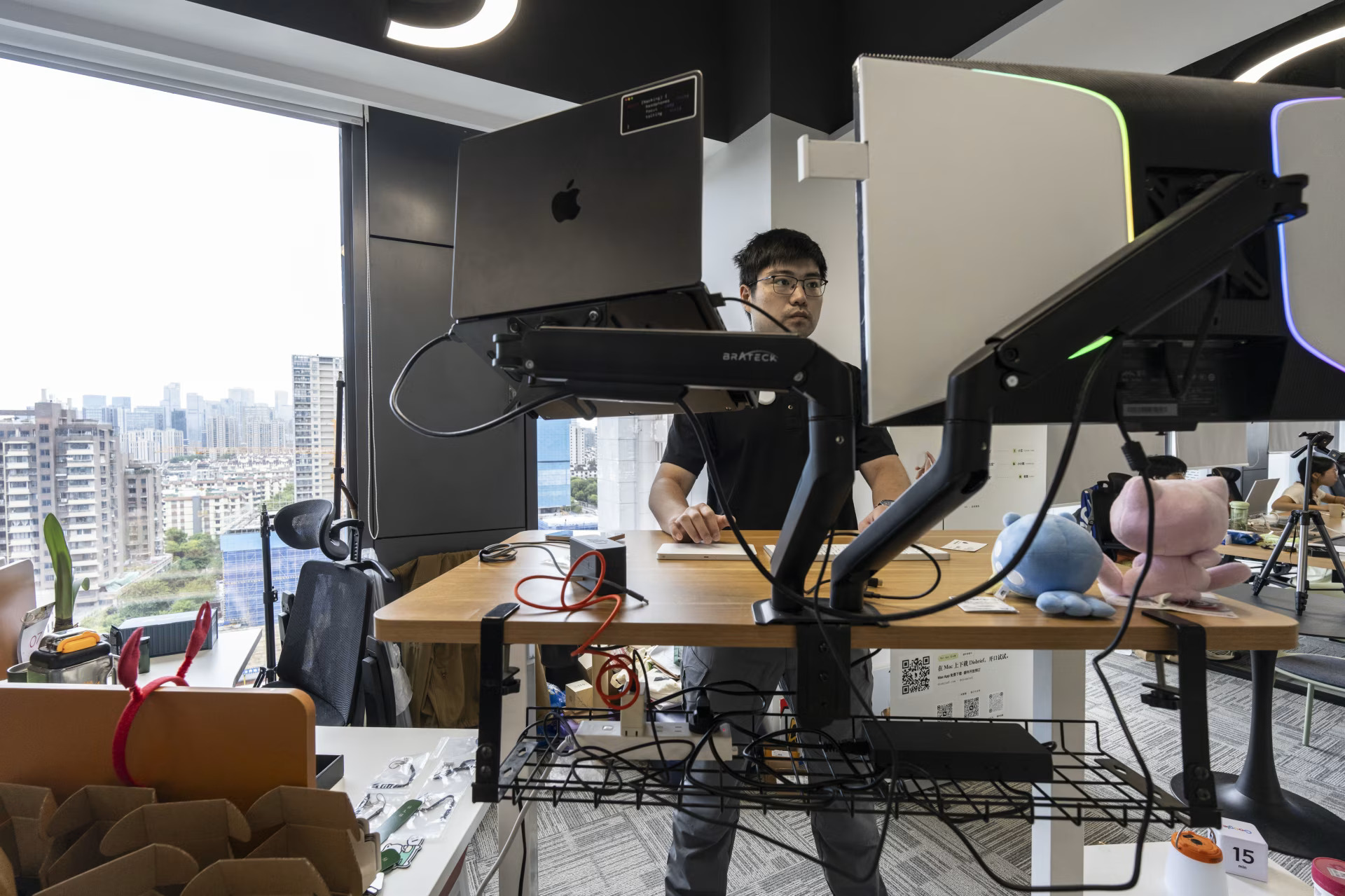
In recent years, the professional landscape for young adults in China has undergone a dramatic transformation. Facing an increasingly tough job market, intense corporate competition, and economic uncertainty, millions of recent university graduates and early-career workers have reached a breaking point. The infamous corporate work culture that required staff to work grueling hours left many feeling physically exhausted and emotionally drained. Combined with rising youth unemployment figures across major urban centers, a quiet revolution began to take shape. Rather than continuing to submit endless resumes to traditional tech giants or simply withdrawing from the workforce entirely through social trends like lying flat, a growing segment of ambitious young professionals is choosing an alternative path. They are leveraging cutting-edge technology to build their own independent businesses. In particular, the rapid rise of generative artificial intelligence has offered a compelling lifeline, prompting a wave of enthusiastic founders to establish dynamic China AI Startups.
The Shift From Corporate Fatigue to Entrepreneurial Ambition
For nearly two decades, employment at big tech conglomerates like Tencent, Alibaba, and Baidu was viewed as the ultimate career destination for ambitious graduates across China. These companies offered prestige, competitive salaries, and rapid career progression. However, economic headwinds, regulatory shifts, and corporate restructuring in recent years transformed these dream jobs into high-stress environments characterized by frequent layoffs and diminished upward mobility.
At the same time, youth unemployment reached record levels, leaving millions of well-educated graduates struggling to secure positions that matched their qualifications. While initial societal reactions manifested in cultural trends where young people openly rejected competitive corporate culture, a new phase of creative adaptation has emerged. Unemployed and burned-out workers are redirecting their skills into self-directed enterprise. By shifting their mindset from corporate dependency to digital sovereignty, these young individuals are attempting to reclaim control over their professional destinies. The explosion of interest around large language models and autonomous software tools has provided precisely the commercial opening they needed to transition into independent creators.
How Generative Technology Is Lowering Startup Barriers
Historically, building a tech company required significant capital, large development teams, and sophisticated physical infrastructure. Traditional software startups needed substantial seed funding to hire engineers, designers, product managers, and marketing specialists. The emergence of modern generative artificial intelligence has fundamentally disrupted this capital-intensive model. Today, open-source models, comprehensive application programming interfaces, and low-code development platforms permit single individuals or tiny teams to build sophisticated digital products in a fraction of the time and at a tiny fraction of the cost.
This technological shift is precisely what makes the launch of modern China AI Startups accessible to young adults who lack deep pockets or traditional venture capital backing. Using tools powered by large language models, a single founder can write application code, generate user interface layouts, produce marketing copy, and automate customer service support. Local ecosystem developments have accelerated this trend. Chinese domestic AI providers, including Baidu with Ernie Bot, Zhipu AI, Moonshot AI, and open-source creators like DeepSeek, have made robust local-language AI resources available to local developers. As a result, technical entry barriers have plummeted, empowering young creators to transform creative concepts into functional applications within days rather than months.
Micro Startups and the Solopreneur Business Model
Unlike traditional tech ventures that prioritized massive scale, venture backing, and rapid expansion above profitability, the new cohort of young founders is championing lean, agile business models. Many of these projects begin as single-person operations or small partnerships formed among former co-workers and university peers. These micro-ventures focus heavily on specialized niche markets, digital utility tools, productivity software, and consumer-facing lifestyle applications.
Examples of popular product directions include automated translation and localization tools for cross-border e-commerce, AI-driven personal tutors, specialized productivity assistants for digital creators, and personalized gaming applications. Because overhead costs are kept extremely low, these micro-enterprises do not need millions of active users or institutional funding rounds to become financially self-sustaining. Achieving a modest customer base willing to pay monthly subscription fees or micro-transactions is often sufficient to provide a comfortable living for the founders. This model provides an attractive escape route from traditional employment, allowing young founders to gain financial independence while working on projects they genuinely care about. Consequently, the expanding ecosystem of China AI Startups represents a grassroots reimagining of what an enterprise can look like in the modern digital economy.
Key Challenges Facing Young Founders in the Local Market
While the low barrier to entry and technical accessibility of generative AI offer exciting opportunities, young entrepreneurs face a formidable set of structural challenges. One major hurdle is intense market competition. Because tools and APIs are widely available, thousands of creators are building similar applications simultaneously. Distinguishing a product in a crowded market requires exceptional user experience design, effective domestic marketing strategies, and deep domain expertise.
Furthermore, navigating regulatory compliance remains a complex hurdle for new China AI Startups. China has instituted comprehensive regulations governing artificial intelligence services, including strict requirements regarding algorithm registration, data security, content moderation, and user privacy protections. For small teams without dedicated legal departments, understanding and adhering to these regulatory frameworks can prove daunting and resource-intensive. Hardware constraints also present an ongoing operational challenge. Global chip export restrictions have placed limits on the raw computing power available to domestic tech infrastructure, driving up server costs for intensive model training and inference. To overcome these limitations, founders must become exceptionally resource-efficient, relying on fine-tuned lightweight models and localized hosting solutions to optimize operating expenses.
Economic Implications for China Tech Sector and Future Outlook
The grassroots wave of AI innovation carries significant implications for the broader Chinese economic landscape. On a macro level, the enthusiasm among young founders aligns with national strategic goals aimed at fostering technological self-reliance and domestic AI innovation. By channeling creative talent away from stagnant corporate structures into active venture creation, this trend injects fresh vitality into the technology sector.
Moreover, the proliferation of China AI Startups demonstrates a resilient shift in how the young workforce views ownership, career stability, and personal productivity. Even if many of these early-stage micro-ventures eventually fail or pivot, the experience gained by thousands of young developers, designers, and marketers will build a highly skilled talent pool accustomed to leveraging advanced software tools. In the long run, this organic ecosystem of solopreneurs and small technical teams could serve as a key engine for digital transformation across various consumer and business sectors.
Conclusion
The emergence of young, burned-out, and unemployed individuals launching independent technology ventures marks a fascinating turning point in modern Chinese society. Driven by necessity, burnout, and technological opportunity, these young founders are converting economic adversity into creative momentum. While structural hurdles, intense competition, and regulatory compliance will undoubtedly test their resilience, the long-term viability of these China AI Startups will depend on their ability to deliver genuine value to end users. Ultimately, this movement illustrates that innovation is not exclusive to corporate giants or heavily funded research labs; often, it thrives at the grassroots level when ambitious individuals gain access to transformative technology.
Read More