


 Wednesday, 14-10-26


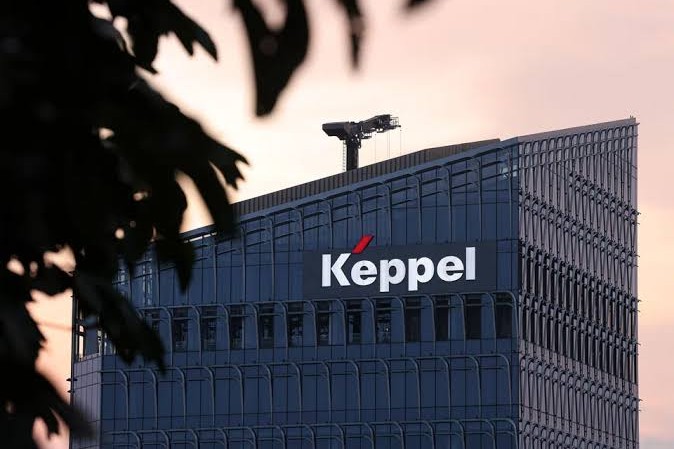
Singapore-based asset manager Keppel plans to connect a 2 GW solar power project in Indonesia’s Riau Islands to its Keppel Merlimau Cogen (KMC) power plant on Jurong Island through an undersea transmission cable (19/09).
The plan was disclosed by Janice Bong, Managing Director of Keppel’s Power and Renewables Infrastructure Division. Keppel and one of its private funds are developing the Indonesian solar power project, which will include a utility-scale battery energy storage system and undersea cable infrastructure linking the project to Singapore.
Keppel has previously received a conditional licence from Singapore’s Energy Market Authority (EMA) to import 300 MW of low-carbon electricity from Indonesia.
Indonesia Solar Project Could Supply Singapore Data Centers
Bong said electricity from the project could potentially be used by data centers because KMC is located near a data-center area planned for development on Jurong Island.
Singapore recently awarded an additional 200 MW of data-center capacity to four operators, including Keppel.
Keppel plans to invest more than S$1 billion to develop data centers on Jurong Island that can support artificial intelligence (AI) requirements.
According to Bong, connecting KMC with the Indonesian solar project would allow Keppel to use existing electricity infrastructure on Jurong Island while creating additional value for customers.
Keppel said, however, that the plan still depends on further development and regulatory approvals.
Keppel Explores Biomethane and Hydrogen Power
Keppel is also exploring biomethane as a renewable fuel that could replace natural gas in power generation.
The company has identified potential biomethane sources from palm oil mill effluent (POME), or liquid waste from palm oil mills, as well as other sources in Malaysia and Indonesia.
Last year, the Singapore Economic Development Board launched a biomethane sandbox to support supply-chain development and accelerate the adoption of biomethane by industry. Keppel is one of the companies participating in the programme.
Biomethane is also an option for new data centers on Jurong Island to meet Singapore's requirement that at least 50% of their electricity needs come from qualifying green-energy sources.
Keppel is also considering a recent EMA offer to the private sector to build new gas-fired power units that are ready to use hydrogen.
The company previously entered the technology through Keppel Sakra Cogen on Jurong Island. The 600 MW power plant began operating in May and is Singapore’s first combined-cycle power plant compatible with hydrogen.
The facility can initially co-fire up to 30% hydrogen with natural gas. However, Sakra Cogen has not yet started using hydrogen because the fuel remains expensive and its global supply chain has not yet developed, especially for green hydrogen produced using renewable energy.
Bong said the use of hydrogen in Singapore will depend heavily on achieving economies of scale that can reduce production costs.
Keppel Project Supports ASEAN Power Grid Development
Keppel’s plans are aligned with Singapore’s efforts to diversify its energy sources and reduce carbon emissions.
Singapore is targeting imports of around 6 GW of low-carbon electricity by 2035.
Keppel is one of six companies that have received conditional licences from EMA to collectively import 3 GW of clean electricity from Indonesia.
The projects still face regulatory uncertainty. Indonesia requires clean-energy exporters to renew their permits every five years, which could be a consideration for investors and potential electricity buyers.
EMA has also granted conditional approval to seven other companies to develop clean-electricity import projects with a combined capacity of 6.25 GW.
One of these is Keppel’s plan to import 1 GW of electricity from Cambodia.
The projects could support the development of the ASEAN Power Grid (APG), an initiative to connect electricity systems across Southeast Asia and promote cross-border trade in clean electricity.
Keppel is also involved in a green-electricity transmission project from Laos to Singapore through Thailand and Malaysia.
The project has brought renewed attention to the development of the APG. Bong said a regional electricity network could provide greater resilience against external shocks, particularly amid increasing geopolitical uncertainty.
Separately, Salim Group has acquired full ownership of Keppel Data Centres’ data-center joint venture in Indonesia, which was previously known as IndoKeppel Data Centres.
Following the acquisition, the company was relaunched as IndoData Data Center and now operates as an independent operator.
PHOTO: BUSINESS TIMES
This article was created with AI assistance.
We make every effort to ensure the accuracy of our content, some information may be incorrect or outdated. Please let us know of any corrections at [email protected].
Read More