





 Wednesday, 09-09-26








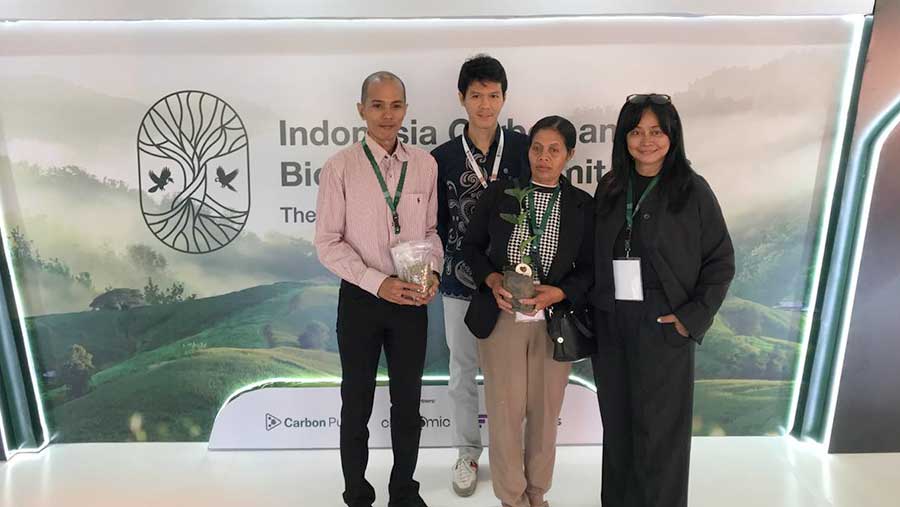
Indonesia stands as one of the world's largest coffee producers, where millions of smallholder farmers depend on the crop for their daily livelihoods. In recent years, the intersection of sustainable agriculture and environmental stewardship has transformed how coffee is cultivated across the archipelago. As global climate challenges intensify, agricultural organizations and local cooperatives are actively reformulating their strategies to align with broader ecological goals. Among these efforts, the leadership and active involvement of female agricultural workers have emerged as a critical catalyst for systemic change. By integrating climate-smart practices into traditional farming frameworks, initiatives across the country are establishing new models for sustainable development. The strategic integration of female leadership into climate initiatives highlights the pivotal role of women in carbon economy initiatives, transforming local agricultural practices into powerful tools for climate mitigation and community resilience.
As environmental degradation threatens traditional coffee growing regions, innovative cooperatives such as Coop Coffee Indonesia are leading the charge in adopting regenerative agricultural methods. These organizations recognize that long-term sustainability requires a comprehensive strategy that simultaneously addresses environmental degradation and social inequality. By focusing on shade-grown coffee, agroforestry, and soil conservation, cooperatives are creating robust farming systems that lower carbon footprints while producing high-quality coffee beans. Central to this transformation is the deliberate empowerment of female members, who have historically performed much of the physical labor in coffee production without receiving equal access to resources, technical training, or governance decision-making power. Recognizing this disparity, modern cooperatives are actively restructuring their operational frameworks to promote gender equity and shared economic leadership.
The Intersection of Agriculture, Gender Equity, and Climate Resilience
For generations, women have formed the backbone of rural agricultural communities throughout Indonesia. They manage delicate tasks such as seedling cultivation, harvesting, sorting, and post-harvest processing. Despite their substantial contributions, structural challenges have often restricted their access to direct land ownership, financial capital, and specialized technical training. Addressing these historical imbalances is not merely a matter of social justice; it is also an essential strategy for enhancing overall environmental outcomes. Research consistently demonstrates that when female farmers receive equal access to agricultural resources and education, farm productivity increases and environmental management practices improve significantly.
In the context of modern climate strategy, the integration of female farmers into carbon mitigation initiatives represents a significant breakthrough. Smallholder coffee farms in key agricultural regions possess immense potential for carbon sequestration through shade-grown agroforestry techniques. When female farmers are equipped with the knowledge and resources to implement regenerative agricultural techniques, they become key agents of environmental stewardship. The active participation of women in carbon economy projects strengthens communal land management, ensures higher survival rates for planted native trees, and promotes sustainable harvesting practices that maintain long-term ecosystem health.
Furthermore, empowering female agricultural workers creates a positive multiplier effect that directly benefits entire rural communities. Women are statistically more likely to reinvest their earnings directly back into family nutrition, healthcare, and children's education. When female farmers earn fair compensation through sustainable coffee production and environmental incentive schemes, broader community resilience improves markedly. This holistic approach demonstrates that environmental conservation and social empowerment are deeply intertwined, creating a self-sustaining cycle of economic improvement and ecological protection.
Agroforestry Models and Carbon Offsetting in Indonesian Coffee
Traditional mono-crop coffee farming often leads to deforestation, soil erosion, and biodiversity loss over time. In contrast, integrated agroforestry systems combine coffee plants with native shade trees, fruit trees, and organic cover crops. This polyculture approach mimics natural forest ecosystems, preserving soil moisture, enhancing biodiversity, and sequestering significant amounts of carbon dioxide from the atmosphere. For Indonesian coffee cooperatives, shifting toward shade-grown coffee serves a dual purpose: it elevates coffee bean quality while generating measurable carbon offsets that can be verified and monetized within international markets.
Implementing these complex sustainable practices requires comprehensive field training, continuous monitoring, and meticulous record-keeping. Female farmers have consistently excelled in managing these complex systems. Their expertise in plant care and meticulous attention to detail make them natural leaders in tree nursing, biodiversity mapping, and organic soil enhancement. As cooperatives work to certify their carbon credit projects, the systematic involvement of women in carbon economy frameworks ensures that data collection and sustainable land management meet rigorous international standards.
Moreover, carbon credit mechanisms provide coffee cooperatives with an additional stream of revenue that helps buffer smallholders against volatile global commodity prices. By converting verified carbon sequestration into tradeable assets, cooperatives can generate stable income for their members. When female farmers are directly involved in managing these green assets and receiving direct revenues, it reinforces their financial autonomy and elevated social standing within their local communities.
Overcoming Structural Barriers Facing Female Agricultural Workers
Despite the clear benefits of gender-inclusive climate programs, female farmers in rural Indonesia continue to face systemic obstacles. Land tenure laws and traditional customs often restrict formal land ownership to male heads of households, making it difficult for women to access agricultural loans or formal cooperative memberships independently. Additionally, domestic responsibilities and unpaid care work frequently limit the time women can dedicate to technical training sessions or cooperative leadership meetings.
To overcome these obstacles, progressive coffee organizations are establishing targeted support systems. Cooperatives are introducing flexible training schedules, local childcare support, and specialized financial products designed specifically for female micro-entrepreneurs. Furthermore, specialized leadership training programs are equipping female coffee farmers with the public speaking, financial management, and negotiation skills needed to serve effectively on cooperative boards and executive committees.
Removing these structural barriers is essential for scaling sustainable carbon initiatives across the archipelago. When female farmers are given equal voting rights and decision-making power, overall project management becomes more inclusive, transparent, and resilient. The expanding visibility of women in carbon economy networks serves as an inspiring blueprint for other agricultural sectors in Southeast Asia, demonstrating that gender equality is a foundational requirement for meaningful, long-term climate action.
Economic and Social Benefits of Gender Inclusion in Green Markets
The economic impact of incorporating female farmers into green value chains extends far beyond individual households. When agricultural cooperatives embrace gender parity, they unlock higher operational efficiency, improved product quality, and stronger brand reputation. International coffee buyers and conscious consumers increasingly prioritize ethical supply chains that demonstrate both environmental sustainability and social responsibility. By championing female leadership in carbon reduction programs, Indonesian cooperatives can secure premium pricing for their coffee beans in high-value global markets.
Socially, the empowerment of female farmers alters traditional perceptions of women's roles in rural societies. As female members gain financial independence and contribute directly to community carbon projects, decision-making dynamics within households and local councils shift toward greater equity. Female farmers become recognized leaders, community educators, and mentors for younger generations. This social transformation reinforces the long-term viability of community-based conservation, ensuring that sustainable practices are passed down naturally through generations.
The broader recognition of women in carbon economy developments also attracts substantial funding from international development agencies, impact investors, and non-governmental organizations. These partnerships provide vital capital for technical infrastructure, sustainable processing equipment, and expanded reforestation projects. By linking local agricultural practices directly with global carbon finance, Indonesian cooperatives are creating a resilient model for sustainable rural development.
Future Prospects for Sustainable Supply Chains in Southeast Asia
Looking forward, the integration of gender equity and carbon market participation in the agricultural sector represents a transformative opportunity for Southeast Asia. As global demand for high-integrity carbon credits grows, smallholder farming communities are uniquely positioned to serve as key providers of nature-based climate solutions. However, realizing this full potential requires continued investment in local institutional capacity, technology transfer, and inclusive governance models.
Indonesian coffee cooperatives are setting a clear standard for how rural communities can successfully navigate the transition toward a green economy. By proving that climate mitigation and gender empowerment reinforce each other, these organizations offer valuable lessons for other commodity supply chains, including cocoa, tea, and rubber. Continued collaboration between government bodies, private sector enterprises, cooperative federations, and civil society will be critical to expanding these programs to reach millions of smallholder farmers across the region.
Ultimately, the transformation of Indonesia's coffee landscape highlights the profound impact of inclusive climate action. When women are fully empowered as active participants and leaders, environmental conservation initiatives become more effective, sustainable, and equitable. As the global community continues to search for scalable solutions to climate change, the success of Indonesian coffee cooperatives demonstrates that true sustainability begins at the local level, through the empowerment of communities and the full inclusion of female farmers.
Read More