





 Monday, 12-10-26








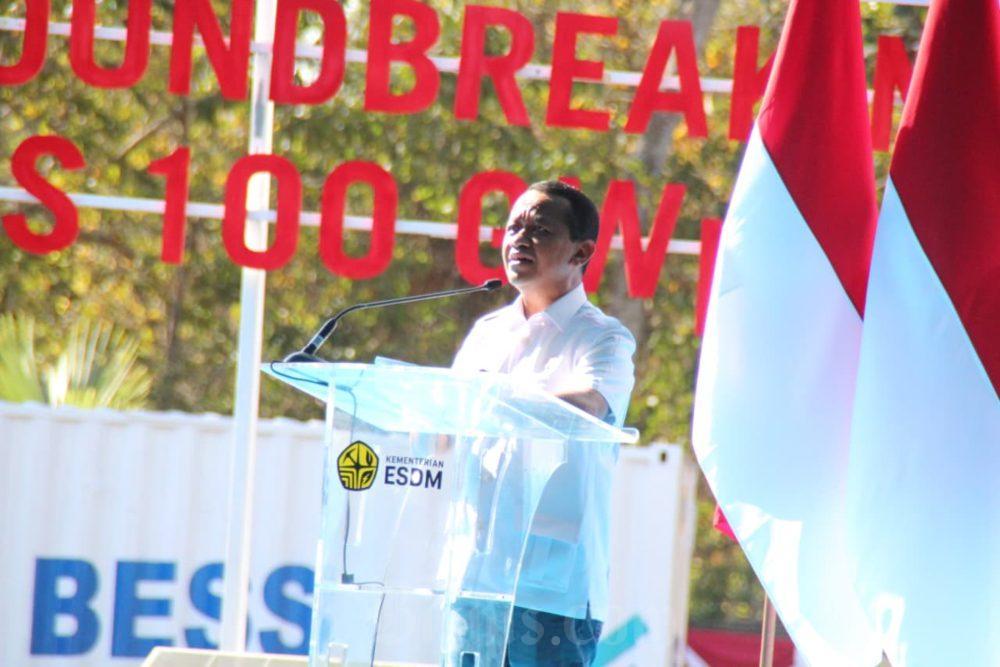
Indonesia has taken a historic step toward total energy independence and rapid decarbonization. On August 25, 2026, President Prabowo Subianto officially inaugurated the launch of an ambitious 100-gigawatt peak solar energy initiative at the Gilimanuk Sea Operations Monument in Jembrana Regency, Bali. The strategic national program began with the simultaneous launching, groundbreaking, and tender preparation of 14 solar power projects spanning six key provinces, including West Java, Central Java, East Java, Bali, Bangka Belitung Islands, and Riau Islands. Together, these opening projects account for an initial capacity of 5.3 gigawatts peak. This initiative signals a profound evolution in Indonesia Solar Power Infrastructure, laying the foundation for a complete structural shift away from fossil fuel imports toward affordable, home-grown renewable electricity generation.
During the official launch ceremony, government leadership highlighted that the electricity generation cost for these newly unveiled solar installations has reached a highly competitive 5 to 6 US cents per kilowatt-hour, excluding battery storage systems. This pricing benchmark demonstrates that utility-scale clean energy has achieved cost parity with traditional coal and diesel generation in the region. By setting an aggressive target to build 100 gigawatts of solar capacity within three years, the administration seeks to eliminate fuel imports, lower national energy subsidies, create millions of green jobs, and position Southeast Asia's largest economy as an international leader in clean energy adoption.
The Economics of 5 to 6 Cents Tariff Rates and Cost Dynamics
Achieving a solar power generation cost of 5 to 6 US cents per kilowatt-hour represents a critical economic milestone for Southeast Asian energy markets. Historically, high upfront capital expenditure and regulatory uncertainties kept renewable energy tariffs relatively elevated across the archipelago. The competitive generation cost achieved in this initial 5.3 gigawatt peak portfolio reflects lower global photovoltaic hardware costs, improved project economies of scale, and streamlined procurement processes led by the Ministry of Energy and Mineral Resources alongside state utility PT PLN.
However, energy ministry officials noted that this baseline tariff applies strictly to the solar generation component. Incorporating Battery Energy Storage Systems, commonly known as BESS, adds additional capital expenses depending on storage duration requirements, ranging from four-hour peak shaving systems to twenty-four-hour continuous supply setups. Even with storage costs factored in, establishing a low generation baseline ensures that expanded Indonesia Solar Power Infrastructure can displace expensive diesel generation across remote island grids. Replacing diesel power plants with floating and ground-mounted solar arrays provides immediate financial relief to national energy budgets while safeguarding electricity consumers against volatile international oil price shocks.
Comprehensive Initial Portfolio Across Six Strategic Provinces
The initial 14-project portfolio launched by President Prabowo spans diverse operational stages and geography. Designed to utilize both inland land areas and water body surfaces, the project list blends floating solar technology on reservoir surfaces with ground-mounted installations. Two projects have already advanced through construction, including the 46 megawatt peak Tembesi solar plant in Riau Islands, which has reached 65 percent completion, and the 92 megawatt peak Saguling floating solar facility in West Java, currently at 44 percent completion. Construction is also progressing rapidly on the 133 megawatt peak Karangkates solar plant in East Java.
Groundbreaking ceremonies marked the start of physical development for three major facilities: the 132 megawatt peak Pasuruan solar project, the 130.2 megawatt peak Banyuwangi installation in East Java, and the 134.2 megawatt peak Gajah Mungkur reservoir solar plant in Central Java. Meanwhile, smaller localized microgrid projects, such as Sembur Island and Rengit Island, entered operational launch phases to supply clean electricity to remote coastal communities.
A major portion of the initial capacity is organized under ready-to-tender projects designed to attract private investment. Chief among these are large-scale floating solar developments on reservoir surfaces across West Java, led by the 1,688 megawatt peak Jatiluhur project, the 1,250 megawatt peak Cirata expansion, and the 636 megawatt peak Jatigede facility. Additional tender packages include the 605 megawatt peak Madura cluster combining solar and battery storage in East Java, as well as the 300 megawatt peak Gilimanuk plant and the 118 megawatt peak Buleleng facility in Bali. Together, these projects demonstrate how modern Indonesia Solar Power Infrastructure maximizes domestic water reservoirs to generate clean power without competing for valuable agricultural land.
Financial Capital and Broad Macroeconomic Impacts
Deploying 100 gigawatts of solar generation capacity over three years requires massive capital mobilization and robust financial coordination. Minister of Energy and Mineral Resources Bahlil Lahadalia confirmed that the complete 100 gigawatt peak mega-program requires a total investment of approximately 73 billion US dollars, equivalent to more than 1,140 trillion Indonesian Rupiah. The initial 14-project wave alone entails an estimated capital outlay of 7.7 billion US dollars, or roughly 135 trillion Rupiah. To channel capital efficiently into these strategic assets, the administration is coordinating closely with the Red and White Cabinet, PT PLN, PT Pertamina, and the newly created national investment entity, Daya Anagata Nusantara, known as Danantara.
The long-term economic returns on this investment are substantial. According to official estimates, replacing costly fossil fuel generation with expansive Indonesia Solar Power Infrastructure will generate annual energy subsidy savings of up to 73.9 trillion Rupiah. The initial 5.3 gigawatt peak phase alone is expected to save the state budget approximately 4.6 trillion Rupiah annually. Furthermore, the 100 gigawatt expansion is projected to create approximately 5.52 million direct and indirect green jobs in manufacturing, engineering, construction, and system maintenance. From an environmental standpoint, the program is estimated to reduce carbon emissions by 140 million metric tons of carbon dioxide per year, opening up carbon market opportunities valued at 6.31 trillion Rupiah annually.
Overcoming Industrial Constraints and Supply Chain Bottlenecks
While the national target of 100 gigawatts within three years reflects strong executive leadership, industry analysts and energy experts highlight several technical and supply chain challenges that must be navigated carefully. Research institutions, such as the Institute for Essential Services Reform, point out that Indonesia's current domestic solar module manufacturing capacity stands at approximately 14 gigawatts per year. Scaling production or importing components to meet a 33-gigawatt annual installation pace requires careful supply chain management, workforce upskilling, and policy flexibility regarding local content requirements.
Grid stability represents another critical technical consideration. Integrating high shares of variable solar energy into regional power grids requires significant investments in transmission lines, smart grid controls, and energy storage systems to prevent voltage fluctuations. Energy sector leaders emphasize that balancing rapid capacity additions with grid reliability is essential to ensure long-term system health. Strategic coordination among equipment manufacturers, grid operators, and private investors will determine how smoothly these large-scale solar assets integrate into the national power grid.
The Path Forward for National Clean Energy Leadership
The launching of 14 solar projects in Bali marks a major turning point in Southeast Asia's clean energy transition. By establishing competitive generation tariffs of 5 to 6 US cents per kilowatt-hour, the Indonesian government has proved that clean energy expansion can align directly with economic affordability and fiscal discipline. The ambitious multi-year roadmap demonstrates a firm national commitment to building a self-reliant, sustainable energy ecosystem.
As physical construction accelerates across Java, Bali, Sumatra, and surrounding islands, continuous collaboration between state utilities, international investors, regulatory bodies, and local manufacturers will be vital. Overcoming supply chain hurdles and expanding grid transmission capacity will allow the nation to realize its full solar potential. Through determined execution and strategic investment, expanding Indonesia Solar Power Infrastructure will serve as the primary engine driving economic growth, industrial independence, and environmental sustainability for decades to come.
Read More