





 Monday, 12-10-26








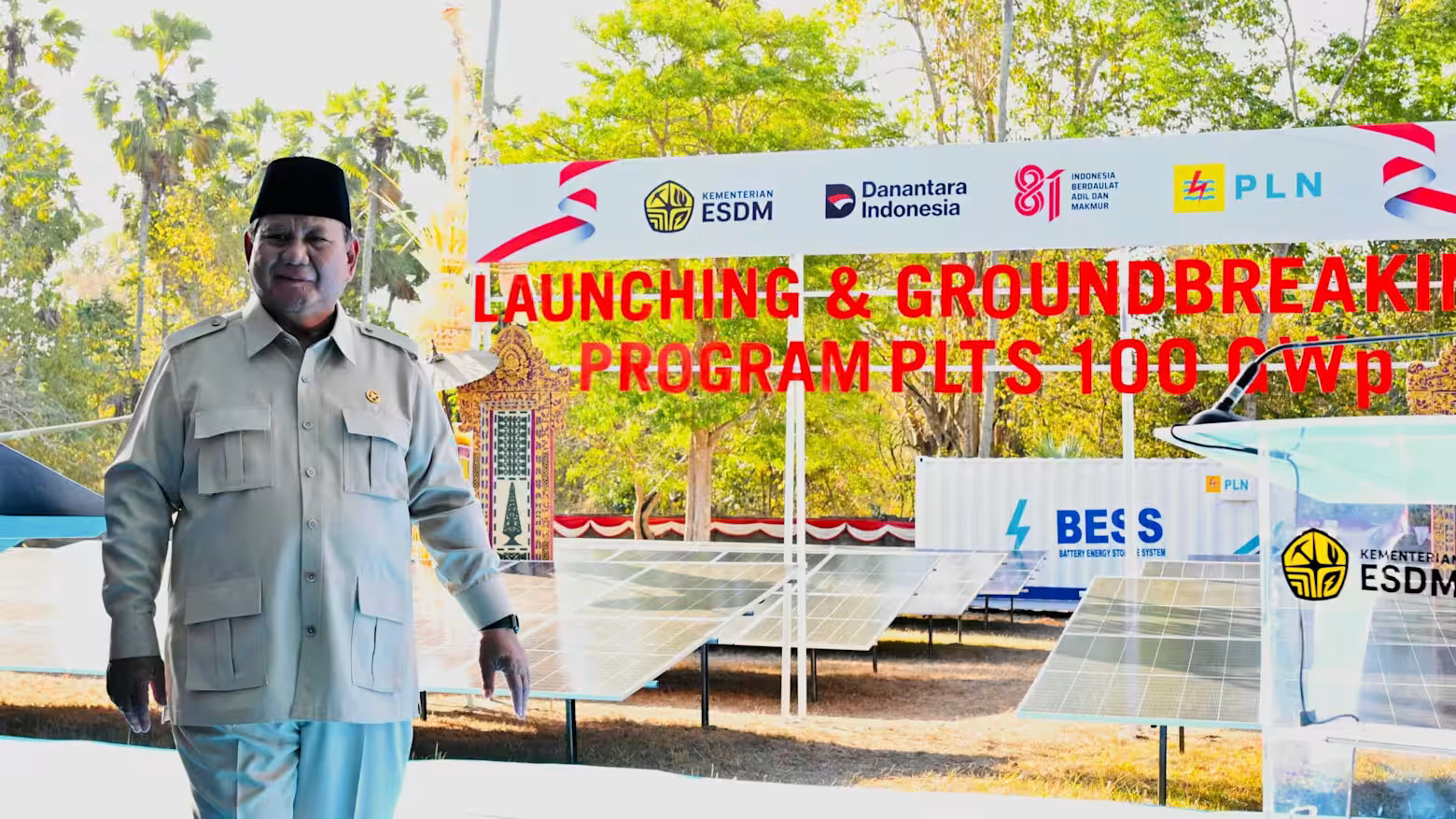
Indonesia is embarking on one of the most ambitious clean energy transformations in developing world history. In a landmark ceremony at the Java-Bali Sea Crossing Operation Monument in Gilimanuk, Bali, President Prabowo Subianto officially launched construction for a massive 100-gigawatt-peak solar generation effort. Backed by an estimated investment value of approximately 73 billion dollars, this initiative represents a historic milestone in the country's transition toward sustainable power generation. For energy analysts, climate policymakers, and prospective international investors, the launch of the Indonesia solar power program signifies a decisive shift away from historical fossil fuel reliance toward an aggressive clean energy future.
The monumental initiative aims to overhaul the national energy balance while simultaneously safeguarding national energy security. As energy demand across Southeast Asia accelerates alongside rapid industrialization and urban population growth, securing a stable, domestic, and clean supply of power has become an urgent priority for political leaders. By harnessing solar irradiation across its sprawling archipelago, Indonesia aims to dramatically curb carbon emissions while positioning itself as a leader in regional decarbonization efforts.
The Strategic Vision Behind Indonesia's Massive Solar Expansion
At the core of President Prabowo's economic and environmental agenda is a push for total energy self-reliance. For decades, traditional fossil fuels, particularly coal and imported petroleum products, have dominated the national power grid. This reliance exposed the national economy to global price volatility and created structural fiscal pressures via energy subsidies. The national vision aims to dismantle these vulnerabilities by building robust domestic infrastructure capable of capturing abundant solar energy.
According to State Secretary Prasetyo Hadi, the executive directive calls for the entire 100-gigawatt-peak capacity to be completed and fully operational by 2029. Achieving such an immense buildout within a tight four-year timeline requires unprecedented coordination between government ministries, state utility companies, private developers, and global capital partners. The rollout of the Indonesia solar power program is structured to deliver immediate capacity additions while establishing long-term industrial capabilities across the domestic manufacturing supply chain.
Core Investment Figures and Implementation Phases
Executing a 73 billion dollar energy infrastructure blueprint demands a structured, multi-phase operational strategy. Rather than attempting a single, monolithic deployment, the government has organized the buildout into progressive tranches to ensure grid stability and capital efficiency. The early phases aim to deliver 65 gigawatts-peak across three major steps of 17 gigawatts-peak, 18 gigawatts-peak, and 30 gigawatts-peak, respectively. Subsequent stages will follow rapidly to reach the ultimate 100-gigawatt-peak threshold by the 2029 deadline.
The immediate focus centers on a target of developing 30 gigawatts-peak of operational solar capacity within 2026 alone. The initial launch package features 14 strategic installations spread across key provinces. Highlighted among these projects is the 300-megawatt-peak Gilimanuk solar plant in Bali, which is projected to generate up to 470 gigawatt-hours of clean electricity annually. This single facility alone is expected to replace 151,000 kiloliters of expensive liquid fuel per year. Other anchor projects featured in the inaugural development tranche include the 605-megawatt-peak PLTS Madura in East Java, the 636-megawatt-peak PLTS Jatigede, and the massive 1,250-megawatt-peak PLTS Cirata project in West Java.
Bridging the Gap Between Solar Potential and Current Installed Capacity
Indonesia possesses extraordinary technical potential for solar power generation. Geographic location along the equator grants the archipelagic nation consistent high solar irradiance throughout the entire year. Official estimates indicate that the country has a total theoretical solar energy potential of roughly 3,294 gigawatts-peak. However, historical development has lagged significantly behind this vast natural potential.
As of early 2026, the country's total installed solar capacity stood at a modest 1.5 gigawatts-peak. This enormous disparity highlights the magnitude of the opportunity being unlocked by current policy directives. The strategic execution of the Indonesia solar power program is specifically designed to eliminate regulatory barriers, streamline land acquisition, and incentivize utility-scale projects that can turn theoretical solar potential into active grid generation.
Retiring Fossil Fuels and Driving National Electricity Cost Savings
A key cornerstone of the broader clean energy transition involves the systematic phase-out of high-emission, high-cost generation assets. Alongside the rapid rollout of new solar infrastructure, the national strategy includes the retirement of 13 gigawatts of diesel-fired power plants in 2026. Replacing decentralized, fuel-oil-dependent power plants with clean solar arrays will deliver substantial economic benefits to the state treasury and consumers alike.
Government projections indicate that replacing costly fossil fuel generation with large-scale solar power will generate annual electricity cost savings of approximately 73.9 trillion rupiah, equivalent to roughly 4.5 billion dollars per year. These operational savings can be redirected toward critical social programs, public education, healthcare, and additional clean technology infrastructure. Furthermore, phasing out expensive diesel generation directly strengthens national fiscal health by insulating state utility operations from international oil market fluctuations.
Industrial Growth, Battery Manufacturing, and Job Creation
The benefits of the mega-project extend well beyond power generation and environmental compliance. Government planners view the energy buildout as a primary engine for domestic industrialization and technology transfer. Mandates tied to the project mandate significant local content requirements, driving investment into domestic manufacturing plants for solar photovoltaic cells, advanced battery energy storage systems, and specialized electrical transmission equipment.
By building out local supply chains, Indonesia aims to transition from a consumer of imported clean technology to an exporter of renewable energy hardware. Under the national electricity supply plan covering 2025 through 2034, energy sector investments are projected to generate approximately 1.7 million new jobs across construction, engineering, manufacturing, and maintenance. Crucially, more than 760,000 of these opportunities represent high-skilled green jobs that will equip the domestic workforce with technical capabilities suited for the future global economy.
Expanding Renewable Power Infrastructure to Remote Archipelagic Regions
One of the most complex challenges facing national power planners is ensuring equitable access to electricity across more than 17,000 islands. Historically, remote, frontier, and disadvantaged communities suffered from limited grid access or relied on noisy, polluting diesel generators. The distributed nature of solar technology offers an ideal solution to these archipelagic geography constraints.
Through microgrid installations, floating solar arrays on inland reservoirs, and decentralized off-grid systems, the Indonesia solar power program is designed to deliver reliable electricity to previously underserved populations. Expanding clean energy access to remote villages supports rural economic development, enables cold-chain storage for agricultural and maritime products, and enhances educational facilities through reliable power for digital connectivity.
Global Implications for Sustainable Energy and Climate Commitments
International climate organizations and global financial institutions have monitored Southeast Asia's transition away from fossil fuels with great attention. As one of the world's largest coal exporters and a rapidly growing industrial economy, Indonesia's energy choices carry significant global climate weight. The successful execution of a 100-gigawatt-peak solar program demonstrates that developing nations can pursue ambitious decarbonization without sacrificing economic growth.
By establishing a clear, multi-year policy framework backed by state leadership, the country is positioned to attract substantial international climate financing and private foreign direct investment. Global clean energy developers, sovereign wealth funds, and multilateral development banks are increasingly prioritizing transparent, large-scale renewable projects. The scale of the Indonesia solar power program provides the long-term project pipeline that international capital markets require to deploy funds effectively in emerging economies.
Conclusion
The launch of the 100-gigawatt-peak solar initiative marks a defining moment in Indonesia's modern industrial and environmental history. By committing 73 billion dollars to construct utility-scale solar installations, phase out legacy diesel generation, and cultivate domestic manufacturing industries, President Prabowo Subianto's administration has set a bold benchmark for green economic development. As these projects come online between now and 2029, the nation will not only secure its domestic energy future and achieve massive economic savings, but it will also establish itself as an undeniable beacon of renewable energy leadership across the Global South.
Read More