





 Monday, 12-10-26








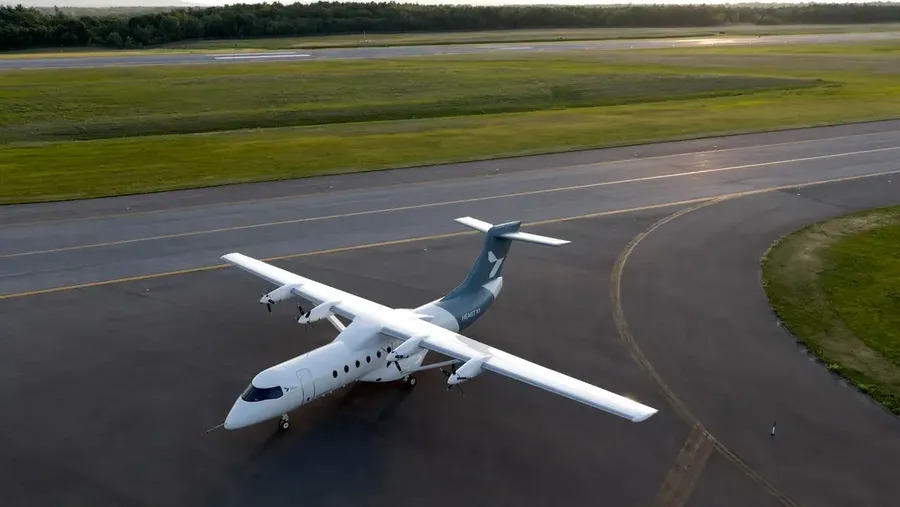
The global aviation industry stands on the precipice of a radical transformation. For over a century, commercial aviation has relied almost exclusively on fossil fuels to power flight. While petroleum based jet fuel offers exceptional energy density, it carries heavy environmental and economic burdens. Aviation accounts for roughly two point five percent of global carbon emissions, while fuel expenses remain one of the most volatile cost factors for commercial airlines. Today, technological advancements in battery technology, power management, and electric motor efficiency are opening an entirely new era for air travel. Demonstrations of regional electric aircraft have proved that zero emission flight is not merely a distant theoretical goal, but a practical reality capable of reducing operational energy costs by staggering margins.
The Historic Flight of the Largest Electric Aircraft
The flight of a modified Cessna 208B Grand Caravan over Moses Lake, Washington, marked a decisive milestone for commercial aviation. This landmark flight featured the largest electric aircraft to successfully take to the skies for test evaluation at the time of its journey. Powered by a high performance electric propulsion system, the nine passenger utility aircraft completed a twenty seven minute flight that captivated aeronautical engineers, airline executives, and environmental advocates around the world. The flight demonstrated flawless airworthiness, steady altitude retention, and responsive power management throughout every phase of operation.
What surprised industry observers most was not simply that the aircraft flew smoothly, but how remarkably inexpensive the journey was from an energy consumption standpoint. The electricity consumed during the entire twenty seven minute flight cost approximately six US dollars, which translates to roughly 88,000 Indonesian Rupiah based on prevailing exchange rates. By comparison, a traditional turbine powered Grand Caravan flying the exact same duration burns hundreds of dollars worth of specialized jet fuel. This stark economic contrast sent a powerful message across the transportation sector: electric propulsion has the potential to fundamentally disrupt short distance regional transport by lowering energy expenses to unprecedented levels.
Breakthrough Operating Efficiency and Cost Breakdown
To fully appreciate the economic impact of electric flight, one must examine the cost structure of modern airlines. Fuel typically accounts for twenty to forty percent of an airline total operating cost. Because global oil prices are subject to geopolitical instability and market volatility, airlines often struggle with unpredictable expense forecasting. Electric flight introduces a stable, highly predictable alternative that shields regional operators from sudden price spikes in petroleum markets.
Beyond direct fuel savings, the largest electric aircraft demonstrates a major advantage in ongoing maintenance expenses. Traditional turboprop and jet engines operate under high thermal stress and contain thousands of complex moving parts. These engines require labor intensive maintenance overhauls, routine component replacements, and rigorous inspections to maintain safety standards. In contrast, electric motors feature a single moving rotor and significantly fewer mechanical parts. This inherent mechanical simplicity translates into far less friction, reduced wear and tear, longer service intervals, and lower labor costs. Over the operational life of an airframe, these reduced maintenance requirements can save airline operators millions of dollars in fleet upkeep.
Engineering Innovation and Propulsion Architecture
The engineering behind this flight involved replacing the standard turboprop combustion engine with an advanced electric motor capable of delivering approximately 750 horsepower. Engineers integrated a high torque propulsion unit designed to deliver immediate mechanical response without the lag often associated with traditional combustion engines. The result is smooth acceleration on takeoff and highly efficient power delivery during cruise maneuvers.
However, retrofitting the largest electric aircraft required solving complex design challenges regarding weight distribution and thermal management. Heavy lithium ion battery packs were carefully positioned along the aircraft center of gravity to preserve flight dynamics and operational stability. Engineers designed liquid cooling systems to keep the battery cells within optimal temperature ranges during high power demand phases, such as takeoff and initial climb. This successful integration proved that existing, flight proven commercial airframes can be adapted to host electric powertrains, paving the way for faster deployment across existing regional route networks.
Environmental Sustainability and Noise Reduction Advantages
The environmental benefits of transitioning to electric flight extend far beyond corporate cost efficiency. Conventional commercial aviation releases carbon dioxide, water vapor, soot, and nitrogen oxides directly into the atmosphere, contributing to global climate change. By eliminating fossil fuel combustion, electric aircraft produce zero direct tailpipe emissions during flight. When recharged using renewable energy sources such as solar, wind, or hydroelectric power, electric aviation provides a truly sustainable transportation alternative.
Noise pollution is another critical factor addressed by electric propulsion. Urban airports and regional airfields often face strict flight curfews due to engine noise disrupting local communities. The motor operating inside the largest electric aircraft runs quietly enough to reduce noise signatures by up to eighty percent compared to conventional turboprop engines. This dramatic noise reduction enables aircraft to operate at smaller regional airfields close to residential areas, opening up new point to point flight routes without causing noise disturbances.
Technological Challenges in Energy Density and Infrastructure
Despite these encouraging achievements, the aviation industry faces major technical challenges before all electric aircraft can replace jet engines on long distance routes. The primary hurdle is energy density. Current jet fuel holds approximately fifty times more energy per unit of weight than today best commercial lithium ion batteries. Because weight is the single most critical variable in aeronautical engineering, battery weight currently limits all electric planes to short distance routes carrying smaller passenger payloads.
Airport charging infrastructure presents another logistical barrier. Charging commercial aircraft quickly between flight legs requires specialized high voltage grid infrastructure and rapid thermal management hardware. Regional airports will need significant investment to install megawatt level charging stations capable of replenishing battery systems within standard gate turnaround times. Regulatory agencies must also create clear certification frameworks for high voltage flight systems, battery safety protocols, and specialized pilot training before commercial passenger operations can scale globally.
The Commercial Future of Short Distance Air Travel
As battery chemistry continues to advance, the commercial horizon for regional electric flight is expanding rapidly. Emerging solid state battery technologies promise higher energy density, faster charging speeds, and improved thermal stability. These advancements will soon allow engineers to build larger airframes capable of carrying more passengers over longer flight distances.
The successful flight of the largest electric aircraft serves as a catalyst for a broader transformation in how people travel short distances. By uniting ultra low operational costs with zero direct carbon emissions, electric flight makes regional feeder routes economically viable once again. Underserved communities that lost commercial air service due to rising fuel costs may soon see those routes restored by efficient electric fleets. The journey toward fully sustainable aviation has clearly begun, promising a cleaner, quieter, and far more affordable future for global travel.
Read More