





 Friday, 09-10-26








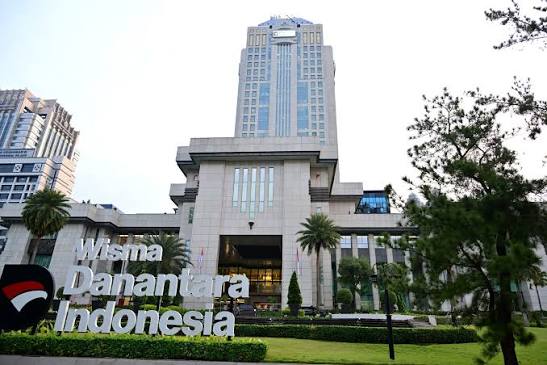
Indonesia’s state investment agency Danantara (BPI Danantara) is positioning itself to acquire a stake in the Indonesia Stock Exchange (IDX) as part of the bourse’s planned demutualization. The demutualization process – which reforms the exchange from a member-owned organization into a corporatized entity – has moved into an advanced stage, with regulations expected in the coming months. Danantara Chief Investment Officer Pandu Sjahrir confirmed to reporters that discussions are underway with the Financial Services Authority (OJK) and IDX management, and the process could be completed within a few months.
Demutualization in Context. Exchange demutualization is a structural change whereby a stock exchange transitions from being owned and governed by its member brokers into a for-profit company with external shareholders. In practical terms, demutualization allows new investors – including sovereign funds and even the public via an IPO – to buy shares of the exchange. Indonesia recently amended its Financial Sector Development and Strengthening Law (P2SK Law) to permit this. The revision stipulates that state entities like the Finance Ministry, Bank Indonesia and BPI Danantara can become shareholders of the exchange. Subsequent regulations will detail share limits, governance rules and timelines. As the Indonesia Business Post notes, this reform “opens ownership to external investors beyond exchange members” and even creates a pathway for the IDX to eventually list on the stock market.
OJK and the Ministry of Finance have been preparing formal regulations to implement demutualization. In fact, an OJK press release confirms that a government regulation is being drafted, with OJK’s capital markets team involved in the process. Once the regulation is finalized, the IDX will undertake structural changes: existing members would exchange their ownership rights for shares, and outside parties may be invited to invest. The Indonesia Business Post reports that OJK aims to issue the demutualization rule by September 2026, which would mark a key milestone. Under such a framework, the IDX can raise capital for technology upgrades and also “distribute dividends to shareholders”, aligning its incentives with profitability and growth.
Danantara’s Role. Danantara Indonesia (formerly known as BPI) is a sovereign wealth fund created to manage state-owned enterprise assets. Its leadership has been supportive of demutualization as a way to strengthen market governance and transparency. Rosan Roeslani, CEO of Danantara, has previously indicated that the fund could take up to a 30% stake in the IDX. In the current announcement, Pandu Sjahrir did not specify the exact size of the share purchase, noting that details will be announced soon. However, he confirmed that the investment will be carried out by Danantara Investment Management (DIM), an asset management unit, under directives from BPI Danantara.
Danantara’s involvement is meant to be strategic rather than a conflict of interest. The fund argues that aligning state-owned capital with the exchange will reinforce good governance: since nearly 30% of the market capitalization comes from state-owned enterprises, Danantara wants to ensure transparency and accountability for such large stakes. In public statements, Danantara officials have noted that many countries allow sovereign funds to invest in their exchanges post-demutualization, and they welcome adopting global best practices. By taking a stake in the IDX, Danantara aims to be both a shareholder and a steward, promoting reforms that “strengthen the Indonesia Stock Exchange going forward”.
Benefits and Broader Impact. Demutualization is seen as a way to deepen Indonesia’s capital market. A corporatized exchange can pursue innovations, improve trading systems, and compete regionally. Official sources expect that new shareholders will bring in fresh ideas and capital, potentially funding better technology and services. In addition, allowing external investors could increase liquidity in the IDX by drawing in institutional players who were previously excluded. OJK has stated that demutualization could attract new shareholders and boost the exchange’s competitiveness amid global market pressures.
Another key aspect is the possibility of an IDX IPO. While not immediate, the law allows for a future public listing of the exchange. Analysts note that demutualization often occurs in phases: initial share sales to strategic investors (such as Danantara) could be followed by an eventual initial public offering. Should that happen, retail investors could directly own part of the exchange itself, democratizing its ownership. Indonesia’s plan mirrors international examples: many global exchanges (for instance, in London and Singapore) went through demutualization and public listings to raise capital and improve governance. The OJK and IDX have underscored that a healthy demutualization will involve clear rules on ownership limits and conflict of interest, so that no single entity unduly influences the market.
Regulatory Timeline. For now, the timeline is focused on finalizing regulations. The P2SK law revision in early 2026 laid the groundwork, and OJK has since been preparing the detailed rulebook. In February 2026, OJK and IDX announced an action plan that includes demutualization as a strategic step in their market integrity reforms. OJK Acting Chief Hasan Fawzi has emphasized that this is a structured, long-term reform. According to the Jakarta Globe, OJK aimed to implement the demutualization regulation by the third quarter of 2026. Upon issuance of the regulation, Danantara will finalize its stake acquisition with OJK approval, likely as one of the first external investors in the new exchange structure.
Danantara and the Future of the IDX. Danantara’s planned investment is a signal of confidence in Indonesia’s financial markets. It shows that the state views the exchange as a valuable asset that can support national economic goals. With Danantara’s backing, the IDX will have a well-capitalized shareholder advocating for reforms. Industry observers will watch for how this affects corporate governance at the stock exchange and whether other investors follow suit. For Indonesian investors, the change means that the stock exchange is no longer an exclusive members-only club, but a modern corporation subject to market discipline.
In summary, Danantara’s move to take a stake in the IDX is directly tied to Indonesia’s demutualization agenda. The process transforms the stock exchange, setting the stage for broader ownership and potentially an IPO. As the regulation is finalized and the investment proceeds, analysts believe this will enhance governance and depth in Indonesia’s capital market, aligning it with international standards. The coming months will be crucial: OJK’s demutualization rules must strike a balance between opening the market and protecting investors, and Danantara’s stake will be watched as both an opportunity and a test case.
Read More