





 Sunday, 20-09-26








Why The JKN Ecosystem Matters Now
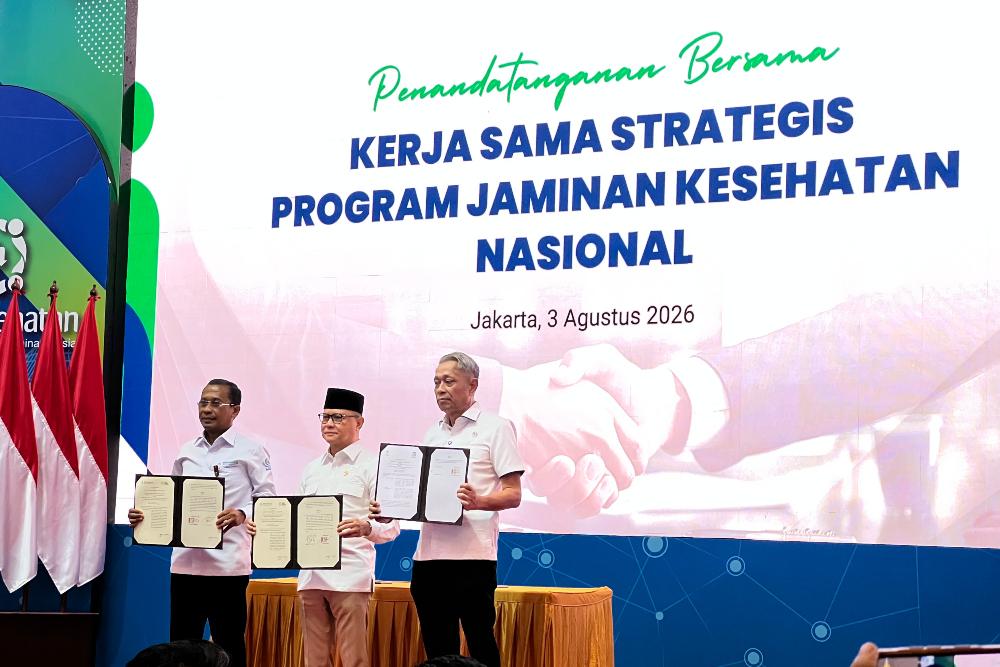
Indonesia’s national health insurance program is no longer just a payment system for medical claims. It has become a broad public service network that depends on data, funding, compliance, and institutional coordination. That is the reason the phrase JKN ecosystem is increasingly important. In the latest collaboration move, BPJS Kesehatan brought together four ministries and institutions to strengthen the program’s governance, improve data quality, and support the sustainability of services for millions of participants.
The message from BPJS Kesehatan is clear: the JKN ecosystem cannot be maintained by one agency alone. It requires a system that connects participant data, local government financing, social protection databases, migrant worker protection, and national statistics. That is why the new partnership is being framed not as a symbolic memorandum, but as a structural response to a much larger challenge.
The Four Institutions Behind The New Cooperation
According to ANTARA, BPJS Kesehatan signed strategic cooperation with four institutions: the Ministry of Social Affairs, the Ministry for the Protection of Indonesian Migrant Workers, the Ministry of Home Affairs, and the Central Statistics Agency. Each partner has a different role, but all are tied to the same objective, which is to make the JKN ecosystem more accurate, more connected, and more sustainable.
The Ministry of Social Affairs will help integrate information on PBI, or contribution assistance recipients, and support interoperability with social welfare systems. The migrant worker ministry will strengthen JKN protection for prospective and active Indonesian migrant workers before departure, during assignment abroad, and after their return home. The Ministry of Home Affairs will help align regional budget planning for JKN contributions and assistance, while BPS will support data matching with national social and economic data and help improve statistical capacity.
That division of labor shows how the JKN ecosystem is evolving. It is no longer being treated as a health insurance issue alone. It is being built as a cross sector governance network in which social protection, labor mobility, public finance, and data architecture all support the same national objective.
Why Data Integration Is The Core Of The Reform
If there is one thread that connects the entire partnership, it is data. BPJS Kesehatan said the cooperation is intended to support data matching, information interoperability, and stronger collection systems. That is important because a program with hundreds of millions of participants cannot function well if its datasets are fragmented or outdated. The quality of the JKN ecosystem depends heavily on whether institutions are using the same picture of who is eligible, who is active, and who still needs support.
This is also where BPS becomes especially important. By linking JKN participant data to the national social and economic database, BPJS Kesehatan can improve targeting, reduce duplication, and sharpen policy decisions. In practical terms, that means the state can better identify vulnerable families, verify assistance eligibility, and reduce mistakes in subsidy allocation. The more accurate the data, the easier it becomes to keep the JKN ecosystem stable and fair.
The collaboration also reflects a wider trend in Indonesian public administration: better services increasingly depend on interoperable digital systems. BPJS Kesehatan has repeatedly emphasized that the future of JKN is not only about expanding coverage, but also about keeping participants active and ensuring service quality remains easy, fast, and equitable. That is a governance challenge, not just a technical one.
The Financial Pressure Behind Sustainability
The reason this collaboration feels urgent is the financial pressure surrounding JKN. ANTARA reported that BPJS Kesehatan handles around two million JKN services per day, with daily claims reaching about Rp500 billion and monthly transactions approaching Rp16 trillion, while monthly premium collection is around Rp14 trillion. Those numbers help explain why sustainability is now a central policy concern.
That imbalance does not mean the program is failing, but it does show how large and complex the JKN ecosystem has become. A system serving almost the whole population naturally needs a stronger financing base, better participant activity, and more disciplined coordination across institutions. BPJS Kesehatan’s leadership has repeatedly warned that keeping the fund sustainable requires more than collecting premiums. It also requires broader social support, consistent compliance, and better governance.
Separate coverage reports suggest that BPJS Kesehatan now covers more than 285 million participants, which means the program reaches nearly the entire population. Jakarta Globe reported that as of June 1, 2026, more than 285.4 million people were registered as JKN participants, while KSP also described JKN as a strategic national program that has reached about 285 million people. That scale makes the JKN ecosystem one of the most important public systems in the country.
What The Collaboration Means For Coverage And Activeness
The other challenge is not only how many people are registered, but how many remain active. Warta Ekonomi reported that around 54 million people were still not fully protected, and ANTARA quoted BPJS Kesehatan saying that the existence of 54 million people paying at least the Class 3 level would be equivalent to about Rp2 trillion. That figure shows why the issue is about more than enrollment. It is about turning registration into active, usable protection.
This is where the Ministry of Social Affairs matters most. By integrating PBI data and linking welfare information more effectively, the government can make subsidy targeting more precise. If the data are clean, households that truly need assistance are more likely to receive it on time. If the data are messy, the JKN ecosystem becomes less efficient and the gaps in coverage remain hidden for longer.
The Ministry of Home Affairs also has a key role because regional governments are part of the financing chain. Local administrations help fund contributions and assistance in many areas, so budget coordination can directly affect whether people remain active in the program. In that sense, the new collaboration is not only about central policy. It is also about making sure the JKN ecosystem works at the provincial and district levels where implementation actually happens.
Why Migrant Workers And Local Government Matter Too
The partnership with the migrant worker ministry adds another dimension to the JKN ecosystem. Indonesian workers who move across borders face a different set of risks, from employment uncertainty to health emergencies far from home. BPJS Kesehatan said the cooperation will cover socialization, participant management, complaint handling, and information technology support so protection can continue before departure and after return. That is a practical extension of social protection into labor mobility.
This matters because protection gaps can easily widen when workers move in and out of jurisdictions. A strong JKN ecosystem should not leave people exposed simply because they are traveling, working abroad, or changing their administrative status. By linking the migrant worker protection framework to health insurance administration, BPJS Kesehatan is trying to keep the program relevant to the realities of modern labor movement.
The same logic applies to local government budgeting. If districts and provinces are better aligned on contribution support and assistance spending, then coverage can be maintained more smoothly. The partnership with the Ministry of Home Affairs suggests BPJS Kesehatan wants JKN to be treated as a shared governance responsibility, not a siloed national agency task. That is the real meaning of ecosystem thinking.
The Bigger Picture For Indonesia’s Social Protection System
The JKN ecosystem is becoming a model for how Indonesia may manage other large-scale public systems in the future. The program already links health financing, social assistance, labor protection, and statistical data. BPJS Kesehatan’s approach suggests that public service sustainability will increasingly depend on coordination across ministries rather than isolated administrative fixes.
That is a meaningful shift in public policy. It means the state is moving from a program-centered model toward a network-centered model, where data, funding, and participant behavior all matter at the same time. If the collaboration succeeds, the JKN ecosystem could become more resilient, more transparent, and more responsive to public needs. If it fails, familiar problems such as inactive participants, weak data, and financing pressure may continue to drag the system down.
For now, the direction is encouraging. BPJS Kesehatan is clearly signaling that the future of JKN will depend on collaboration, not isolation. That message is timely, because a program of this size can only remain credible if it is supported by institutions that share data, share responsibility, and share the same goal of universal and sustainable protection. The JKN ecosystem is no longer an abstract policy phrase. It is the foundation on which Indonesia’s national health insurance future is being built.
The next test for BPJS Kesehatan will be implementation. Agreements are important, but the real measure of success is whether participant data becomes cleaner, subsidies become more targeted, regional financing becomes more consistent, and migrant worker protection becomes easier to manage. Those are the practical outcomes that will show whether the JKN ecosystem is truly getting stronger.
If the collaboration works as intended, it can help keep the program active for millions of Indonesians while easing long-term pressure on financing and administration. If the institutions involved can maintain the same level of coordination beyond the signing ceremony, this could become one of the more important governance upgrades in the history of JKN.
Read More