





 Sunday, 04-10-26








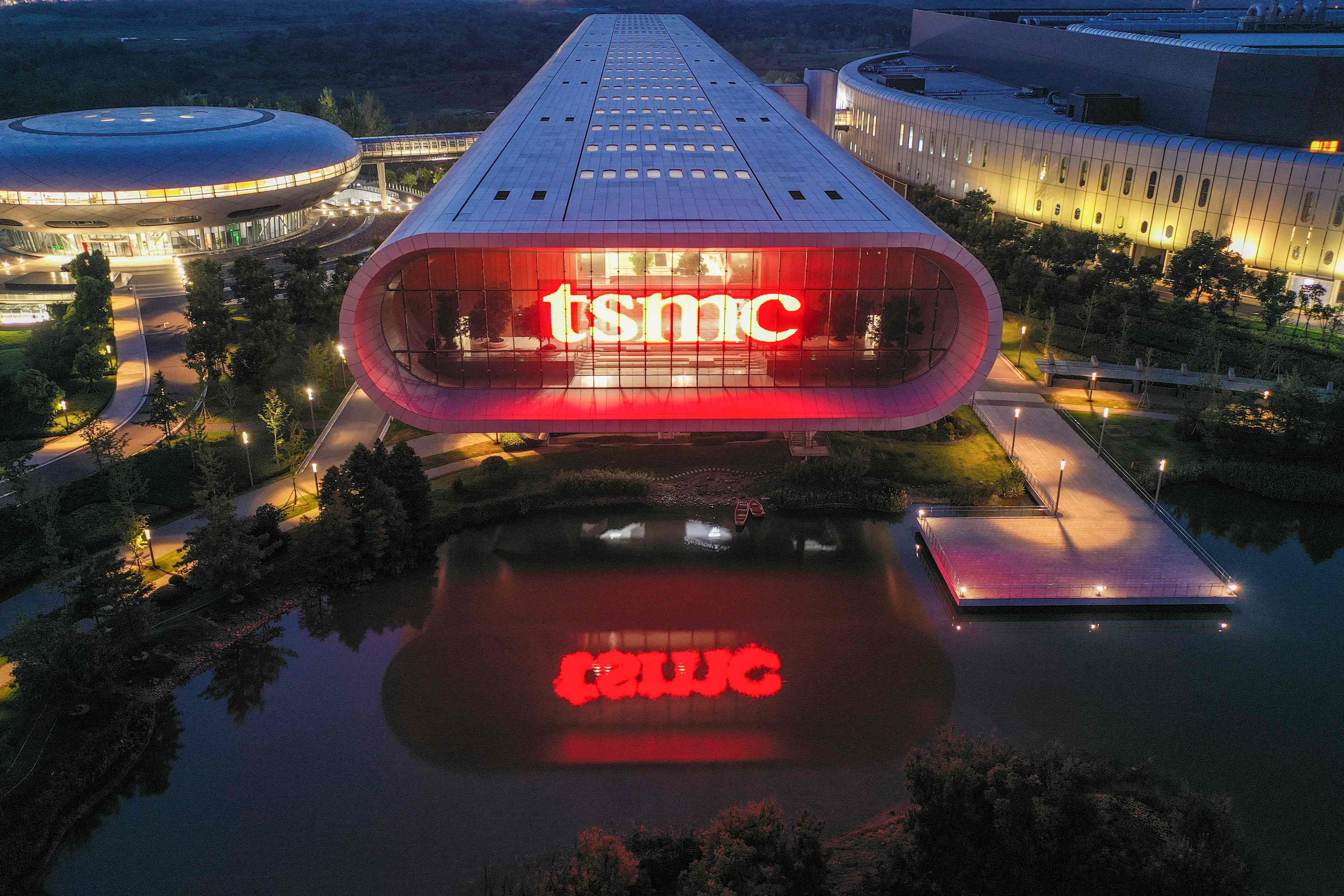
Taiwan’s semiconductor industry is facing increasing attention over electricity demand as artificial intelligence and advanced chip production continue to grow.
TSMC, Taiwan’s largest electricity consumer, used around 25.55 billion kWh of electricity in Taiwan in 2024, accounting for around 9% of the country’s total electricity consumption.
The company’s large-scale manufacturing operations have made electricity supply an important issue as Taiwan continues developing its semiconductor and AI-related industries.
Taiwan Proposes New Energy Rules for Large Power Users
Taiwan’s Ministry of Economic Affairs is leading an amendment to the Energy Management Law that would require large electricity consumers to install their own power generation and storage infrastructure.
The proposed amendment would apply to commercial entities consuming an electricity load of 5MW or above. It would cover more than 400 facilities, including semiconductor plants, optoelectronics companies, steel factories, petrochemical plants, and AI data centers.
Taiwan already requires large commercial electricity users to offset 10% of their electricity consumption through renewable resources under its Renewable Energy Development Regulations and related sub-laws.
The new amendment would introduce additional requirements by asking large electricity consumers to develop their own energy generation and storage systems.
If the amendment becomes law, TSMC would be among the companies most affected because of its electricity consumption level. The company may need to replace part of its grid-based electricity supply with power from its own infrastructure.
The proposed regulation would include a grace period for companies to install the required energy infrastructure. Companies that fail to comply would face financial penalties.
TSMC’s Manufacturing Network Drives Massive Electricity Demand
TSMC’s electricity use comes from its extensive network of semiconductor manufacturing facilities in Taiwan.
The company operates six 12-inch GIGAFAB facilities, including Fab 12, Fab 14, Fab 15, Fab 18, Fab 20, and Fab 22. TSMC also operates four 8-inch wafer labs, including Fab 3, Fab 5, Fab 6, and Fab 8, as well as one 6-inch wafer fab, Fab 2.
In addition, TSMC maintains several advanced packaging plants.
According to the source article, replacing TSMC’s current electricity consumption with power generated from captive power plants would be a major challenge due to the scale of the company’s operations.
The company has benefited from the economies of scale provided by Taiwan’s grid-based electricity system. The proposed regulation could change how large electricity users manage their power supply.
AI Growth Increases Taiwan’s Electricity Demand Concerns
Taiwan’s role in the global AI supply chain has increased attention on future electricity needs.
The International Energy Agency (IEA) noted that most chips used in AI data centers are manufactured in foundries located in Taiwan and South Korea, with TSMC being one of the major players.
The IEA also stated that the semiconductor industry accounts for about 1% of global industrial electricity demand and that TSMC consumed almost 10% of Taiwan’s total electricity consumption in 2023.
Taiwan’s government estimates that AI and semiconductor-related industries will require additional electricity capacity in the coming years.
Based on government projections, AI and semiconductor-related power use could require an additional 4.32 million kW by 2030, which is roughly equivalent to building 0.9 of a Taichung Power Plant.
However, some experts have questioned the accuracy of current AI electricity demand forecasts due to limited available data.
Experts Question Taiwan’s AI Power Forecasts
Chia-Wei Chao, Research Director at Taiwan Climate Action Network (TCAN), said Taiwan’s projection of an eightfold increase in AI-related electricity demand between 2023 and 2028 appears unusually high.
“That kind of estimate would mean data center electricity consumption in Taiwan growing by 50% every year,” Chao said. “In other words, Taiwan would need to build two data centers the size of Google’s facility in Changhua every quarter.”
Chao also said there is not enough information available to understand how the government calculated its electricity projections.
Hsin-Wei Hsu, Assistant Professor at the Department of Industrial Engineering and Management at National Taipei University of Technology, said forecasting AI-related electricity demand remains difficult because AI is still a relatively new field.
“Traditional power forecasts rely on historical trends, but AI is such a new field that there simply isn’t enough historical data to go on,” Hsu said.
Chih-Wei Wu, Deputy Director General of the Energy Administration at Taiwan’s Ministry of Economic Affairs, said the government’s estimates consider future demand from servers, AI hardware, GPUs, system technology improvements, and future applications.
Wu said electricity demand from the AI industry is estimated to reach around 21.8 billion kWh by 2030.
TSMC Expansion Adds Pressure on Kaohsiung’s Electricity Use
TSMC’s expansion in Kaohsiung has also increased discussion around local electricity demand.
According to Yu-Yu Teng, Director of Media and Communications at Citizen of the Earth, Taiwan, TSMC’s five plants in Kaohsiung consume around 9.2 billion kWh of electricity.
This amount equals roughly 30% of Kaohsiung City’s total electricity consumption in 2023 and 1.6 times the city’s residential electricity consumption.
Teng said that while TSMC’s manufacturing processes produce relatively lower carbon emissions compared with industries such as steel and petrochemicals, the company’s electricity demand still creates pressure for Kaohsiung’s carbon reduction efforts.
“Combined, TSMC’s five plants in Kaohsiung consume about 9.2 billion kWh, which equals roughly 30% of Kaohsiung City’s total electricity use in 2023 and 1.6 times the city’s residential consumption,” Teng said.
This article is a summary of two original articles. The full versions can be read at the following links:
https://wccftech.com/tsmc-consumes-9-of-taiwans-electricity-and-a-new-law-would-force-it-to-generate-that-power-by-itself/
https://earthjournalism.net/stories/powering-ai-how-much-electricity-will-taiwan-need-to-fuel-its-ai-ambitions
PHOTO: AFP
This article was created with AI assistance.
We make every effort to ensure the accuracy of our content, some information may be incorrect or outdated. Please let us know of any corrections at [email protected].
Read More