





 Friday, 23-10-26








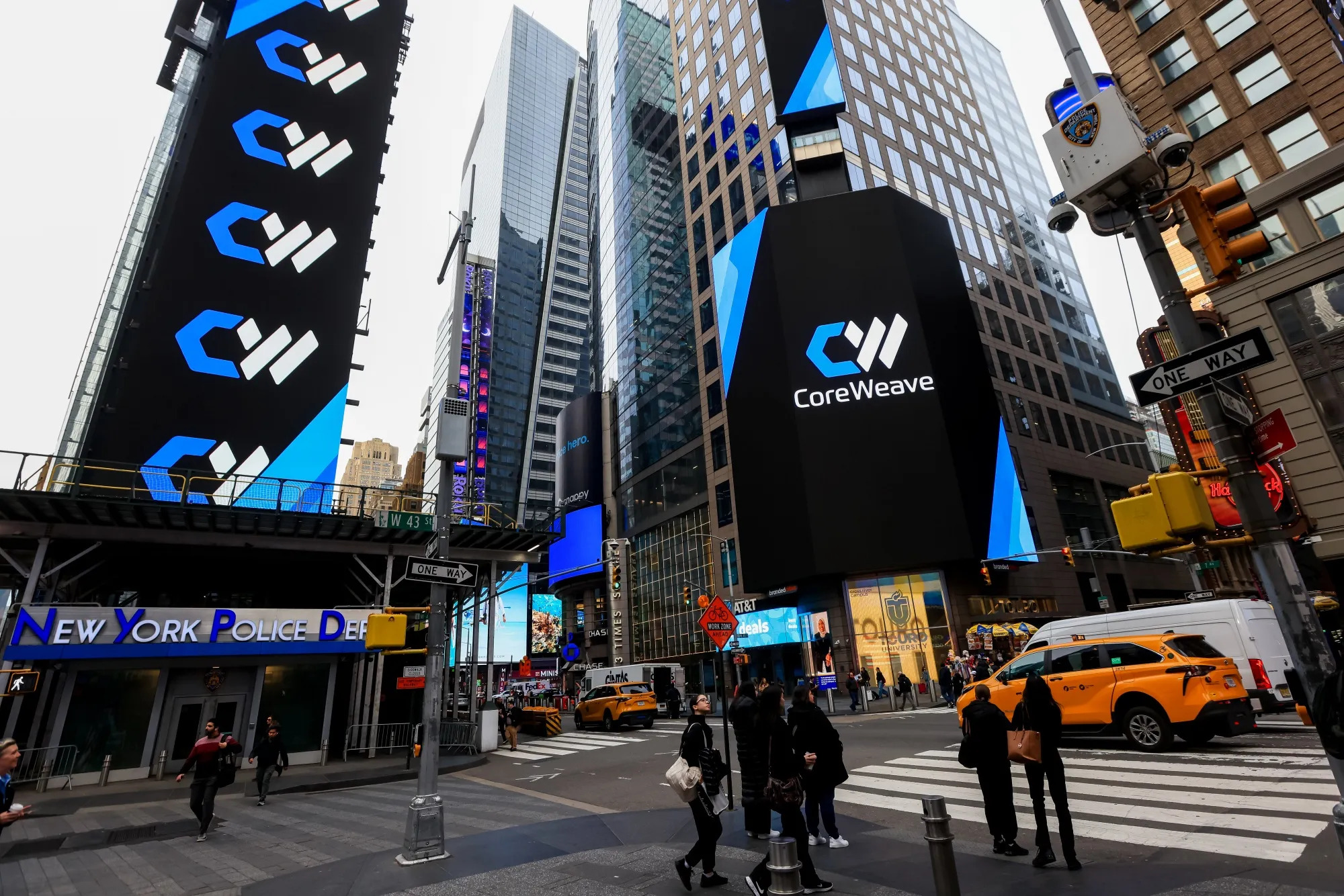
CoreWeave is not behaving like a normal cloud company, and that is exactly why its latest move matters. Reuters reported that the AI cloud provider is exploring derivatives, including put options, as a way to hedge against a future drop in memory and storage chip prices. The discussion is still early, and no hedge has been executed yet, but the idea alone says a lot about how fast the AI infrastructure market is changing. CoreWeave is now exposed not only to demand for compute, but also to the price path of the components that power it.
That is a subtle but important shift. In the traditional cloud model, companies worry mainly about utilization, customer demand, and capital costs. CoreWeave’s situation is different because it sits much closer to the semiconductor supply chain. Reuters said the company has signed long-term agreements with suppliers such as Micron and SanDisk, and those deals include price-floor protections for DRAM and storage chips. In other words, CoreWeave has locked in supply, but it has also accepted some exposure if market prices fall sharply later.
Why CoreWeave Is Paying Attention To Memory Chip Prices
The reason CoreWeave is looking at memory chip prices is simple: the AI boom has turned memory into a strategic input, not a commodity afterthought. Reuters reported that memory and flash storage prices have jumped in recent months, while the industry remains cyclical and vulnerable to a reversal once new manufacturing capacity comes online. That combination creates a classic mismatch. Companies rush to secure supply during a shortage, then later discover they are overexposed if the market cools.
CoreWeave’s model amplifies that risk. The company is an AI cloud provider, but it is not a generic enterprise host. It sells infrastructure built for AI workloads, which means it needs a dependable flow of advanced components and storage systems. Its first-quarter 2026 results show just how quickly the business has scaled, with revenue of $2.078 billion and revenue backlog of $99.4 billion as of March 31, 2026. CoreWeave also said it had surpassed 1 GW of active power and was on track for more than 8 GW by 2030.
That scale is impressive, but scale also means complexity. When a business signs multi-year supply agreements in a volatile market, it is effectively making a view on future memory chip prices even if it does not say so explicitly. That is why the Reuters report is so interesting. The company is not only buying chips. It is thinking about financial engineering to defend against the wrong side of the cycle.
How Long-Term Supply Deals Changed The Risk Profile
The CoreWeave story becomes clearer when you look at how memory suppliers themselves are structuring their contracts. Micron’s June 2026 investor presentation said its strategic customer agreements are typically five-year deals, are structured as take-or-pay arrangements, and often include a floor price and a ceiling price for existing products. Micron also said the largest agreements generally have a ceiling price at the current market level and a floor price through the life of the contract.
That kind of structure helps chipmakers preserve margins, but it also transfers risk to the buyer. If spot memory chip prices fall below the contract floor, the customer can end up paying above-market rates. Reuters said that is exactly the problem CoreWeave is now weighing. The company wants the supply certainty of long-term agreements, yet it does not want to be trapped if the market turns and memory chip prices slide.
This is where the Wall Street playbook comes in. Reuters reported that CoreWeave executives have discussed put options and other derivatives as possible hedges. That idea is common in energy and airline industries, where companies try to manage exposure to fuel or currency swings. Applying the same logic to memory chip prices is unusual, but not irrational. If a cloud company’s cost base is increasingly tied to a volatile hardware market, hedging starts to look less like a finance trick and more like basic risk control.
Why The Memory Market Is Still So Volatile
The memory market has been strong, but strong does not mean stable. Counterpoint Research said memory prices soared by 50% in the fourth quarter of 2025 and expected the rally to continue into 2026. Earlier in 2026, the research firm said memory chip prices were still rising sharply across server and PC categories, driven by tight supply and aggressive AI-related demand.
Reuters has also pointed to the broader "chipflation" effect, warning that rising memory chip prices are beginning to ripple beyond the data center into other parts of the economy. In one report last month, Reuters said memory chip prices had increased sixfold over the past year, driven by heavy AI infrastructure spending and a supply chain that is still struggling to keep up. That kind of price behavior is exactly why CoreWeave is thinking about downside protection now instead of waiting for the cycle to turn.
Another reason the market feels unstable is timing. Reuters reported that SK Hynix and Micron expect fully ramped new manufacturing capacity in early 2028. That does not mean prices will suddenly collapse in 2028, but it does imply that supply relief is not immediate. In the meantime, AI demand remains strong, and memory chip prices can stay elevated longer than many buyers would like.
For CoreWeave, that creates a narrow window. The company needs enough supply to keep its AI cloud business growing, but it also needs enough flexibility to avoid overpaying if the memory cycle weakens. That is why the company’s interest in derivatives is not just a financial footnote. It is a response to a structural market problem.
What CoreWeave’s Business Model Tells Us
CoreWeave’s first-quarter 2026 results make the company’s risk profile easier to understand. Revenue more than doubled year over year, while backlog remained enormous. The company also highlighted multi-year agreements with major AI customers, including Meta and Anthropic, and said it had closed an $8.5 billion delayed draw term loan facility. It also secured a $2 billion investment from Nvidia, which shows how closely CoreWeave is tied to the broader AI hardware ecosystem.
That kind of growth is exactly what makes memory chip prices so important. The more CoreWeave expands, the more its economics depend on stable access to chips, storage, power, and financing. If component costs stay high, margins can tighten even when revenue is rising fast. If component costs fall, the company could gain breathing room, but only if its supply contracts do not leave it paying stale prices.
This is also why the market is watching CoreWeave differently from a year ago. It is no longer just an AI growth story. It is becoming a case study in how far vertically exposed cloud businesses can push financial risk management. The company’s interest in hedging memory chip prices suggests that AI infrastructure is entering a more mature phase, where growth alone is not enough and treasury discipline starts to matter more.
What The Hedge Could Mean For Investors
If CoreWeave eventually implements a hedge, it would send a strong signal to investors. It would suggest the company believes memory chip prices may not stay high forever, even if AI demand remains healthy. That would not necessarily be a bearish call on the sector. It would simply show that management is taking the cycle seriously and preparing for the possibility that the market gets more normal, or even oversupplied, over time.
Investors should also read this move in the context of the broader semiconductor cycle. Micron’s contract structure already shows that suppliers are trying to lock in margins and visibility for years ahead. Counterpoint’s data suggests memory chip prices have been on a strong run. Reuters’ reporting shows that other industries have used hedging for decades to manage commodity swings. Put together, the logic behind CoreWeave’s thinking looks pragmatic, not exotic.
Still, hedging is never free. A derivative program can reduce downside risk, but it can also cap upside or introduce new costs. That means the company would need to design the hedge carefully, especially since the discussions are still at an early stage. CoreWeave is trying to solve a real problem, but it does not yet have a public blueprint for how far it will go.
Why This Story Matters Beyond CoreWeave
The bigger significance of this story is that it shows how AI infrastructure is reshaping business finance. Memory chip prices used to matter mostly to PC makers, phone vendors, and semiconductor investors. Now they matter to cloud providers, AI labs, and hyperscale infrastructure companies. Once a cloud vendor begins thinking like a commodity buyer, a hedger, and a long-term supply planner all at once, the AI economy starts to look much more industrial than experimental.
That may be the most important takeaway from Reuters’ report. CoreWeave is not the first company to worry about cost volatility, but it may be one of the clearest examples of an AI-native business crossing into the territory of classic risk management. The company’s exposure to memory chip prices shows that the AI boom is no longer just about demand growth. It is also about managing the inputs that make that growth possible.
Conclusion
CoreWeave’s exploration of hedging is a sign that memory chip prices have become a board-level issue for AI infrastructure companies. Long-term supply contracts can secure capacity, but they can also create cost risk if the market turns. With memory prices still elevated, supply tight, and new capacity years away, the company is behaving like a firm that understands the next phase of AI growth will be shaped as much by discipline as by ambition. The message is simple: in the AI cloud race, memory chip prices are now part of the strategy.
Read More