





 Tuesday, 22-09-26








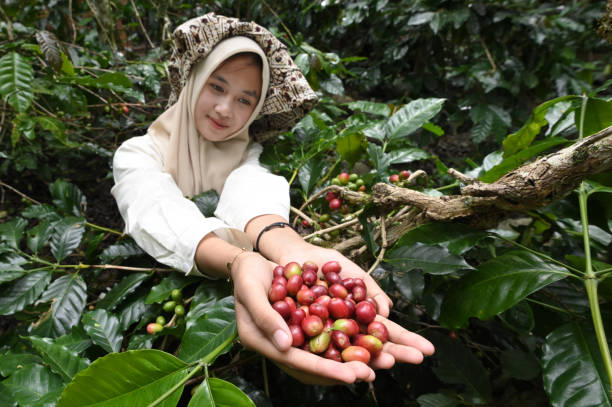
Indonesia is aiming higher for one of its best known agricultural commodities. According to the Jakarta Globe, Agriculture Minister Andi Amran Sulaiman said the country wants to raise the value of its coffee exports to Rp 100 trillion, or about $5.5 billion, over the long term by improving productivity across the supply chain. The target is ambitious, but it fits a broader national push to lift agricultural value, improve competitiveness, and move more commodities into higher value markets.
The announcement matters because Indonesia already has a meaningful position in the global coffee trade. World Coffee Research says Indonesia is one of the most diverse coffee origins in the world, producing both arabica and robusta, and contributing about 5 percent of world coffee exports. That gives the country a real base to build on, especially if productivity, post harvest quality, and market access improve in step.
Why Coffee Exports Matter So Much For Indonesia
Coffee exports are more than a trade statistic. For Indonesia, they connect rural livelihoods, plantation productivity, regional development, and foreign exchange earnings in one sector. The Jakarta Globe reported that the government sees coffee as one of the commodities with the strongest potential to become a leading agricultural export if output and quality can be improved consistently.
That view is supported by international market data. The International Coffee Organization reported that world coffee exports remained strong in 2025 and 2026, while the global market continued to face shifts in robusta and arabica supply. In a market like that, countries with scale, diversity, and quality potential can still win, especially when they can supply both commercial and specialty segments. Indonesia has that kind of profile.
Indonesia also has a large domestic production base. USDA’s May 2026 Coffee Annual for Indonesia said production is projected at 11.3 million bags in 2025/26, while exports are forecast to rise by 7 percent to 6.5 million bags in the same period. That does not automatically guarantee higher export value, but it does show that the country has meaningful export potential if quality, logistics, and farm yields continue improving.
The Government’s Productivity Strategy
The heart of the plan is productivity. According to the Jakarta Globe, Amran said the long term export target would be pursued by boosting productivity, which usually means improving yields, farm management, seed quality, replanting, and supply chain efficiency rather than simply expanding acreage. That approach is important because land expansion alone cannot solve structural problems in agricultural exports.
In coffee, productivity is not just about volume. It is also about consistency. Buyers in premium and commercial markets want dependable moisture levels, bean size, processing standards, and traceability. When those factors improve, exporters can move from commodity pricing toward higher value contracts. That is one reason coffee exports can rise in value faster than they rise in tonnage.
Indonesia already has evidence that export values can move sharply when market conditions are favorable. Jakarta Globe previously reported that coffee exports surged in 2024, showing how quickly the sector can benefit from stronger pricing and demand. BPS based reporting has also shown that coffee remains a significant export item for the country. The new target builds on that momentum rather than starting from zero.
Indonesia’s Position In The Global Coffee Market
Indonesia’s coffee exports have long been shaped by the country’s dual role as a robusta heavyweight and a specialty origin. World Coffee Research notes that Indonesia produces both arabica and robusta coffee and remains one of the world’s important coffee origins. The country’s broad geography, from Sumatra to Java, Sulawesi, Bali, and Flores, allows for a wide range of flavor profiles and market segments.
That diversity is a strategic advantage. Robusta supports large scale commercial sales, while arabica supports specialty and premium demand. USDA’s coffee report and other industry sources show that the United States, the European Union, and other large markets continue to matter for Indonesian shipments. In other words, coffee exports are not limited to one customer base. They can be expanded through multiple channels if quality and trade access improve.
The broader trade backdrop also helps. Reuters reported in February 2026 that Indonesia’s coffee shipments were exempted from a 19 percent U.S. tariff under a reciprocal trade agreement, which is a useful reminder that trade policy can directly affect the economics of coffee exports. When one of the biggest consumer markets becomes more accessible, the value of export growth rises even further.
What Has To Improve For The Target To Be Realistic
The biggest question is whether productivity gains can happen at scale. Indonesia’s coffee sector remains highly dependent on smallholders, and smallholder systems can be productive, but only when they have access to training, finance, seedlings, processing support, and market links. BPS publications on Indonesian coffee statistics show that coffee data are tracked by province, production category, and export destination, which reflects how geographically spread and administratively complex the sector really is.
That complexity matters because coffee exports are not built only at the port. They begin on the farm, continue through harvesting and drying, and only then reach processing, grading, and shipping. If one link in that chain weakens, export value falls even when production looks healthy on paper. That is why the government’s focus on productivity has to include more than yield. It has to include agronomy, quality control, and post harvest handling.
Climate is another factor. USDA’s May 2026 outlook said Indonesia’s green bean production is likely to decrease in 2026/27 because of excessive rainfall during the growing cycle. That kind of weather volatility can quickly disrupt coffee exports, especially if farm support systems are weak. So the long term target is credible only if climate adaptation is part of the strategy.
Why Coffee Exports Could Become A Bigger Rural Growth Engine
If the policy works, the benefits could be substantial. Coffee exports can support rural incomes in regions where plantation crops are already central to the local economy. World Coffee Research estimates that coffee supports 1.77 million people in Indonesia and contributes more than $1.5 billion in export revenues. That alone shows why policymakers treat the sector as more than a niche agricultural product.
There is also room for value addition. When Indonesia ships more processed coffee, roasted products, or specialty lots, it can capture more income from the same crop. That is the difference between exporting volume and exporting value. The current target, Rp 100 trillion, suggests that the government is thinking in value terms rather than only in tonnage terms, which is a more mature export strategy.
In practical terms, stronger coffee exports could also support logistics, branding, warehousing, packaging, and local processing industries. That creates a wider economic footprint than raw bean exports alone. For a country trying to expand agricultural competitiveness, that is a meaningful advantage.
What Investors And Traders Should Watch Next
For traders, exporters, and agribusiness investors, the next few signals will matter. The first is whether the government follows the headline target with concrete productivity programs. The second is whether production forecasts hold up after weather risks. The third is whether export destinations continue to diversify, especially in markets where Indonesian coffee already has recognition. USDA’s forecast and recent trade data suggest that Indonesia has room to scale if execution remains strong.
The market will also watch whether coffee exports gain more value through branding and specialty positioning. Indonesia has the raw material advantages. The challenge is converting those advantages into consistent premiums. That means better farm income, stronger export value, and a more resilient coffee economy overall.
Indonesia’s coffee exports target is not just a number. It is a statement about how the country wants to grow its agricultural sector, reward farmers, and compete more effectively in global trade. The Rp 100 trillion goal is ambitious, but it is not out of reach if productivity improves, climate risks are managed, and market access remains favorable. Coffee exports already have the scale, heritage, and international demand to matter. The question now is whether Indonesia can turn those strengths into sustained export value.
Read More