





 Saturday, 24-10-26








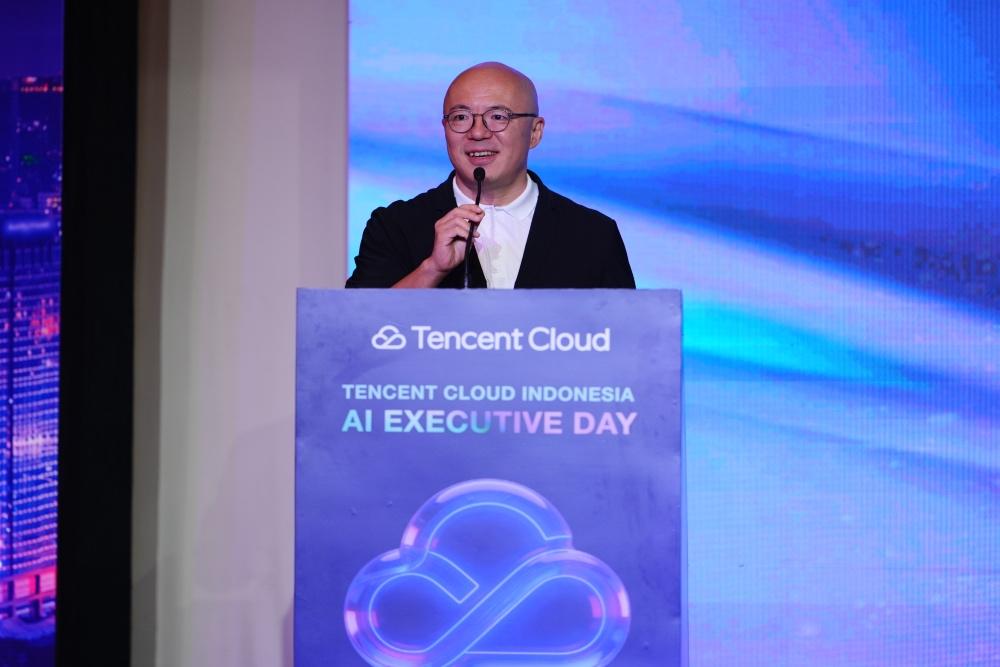
Tencent Cloud is making a clear push to turn AI from a demo into a working business tool. At SuperAI 2026 in Singapore, the company introduced WorkBuddy and Miora, two new AI products designed to help businesses and professionals automate work, speed up content production, and improve productivity across Southeast Asia. The launch reflects a broader shift in the market, where companies are now looking for AI that can execute tasks, not just answer questions.
For Indonesia, the timing is especially relevant. The country has one of the region's largest and fastest expanding digital economies, while businesses still face practical barriers such as uneven infrastructure, limited digital skills, and cloud governance challenges. That combination makes the AI agent conversation more than a trend story. It is becoming a real enterprise planning issue.
Why Tencent Cloud Is Betting On AI Agents
The new launch shows how quickly the industry is moving beyond basic chatbots. Tencent Cloud described WorkBuddy as a productivity focused AI agent that can take a single instruction and break it into multiple tasks, run them in parallel, and deliver a finished output ready for use. The company positioned Miora as a separate AI native creative studio for designers, marketers, and content teams. Both products are part of Tencent Cloud's broader agent playground strategy.
That matters because the market is now asking for systems that do actual work. Tencent Cloud's own materials say WorkBuddy is built for office workflows such as data analysis and report generation, and it can be controlled remotely through tools like Discord, Slack, and Telegram while still supporting governance and security. In other words, this is not just another generative AI layer. It is an AI agent designed to sit inside business operations.
This is also why the launch feels commercially important. A company that can turn AI from a prompt interface into a workflow engine has a better chance of being adopted by businesses that care about output, not novelty. In that sense, WorkBuddy is as much an operations product as it is an AI product.
What WorkBuddy Does For Everyday Business Teams
WorkBuddy is built around a simple promise: give it one instruction and it helps produce a complete result. Tencent Cloud says the AI agent can assist with data analysis, office work, and report preparation, while also supporting multiple AI models through one API layer. That flexibility is important for businesses that do not want to lock themselves into a single model stack.
Tencent also frames WorkBuddy as a desktop AI agent for everyday office work. Its documentation says the product is designed to understand plain language instructions, plan the steps, execute the task, and return a verifiable result. That is a meaningful distinction from a standard chatbot, because the value is not only in producing text but also in orchestrating a workflow.
Miora extends that logic into creative work. According to ANTARA's report on the launch, Miora is meant to help designers, creators, and marketers keep visual consistency across brands and campaigns, and it can generate graphics, video, 3D assets, and interface concepts from a simple brief. Together, WorkBuddy and Miora show how Tencent Cloud is trying to cover both operational and creative use cases with one AI agent driven ecosystem.
Why Indonesia Is A Strategic Market
Indonesia is not just another ASEAN market for cloud vendors. Multiple official and industry sources show that it is one of the region's most important digital economies. UNCTAD said Indonesia's digital economy was valued at around $90 billion in 2024 and is expected to reach $300 billion by 2030, while the U.S. Trade Administration said the country's digital economy is one of the fastest growing in Southeast Asia and could exceed $130 billion by 2025. Those estimates vary, but they point in the same direction, which is strong structural expansion.
That growth creates obvious opportunities for an AI agent platform. Indonesia has a large internet user base, a mobile first consumer culture, and increasing enterprise demand for cloud infrastructure. At the same time, the OECD notes that the country still faces low fixed broadband penetration, slow 5G rollout, and only modest digital tool adoption across the broader business sector. Those gaps create room for providers that can offer practical, scalable cloud and AI solutions.
Tencent Cloud already has a deeper Indonesia story than many people realize. In 2024, GoTo Group announced agreements with Tencent Cloud and Alibaba Cloud to boost cloud infrastructure and digital talent development in Indonesia. The company said Tencent Cloud would establish a third data center in the country as part of a commitment worth about $500 million by 2030, aimed at strengthening local cloud and AI capabilities. That context makes the WorkBuddy launch look like the next step in a longer Indonesia strategy, not a standalone product rollout.
Southeast Asia Is Moving Toward Agentic AI
The regional backdrop is also favorable. McKinsey and the Singapore Economic Development Board found that AI adoption in Southeast Asia is outpacing the global average, and that nine in ten organizations said they are ready to experiment with agentic AI. That is a strong signal that companies are no longer asking whether AI can help. They are asking how quickly it can be embedded into real workflows.
That finding fits what Tencent Cloud is trying to sell. WorkBuddy is not being introduced as an abstract model layer. It is being packaged as an AI agent that can reduce the friction between decision making and execution. For businesses across Indonesia and the wider region, that matters because many organizations still struggle to translate AI enthusiasm into repeatable productivity gains.
The market is also becoming more selective. Companies want secure deployment, clear governance, and measurable output. Tencent Cloud's launch messaging repeatedly emphasizes safe operation, compliance, and enterprise control. That positioning is smart, because many buyers in Indonesia are interested in AI, but they are equally concerned about data handling, workflow reliability, and control over model usage. An AI agent that cannot fit governance requirements will struggle to scale.
What Indonesian Companies Should Pay Attention To
For Indonesian companies, the most immediate question is not whether AI is useful. It is whether an AI agent can actually reduce workload without creating new risks. WorkBuddy's design suggests that Tencent Cloud is targeting exactly that concern. By combining multi model support, workflow execution, and remote control options, the product is meant to fit inside existing office processes rather than forcing teams to rebuild everything from scratch.
That could be attractive for businesses in sectors like retail, financial services, media, logistics, and digital platforms, especially where recurring analysis and documentation tasks consume a lot of time. The promise of the AI agent model is simple: fewer manual steps, faster output, and more room for teams to focus on judgment and strategy. If the implementation is smooth, that can become a real productivity gain rather than just a software purchase.
At the same time, the usual constraints still apply. Indonesia's digital ecosystem is growing, but OECD and U.S. government assessments both point to infrastructure and skills gaps that remain relevant. That means adoption will likely be uneven across company sizes and sectors. Large enterprises and digitally mature firms may move first, while smaller firms may need more support from local partners and managed service providers.
The Bigger Business Case Behind Tencent Cloud's Move
Tencent Cloud's launch should be read as part of a larger competitive strategy. The cloud market is no longer won only by storage, compute, and price. It is now also about who can deliver the most useful AI agent stack for real business work. By introducing WorkBuddy and Miora together, Tencent Cloud is signaling that it wants to own both productivity automation and creative execution.
That creates a broader ecosystem effect. If a company adopts one AI agent for office work and another for creative production, it is more likely to stay inside the same cloud environment for model access, workflows, and enterprise support. Tencent Cloud's integration with TokenHub and its wider AI portfolio strengthens that logic by giving customers a path from experimentation to deployment.
For Indonesia, this may be the most important takeaway. The country is moving into a phase where digital transformation is not just about access to cloud infrastructure. It is about operational intelligence. An AI agent like WorkBuddy represents that shift clearly, because it connects infrastructure, automation, and business output in one product story.
Tencent Cloud's WorkBuddy launch shows where enterprise AI is heading next. The market is moving away from passive assistants and toward AI agent systems that can execute work, manage workflows, and deliver finished outputs. In Southeast Asia, and especially in Indonesia, that shift has obvious potential because the region is already showing strong AI adoption momentum and deep demand for digital productivity tools.
The real test will be execution. If Tencent Cloud can combine product usefulness, local infrastructure, and enterprise trust, WorkBuddy could become a serious option for Indonesian businesses looking to scale faster. For now, the message is clear enough: the AI agent era is no longer theoretical, and the competition to define it has already begun.
Read More