





 Wednesday, 10-06-26








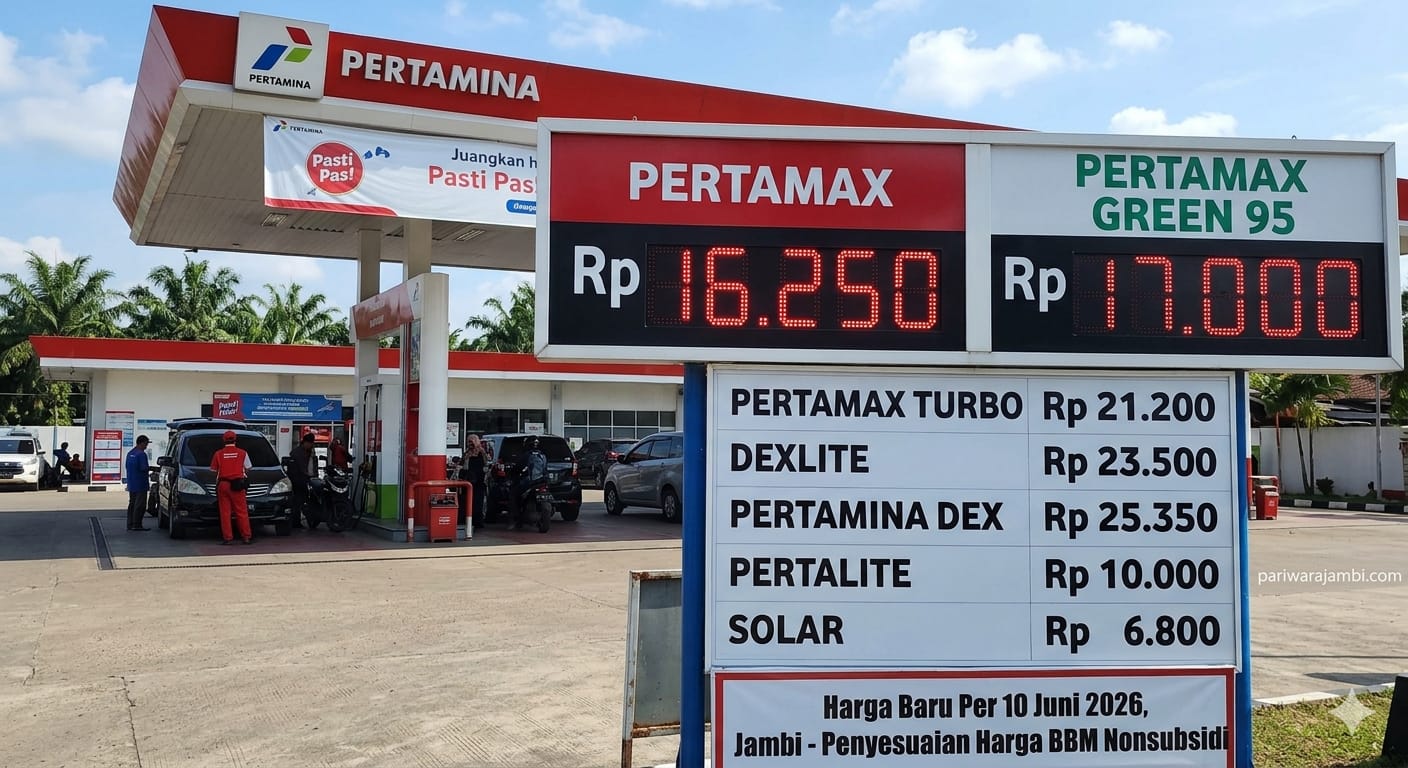
The latest Pertamax price hike has put fresh pressure on Indonesia’s energy conversation. Starting June 10, 2026, Pertamina Patra Niaga lifted Pertamax to Rp16,250 per liter from Rp12,300, while Pertamax Green 95 rose to Rp17,000 per liter from Rp12,900. The move may be framed as a routine market adjustment, but it lands at a sensitive moment for households, transport operators, and policymakers who are trying to keep inflation and fiscal risks under control.
The change matters for more than just motorists filling up at the pump. In Indonesia, fuel pricing is never only about retail economics. It also reflects a wider balancing act between global oil market conditions, domestic pricing formulas, the state budget, and the political need to protect purchasing power. That is why the Pertamax price hike quickly becomes a policy story, not just a consumer story.
Why The Pertamax Price Hike Matters
At first glance, Pertamax is a non-subsidized product, so the increase does not directly change the official price of subsidized fuel such as Pertalite or Biosolar. Those prices were left unchanged at Rp10,000 and Rp6,800 per liter, respectively. Even so, the jump still matters because Pertamax is widely used by private vehicle owners, ride-hailing drivers, logistics users, and consumers who prefer a higher-octane fuel. A sudden increase of Rp3,950 per liter can alter weekly transport costs in a way that households feel immediately.
This is where the broader risk begins to appear. When the gap between subsidized and non-subsidized fuel becomes more visible, some consumers naturally shift toward cheaper products. That does not automatically create a fiscal crisis, but it can increase pressure on subsidized supply channels and make government fuel policy harder to manage. In other words, the Pertamax price hike does not raise subsidy spending directly, but it can intensify the political and operational burden surrounding subsidies. That is an inference from the pricing gap and the government’s repeated effort to hold subsidized fuel steady.
For businesses, the effect can be even sharper. Delivery fleets, service vehicles, and informal transport operators often absorb fuel shocks before they can pass them on. When operating costs rise, margins tighten. If the pressure persists, some companies may increase service fees, reduce trips, or delay non-essential spending. That is why a Pertamax price hike often shows up later in consumer prices, not only at the gas station. The transmission is not instant, but it is real.
What Drove The Increase
Pertamina Patra Niaga said the adjustment followed coordination with the government and used a periodic evaluation mechanism that considers global oil developments and economic market prices. The company also described the change as part of energy governance aimed at preserving business continuity, service quality, and supply certainty. In simple terms, Pertamax did not move higher out of nowhere. It moved because the pricing formula, according to Pertamina, required an update.
That explanation is important because it shows how Indonesia’s fuel market works in practice. Non-subsidized prices are more exposed to international conditions than subsidized fuel. When oil markets move, refinery costs and distribution economics eventually follow. The state does not need to approve every consumer price in the same way it does with subsidized fuels, but the government still sits at the center of the policy architecture. This is why the Pertamax price hike is both a market reaction and a policy signal.
The government, meanwhile, has tried to calm public concern by emphasizing that subsidized fuel prices will not rise through the end of 2026. In early April, the Finance Ministry said BBM subsidies were already calculated with several scenarios, including an oil price assumption of up to 100 dollars per barrel, and that the APBN deficit was still expected to remain around 2.9 percent. The ministry also pointed to a fiscal buffer in the form of a Rp420 trillion sisa anggaran lebih, or SAL, if external pressure becomes stronger.
That reassurance does not eliminate fiscal risk. It only means the government believes it has room to absorb shocks for now. If global energy prices stay high or domestic demand shifts more heavily toward subsidized fuel, subsidy and compensation spending can still come under pressure later in the year. The current stance suggests the state wants to protect consumers first and deal with the budget consequences within the existing fiscal buffer.
The Subsidy Question Behind The Pump Price
The real issue behind the Pertamax price hike is not whether Pertamax itself is subsidized. It is not. The deeper issue is how the pricing gap reshapes behavior across the fuel market. When non-subsidized products become noticeably more expensive, some users try to move down the price ladder. That can increase traffic to subsidized outlets, intensify distribution pressure, and make quota management more sensitive. For policymakers, that is where the subsidy debate becomes difficult, because even stable subsidized prices can still face rising demand pressure.
There is also a household psychology effect. Fuel is one of the clearest daily signals of inflation because drivers see it in real time. A single fuel price change can affect how people think about transport, food delivery, commuting, and even future budgeting. Once consumers expect energy costs to stay elevated, spending behavior becomes more cautious. That is often how a Pertamax price hike begins to shape sentiment beyond the energy sector itself.
For the government, the challenge is to prevent the market from interpreting every increase as a sign of uncontrolled inflation. That is why official statements have emphasized that subsidized fuel will remain stable, that the budget is prepared, and that the state still has buffers. The message is meant to reassure the public that the fuel system remains manageable even after the latest price move.
What Comes Next For Consumers And Policymakers
In the near term, consumers should expect the most visible impact to come from transport costs. Households that use private vehicles daily will feel it first, while businesses with regular fuel consumption may adjust routes, service charges, or procurement plans. If inflationary pressure broadens, the effect could also appear in delivery services and goods prices. The Pertamax price hike therefore deserves attention not because it is unprecedented, but because it can ripple through several layers of the economy.
For policymakers, the next test is communication and coordination. The government needs to keep explaining why non-subsidized prices move while subsidized prices stay fixed, and it must monitor whether the market shift causes unintended demand changes. A transparent explanation of the pricing formula can reduce panic, but only if consumers see consistency between policy and market outcomes.
In the bigger picture, Indonesia is still trying to balance three priorities at once: keeping energy affordable, preserving fiscal discipline, and maintaining supply stability. That balance is difficult even in calm markets. When oil prices rise or regional uncertainty increases, the pressure becomes stronger. The current Pertamax price hike is a reminder that fuel policy in Indonesia is never just about one product price. It is about the cost of stability itself.
Read More