





 Monday, 08-06-26








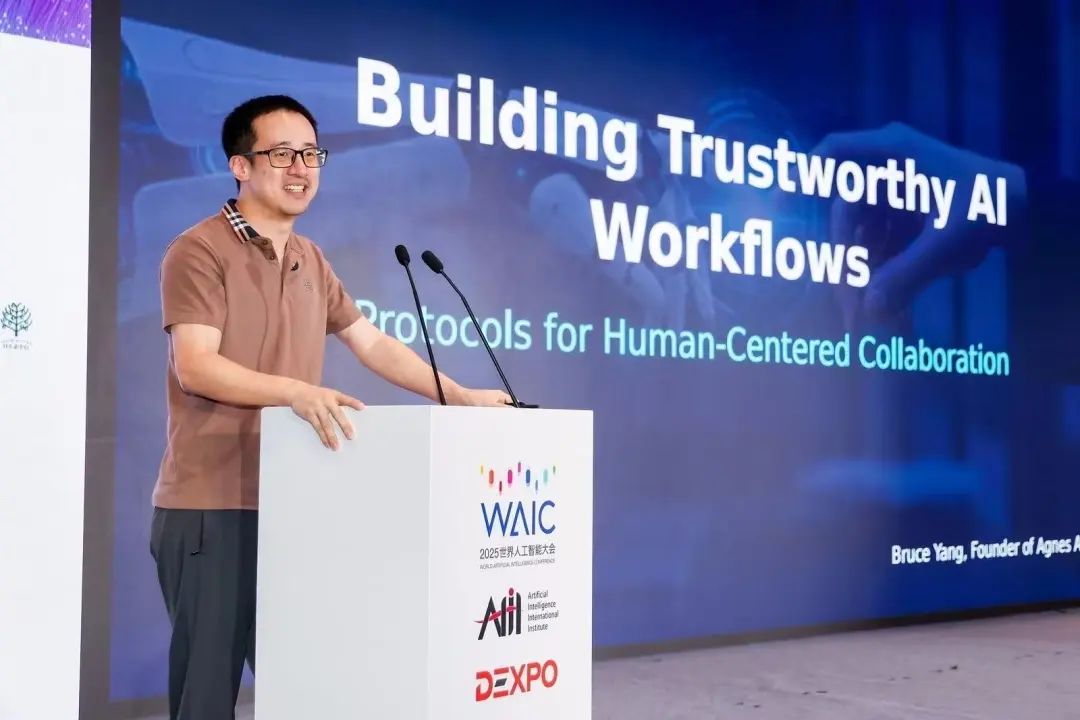
Agnes AI is becoming one of the clearest signs that Singapore is no longer just participating in the global AI race. It is trying to shape it. According to a press release carried by Hackernoon, Agnes AI became the first Singapore-founded AI lab to enter the global top 10 across text, image, and video benchmarks. Business Insider’s syndication of the same announcement says the company has now achieved that result three times in a row, which makes the milestone more than a one-off headline. It suggests consistency, not luck.
That matters because benchmark victories alone do not build an ecosystem. What makes Agnes AI notable is that the company is pairing technical credibility with a product strategy aimed at everyday use. Its official website describes Agnes AI as an AI gateway, free AI API platform, and AI application ecosystem. The app itself positions the product as an all-in-one environment for search, presentation building, image and video generation, games, and agentic workflows. In other words, Agnes AI is not selling a narrow feature. It is building a practical AI stack.
From Local Lab To Global Top 10
The most important part of the Agnes AI story is not simply that it ranked well. It is that a Singapore-born lab broke into the same competitive conversation as much larger global players. The press release places Agnes AI alongside names such as OpenAI, Anthropic, Google, and ByteDance on global benchmark leaderboards. That comparison is meaningful because these companies have scale, capital, and research depth that most startups can only dream about. For a Singapore-based lab to appear in that company signals a real shift in capability.
The company’s public positioning also shows that it is not relying on the usual “AI for AI’s sake” narrative. Agnes AI says it built a multimodal stack covering text, image, and video, and its website highlights free access to frontier models. That combination is strategically smart. It lets the company compete on performance while also competing on accessibility, which is the harder and more defensible problem in emerging markets.
This is where Agnes AI starts to look larger than a benchmark story. Benchmarks are a proof point. Productization is the real test. The company’s app listings show a consumer-facing and builder-friendly platform that blends search, content generation, automation, and agent deployment. That suggests a deliberate attempt to move beyond demo culture and into daily workflow utility. For a fast-growing AI firm, that distinction is everything.
Why Agnes AI Resonates In Southeast Asia
Agnes AI’s rise also fits the needs of Southeast Asia far better than many imported AI products do. In the company’s public messaging, it repeatedly frames frontier AI access as a cost problem and a gatekeeping problem. One of its posts says that most frontier models cost between $2 and $30 per minute, which it describes as a locked door for developers, students, and founders in markets that are price sensitive. The message is clear: if AI remains expensive, it remains exclusive. Agnes AI is trying to make inclusion part of the product.
That positioning has commercial logic. Agnes AI reported passing 5 million registered users within six months of launch, while an earlier report said it had crossed 2 million users in roughly four months. Another source said nearly half of its users were from Southeast Asia, and that the company had entered the top 10 productivity rankings in several regional app stores. Those are strong signals that the company is solving a real regional need, not just attracting curiosity from tech observers.
The user growth also helps explain why the Singapore story matters beyond prestige. Southeast Asia is a fragmented market with many languages, different digital habits, and wide income differences. A product that can cross those boundaries while staying affordable has a real chance to become infrastructure, not just software. Agnes AI appears to be positioning itself exactly that way, as a platform that can sit inside search, content creation, productivity, and collaboration workflows. That is a stronger play than chasing a single viral feature.
There is also a broader cultural point here. Many AI products are built for users already living inside Silicon Valley-style work patterns. Agnes AI seems to be designing for builders in Southeast Asia first, then reaching outward. That is a subtle but important difference. It means product decisions are being made around local constraints, such as affordability and access, instead of assuming every market can absorb the same cost structure or workflow design.
A Business Model Built On Access, Not Scarcity
Agnes AI’s growth strategy is also interesting because it leans into access. The company says it offers free API credits and free access to frontier models, and it describes its system as a full-stack multimodal AI platform. That is a bold move in a market where many companies still monetize scarcity through usage fees, gated access, or enterprise-only availability. Agnes AI is betting that broad access can accelerate adoption fast enough to create a stronger long-term position.
The company is also clearly thinking about enterprise and institutional relevance. One recent post said Agnes AI joined Singapore’s National AI Impact Programme with IMDA and AI Singapore, contributing models to help upskill 40,000 tech professionals nationwide. That matters because credibility in AI is no longer built only through consumer traction. It also comes from whether governments, schools, and companies see the platform as useful infrastructure for capability building.
This is a smart way to widen the moat. Consumer traction creates visibility. Institutional participation creates legitimacy. Together, they make it harder for the company to be dismissed as another startup riding the AI hype wave. Agnes AI is showing signs of being a platform company with reach across consumers, developers, and national-skills programs. That mix is rare, and it gives the company more room to grow than a single-use AI app would have.
The deeper strategic lesson is that AI competition is moving away from pure model size and toward product economics. A model can be impressive and still fail if it is too expensive or too hard to use. Agnes AI is trying to invert that equation. It wants to prove that frontier-level capability can also be affordable, local, and useful in everyday workflows. If it succeeds, its benchmark rankings will only be the beginning of the story.
What Singapore’s AI Playbook Could Mean Next
Agnes AI is becoming a useful case study for Singapore’s wider AI ambitions. The company shows that a small market does not automatically mean a small outcome, provided the ecosystem supports serious technical work and fast commercialization. Its rise also suggests that Southeast Asia does not need to wait for imported AI platforms to define the region’s digital future. It can build its own. That is the bigger message behind the headlines.
If Agnes AI continues to combine benchmark strength, user growth, and broad access, it could become one of the region’s defining AI platforms. It would not just be a Singapore success story. It would be a Southeast Asian one. And in a market where many AI companies still struggle to convert attention into adoption, that is a very significant difference.
Read More