





 Sunday, 25-10-26








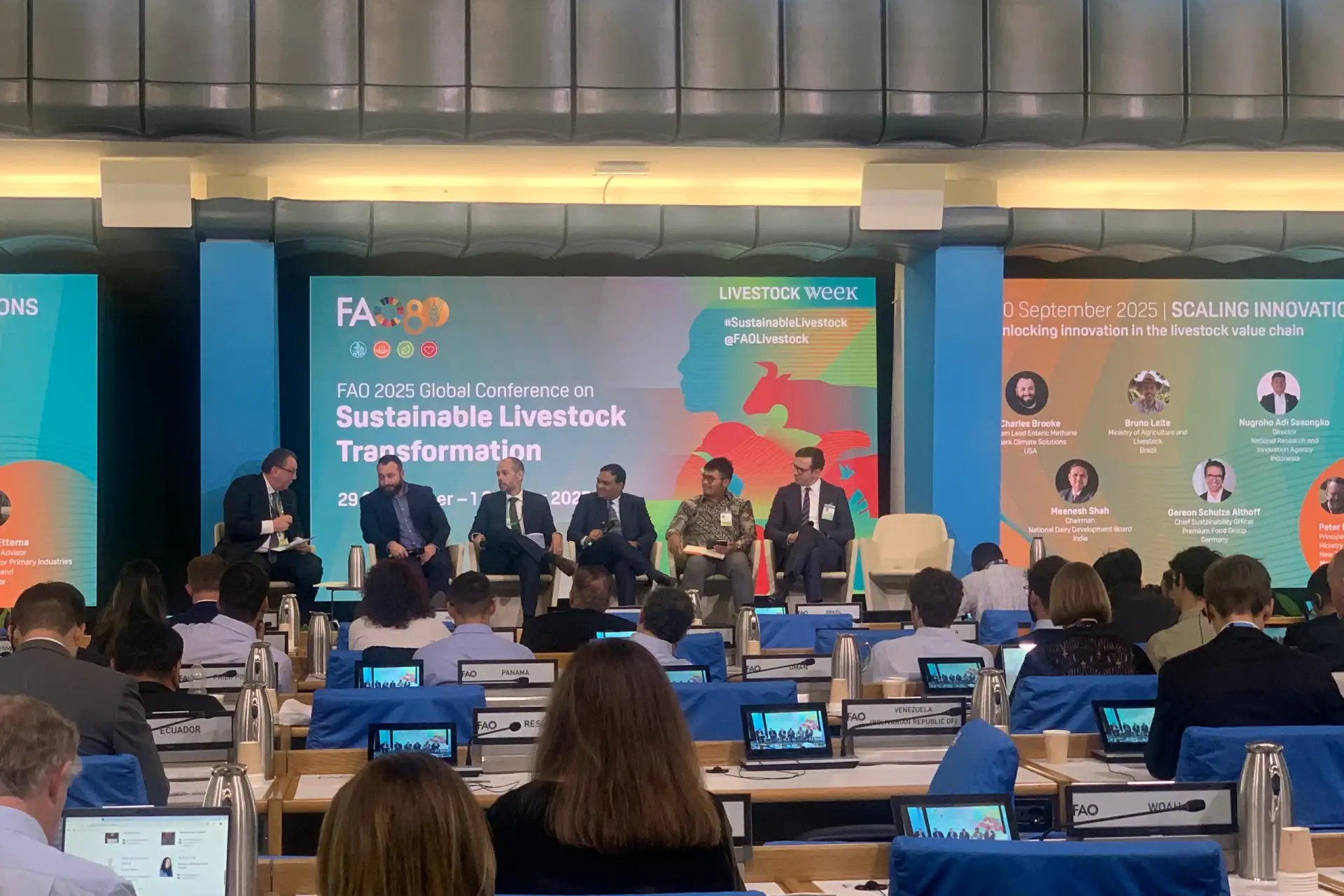
Indonesia, through the National Research and Innovation Agency (BRIN), in collaboration with the Food and Agriculture Organization (FAO), is strengthening global cooperation to drive sustainable livestock industry transformation through a science-based approach at an international forum in Jakarta (27/03).
The initiative is part of the International Strategic Meeting on Scientific Pathways for Sustainable Livestock Industry Transformation, held on March 27–28, 2026.
International Strategic Meeting Gathers Global Stakeholders
The two-day forum is attended by more than 470 participants from 33 countries, including international experts, policymakers, scientists, business actors, and civil society organizations.
The meeting provides a platform for global collaboration to define new directions for livestock system transformation based on science, innovation, and cross-sector partnerships.
Livestock Sector’s Global Role and Ongoing Challenges
The livestock sector plays a vital role in global agrifood systems by supplying around one-third of the world’s protein needs.
It also supports the livelihoods of more than 1.3 billion people, particularly smallholder farmers and rural communities.
However, the sector faces challenges related to sustainability, climate change, and resource efficiency as global food demand continues to increase.
Head of BRIN, Arif Satria, stated that Indonesia’s livestock sector has a strategic role in supporting food security, improving nutrition, and strengthening rural economies.
“This strategic meeting reaffirms Indonesia’s commitment to addressing global challenges through science, innovation, and collaboration. By strengthening research capacity and adopting sustainable practices, we not only increase productivity but also enhance the resilience of the livestock sector to climate change,” he said.
GLEAM Model Introduced to Support Sustainable Livestock Systems
FAO Representative for Indonesia and Timor-Leste, Rajendra Aryal, said that collaboration developed through the forum will strengthen efforts to build a more efficient, inclusive, and sustainable livestock system.
“Discussions and partnerships emerging from this meeting will serve as a key foundation in building livestock systems aligned with national priorities and global goals. FAO remains committed to supporting Indonesia through science-based approaches and strategic partnerships,” he said.
One of the main agendas of the conference is the launch of the latest phase of the Global Livestock Environmental Assessment Model (GLEAM).
The model is a comprehensive analytical framework designed to measure the environmental impact of livestock systems and provide recommendations to improve efficiency and sustainability.
GLEAM is expected to help policymakers, researchers, and industry players develop data-based policies, reduce environmental impact, and maintain balance across economic, social, and environmental aspects.
Prior to the event, FAO held technical training for 100 experts on the use of GLEAM and updated technical guidelines developed through the Livestock Environmental Assessment and Performance (LEAP) partnership.
Scientific Exchange and Youth Innovation Highlight Forum
The forum features plenary sessions, expert panels, and parallel scientific discussions that present the latest research on sustainable livestock.
A youth research competition is also organized to encourage innovation from younger generations in supporting the transformation of the livestock sector.
FAO Assistant Director-General Thanawat Tiensin emphasized the importance of global collaboration in addressing challenges in the livestock sector.
“The world needs a shared vision, collective responsibility, and a One Health approach as a comprehensive solution for sustainable livestock transformation. Science and innovation are key to ensuring food security, nutrition, and sustainable livelihoods,” he said.
The event is also broadcast live through BRIN’s YouTube channel to expand public access to knowledge and global discussions on sustainable livestock.
PHOTO: BRIN
This article was created with AI assistance.
We make every effort to ensure the accuracy of our content, some information may be incorrect or outdated. Please let us know of any corrections at [email protected].
Read More